• Mission & Community
  • Contact
  • Register

Suzuki Music Academy of Hong Kong

"Music Exists for the purpose of growing an admirable heart" ~Shinichi Suzuki

"Music exists for the purpose of growing an admirable heart"
Shinichi Suzuki
  • Home
  • About SMAHK
  • What is Suzuki?
    • History of the Suzuki Method
    • About the Suzuki Method
  • Programs
    • Instrumental Program
    • Rising Stars Program
    • Little Stars Early Childhood Music
    • Yo Yo Ma Program
    • Faculty
  • Events
    • Calendar
      • Download Calendar
    • Events sign up
      • Graduation Concert
      • Bach in the Subway
      • Prospective Family Parent Seminar
      • T-Shirt Orders
  • News
  • Gallery
    • Photo Gallery
    • Video Gallery
  • Video Gallery
  • T-Shirt Orders
  • School Calendar Download
  • Conference Photos
  • Studio Recitals
  • Photo Gallery
  • Register
  • Contact
  • Faculty
  • About Suzuki Music Academy of Hong Kong

Is your instrument healthy and safe?

November 2, 2018 By Suzuki Music Academy of Hong Kong


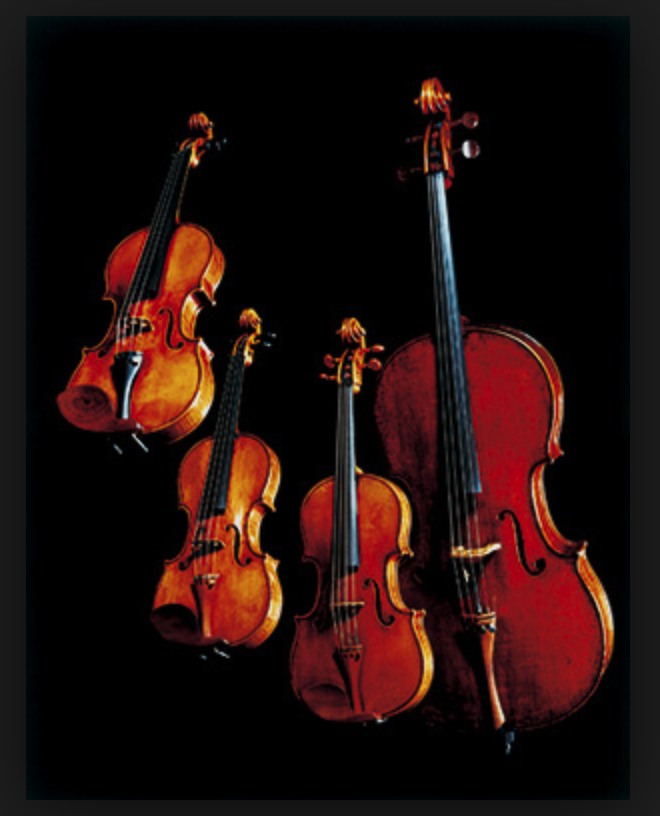
Taking care of the instruments

by Ms Ryoko

The instruments are delicate and valuable, and becomes something really a personal  over the time we use them.

I recently found that some string students do not have a routine of putting away their instruments into the case after daily home practicing – keeping on the shelf, in the drawer, or hanging on the wall without the case. This is very dangerous to the instrument’s condition and value. IT IS  PART OF PRACTICING TO TAKE OUT AND PUT AWAY THEIR INSTRUMENTS BEFORE AND AFTER PRACTICING! Please once again make sure to help your child(ren) to understand the importance of the case in order to build up a good habit in taking care of the instrument.

Steps of getting the instrument:

BEFORE

  • wash and dry your hands properly
  • if playing a stringed instrument, put the case in the safe place in the practice area: it should be flat on the floor before opening
  • open the case or piano lid and get ready
  • tighten the bow only the proper amount.  There should still be a curve going TOWARD the horsehairs after the bow is tightened
  • use good quality rosin to rosin the bow
  • for violin or viola, place the instrument upside down in your lap to put on the shoulder pad. This will keep the bridge safe.
    • Did you know that the bridge is ONLY held in place by the tension in your strings?!?!

AFTER

  • Loosen the bow hair and clean the instrument (including the strings) gently with a cloth
  • put the instrument back to the case and zip properly
  • keep it in a safe place.
      • where it cannot fall
      • where no one and nothing can fall on it
      • where the temperature and humidity stay the most consistent
          • NOT:  by the door
              •  by the window
              •  under the air con
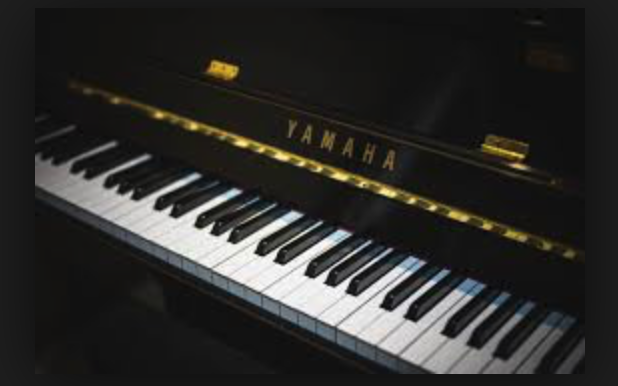
  • for the piano, cover the piano keys with the cloth, and close the lid gently

Keeping the string instrument in the case can protect it from getting damaged by humidity/dryness and temperature changes as well as getting hit by other objects/people. It is already dangerous enough to walk around with the instrument or putting it on the sofa where other family members are around, so keeping it without the case all the time is simply unacceptable. We understand that we have to take the violin out from the case on occasion before group class/chamber music/orchestra and at the concert venue because of the limited space, however, this is an exceptional situation where the students need to pay extra attention carrying the instruments.

We all know that the instrument is not a toy. Keeping the instrument in a good condition can help keeping a good value of it, and most importantly, we would like our students and parents to appreciate and be grateful for what they have. Just like many other personal belongings which should be taken care of nicely with respect, taking a good care of the instrument can definitely teach your child(ren) a great lesson.

We know many of you are already aware of the things above, however, please have a chat with your child(ren) about it and keep eyes on where the instruments are while they are practicing and while they are NOT practicing. It is very easy to get used to what we have and forget about the importance of having the instruments in our lives.

Thank you for your continuous support and attention.



SUZUKI SUMMER REFLECTION: Chloe Chung (& family)

September 12, 2018 By Suzuki Music Academy of Hong Kong


This summer it was Chloe’s first experience in a Suzuki summer institute as a participating student.  For the past 3 years, she simply tagged along with her older brother Caleb taking singing and yoga lessons!  Last year she saw a 4 year old girl playing cello on stage and she’s been asking for lessons since. By July, she’s taken two semesters of cello lessons with Miss Sandra and was so excited when she learnt that she’d be in an orchestra, take master & group classes everyday for five days!!

Although we have been Suzuki parents for seven years with Caleb on his violin and just a year with Chloe on the cello, we never stop marvelling at how much they learn and enjoy in these summer institutes. For Chloe,  this has been especially true. First, she picked up her bow and started using it after her teacher taught her a few techniques. Before that she’s been doing pizzacato.
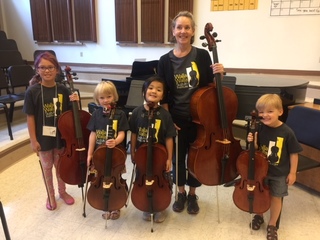
Second, she was given music just like everyone else in an orchestra with a very short stand – while she did open strings during most of the song – she felt really empowered that she was part of a much bigger group creating amazing sounds in the orchestra.  Last but not least, she got to perform with everyone on stage on the last day wearing the Suzuki camp shirt  – she couldn’t be happier!
Many parents over the years asked us if we are worried about other teachers undermining what our home teacher has taught our kids in HK.  We’ve consistently found that the opposite is true – they have simply reinforced what we’ve learnt – the importance of posture, the significance of a bow hold, the ability to create a beautiful tone and much more – these very fundamental Suzuki values which we hear week in week out  – we hear time and time again from all the teachers in the US.  The best thing was that in the two weeks while we were on holiday in Canada, Chloe picked up the cello and played with her bow every morning after breakfast – and insisted that we give her a proper applause after her Song of the wind.  Also inspired by older kids doing a recital on the last day!
Perhaps most importantly, it was the new friendships we’ve made in these institutes that are so special.  This year,  Chloe met Anne whose parents teach music at the University.  The two girls were inseparable for 3 days – holding hands going from class to class, playing pretend with their dolls on the grassy areas, even swimming together in the university pool.  On the last day, they hugged so hard saying goodbye to each other that they wouldn’t let go…until we promised we’ll be back next year!   And we will!

SUZUKI SUMMER REFLECTION: The Mak Family

September 5, 2018 By Suzuki Music Academy of Hong Kong

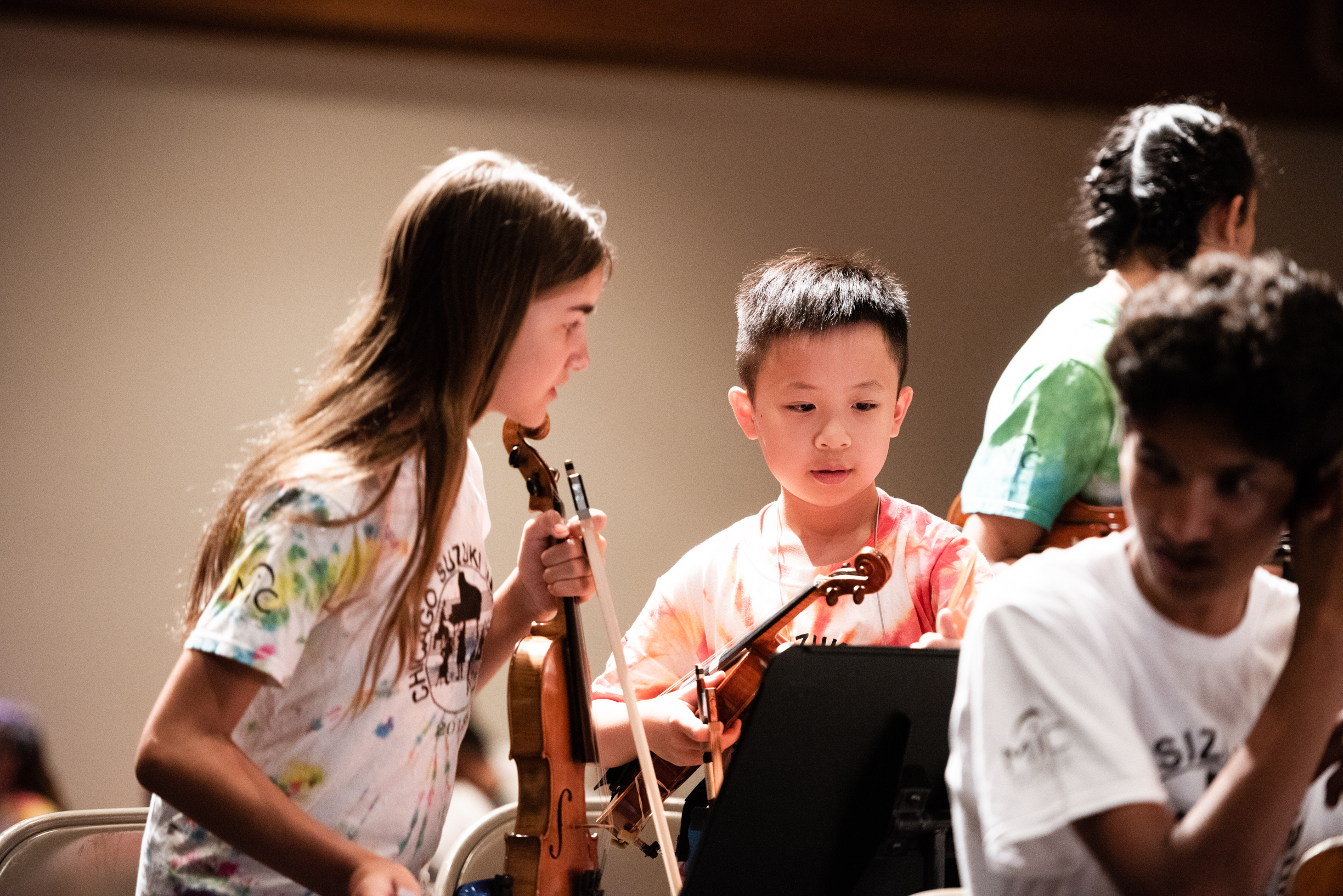
Chicago Suzuki Institute (CSI) 2018

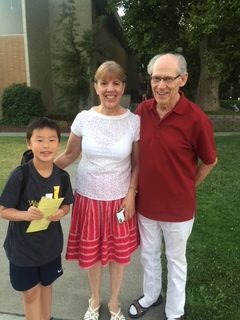
The Maks

This year, our family spent a week with the Chicago Suzuki Institute, and to us all, that was about the ideal summer vacation.

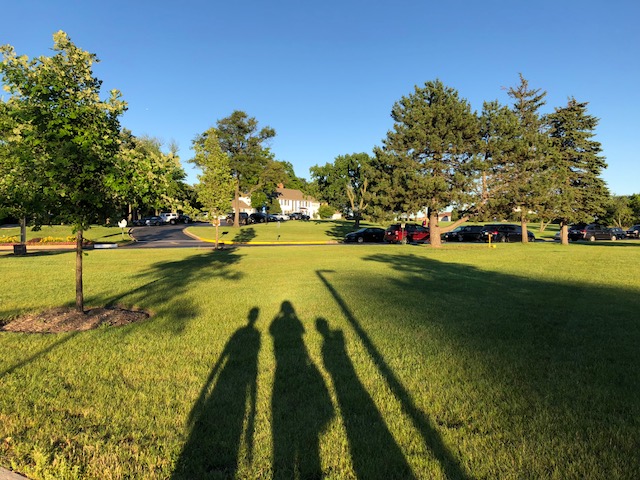
The Chicago Suzuki Institute takes place every year in the picturesque campus of Trinity International University, a small private university situated in Deerfield, which is a quiet suburb about 1 hour on the train from downtown Chicago.

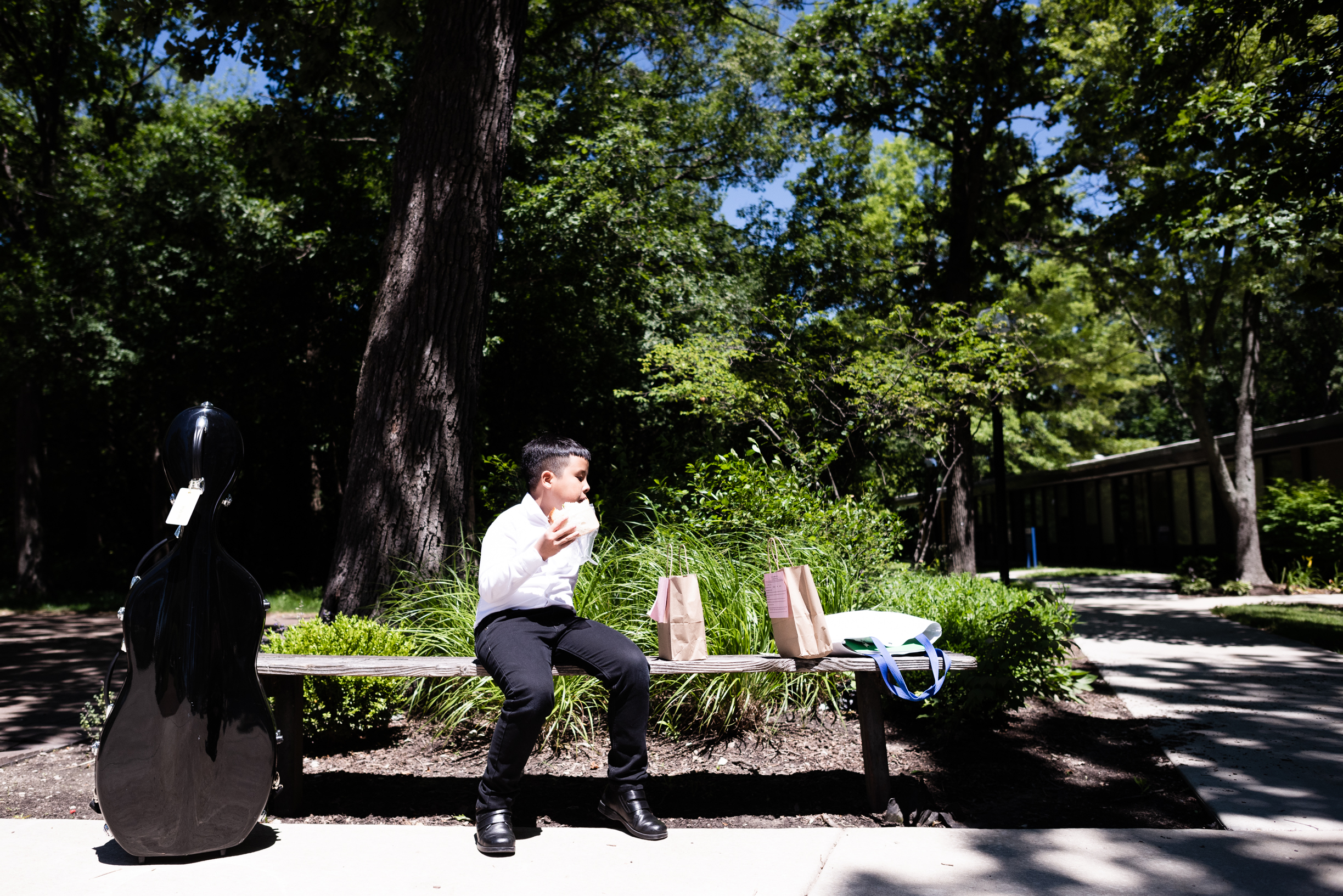
The campus provided a serene environment where everyone you saw, and everything everyone did, was about music and nothing else – and for a week, we were blessed with the blissful feeling that everything that counted was good music. And remarkably – everything was so well-organized, one really didn’t have to worry about anything else.  


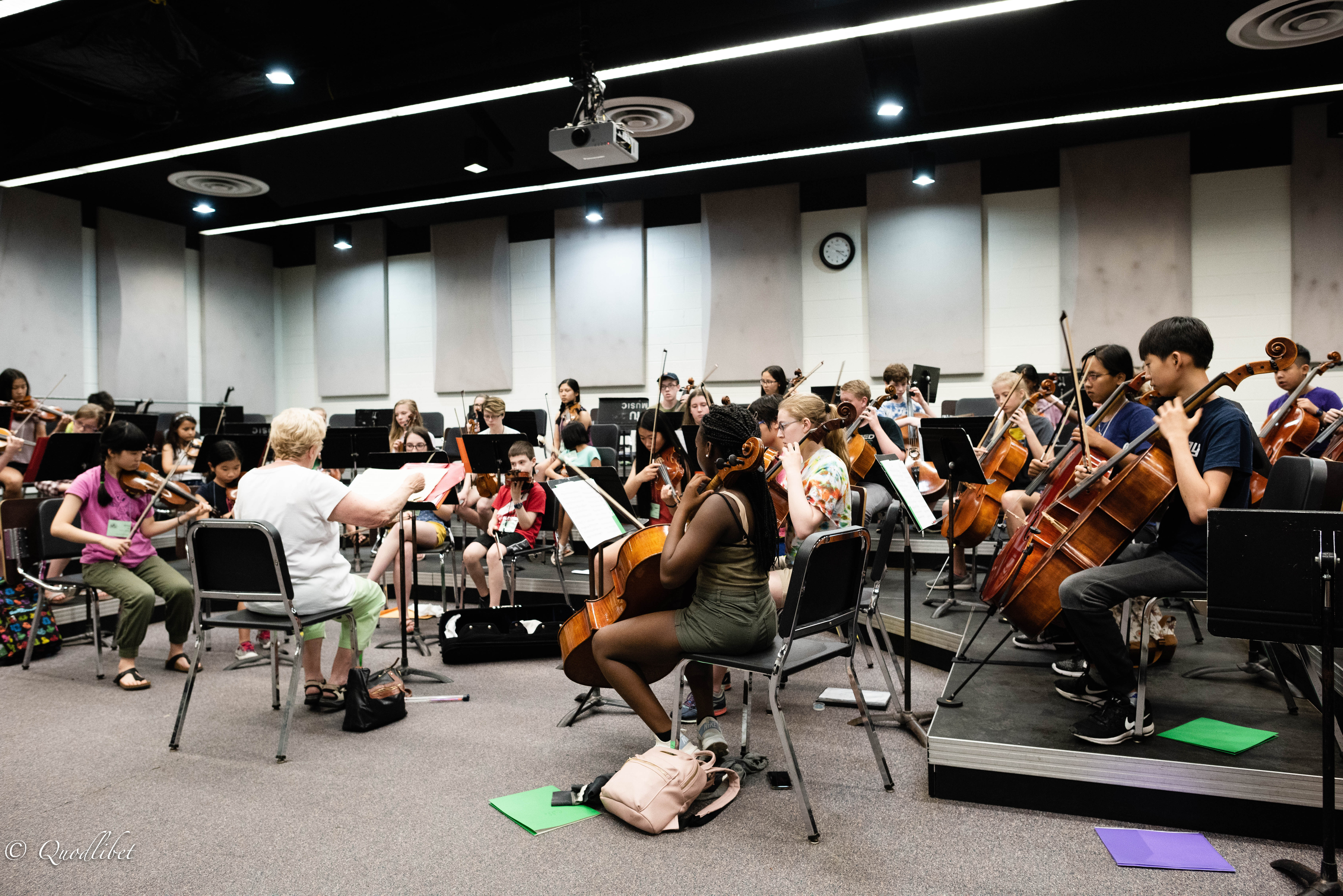
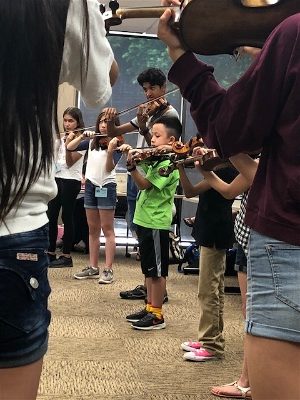
Each day of the week started with orchestra rehearsal sessions – Ian was in an advanced orchestra under the direction of Ms Marilyn Kesler and Julian played first violins in Mr Aaron Kaplan’s orchestra. They were both amazing conductors and teachers – players learned the etiquette and skills required of orchestral players, and the improvement the orchestras showed in the week – preparing some rather difficult pieces – was simply amazing. Then the students broke out into different group classes, masterclasses, chamber music sessions and enrichment classes.

In Master Classes, Julian and Ian learned a lot by improving their skills in a focused manner, even in the short space of one week. Repertoire/ Group classes were advanced exercises in ensembleship and musicianship. Julian was able to see the Bach Gavotte in a new light with Ms. Kathleen Spring in his master class, and in repertoire class he learned from Mrs. Susan Macdonald. Mrs. Macdonald and Ms. Diane were actually classmates in violin class when they were kids!


Ian had an amazing time working with his peers and Mr. David Holmes on Goltermann’s Rondo – along with spasms of laughter from Mr. Holme’s humorous manner of portraying musical expressions. He learned to improve his posture and vibrato while studying the Sicilienne with Ms. Mary Walters in master class.


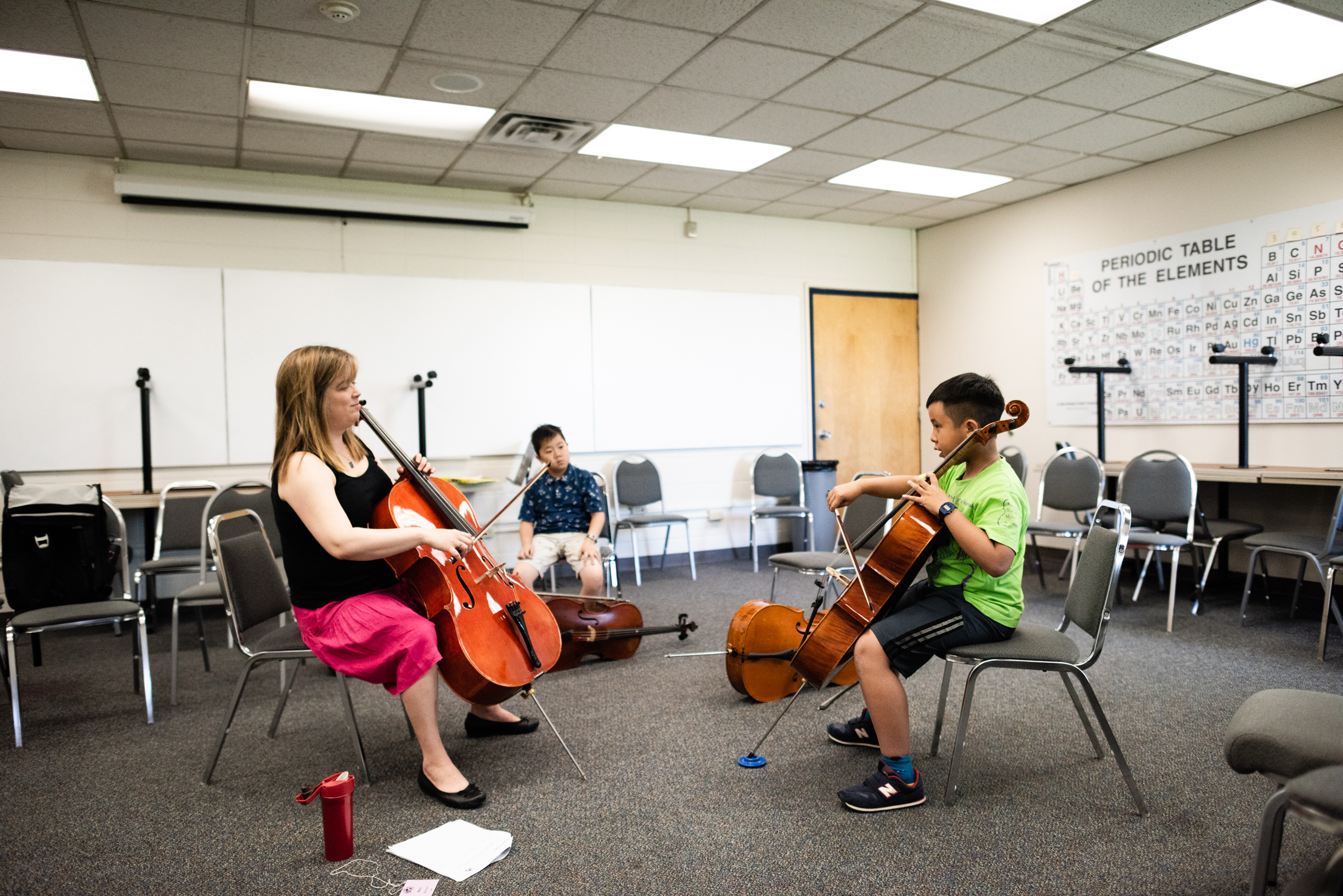
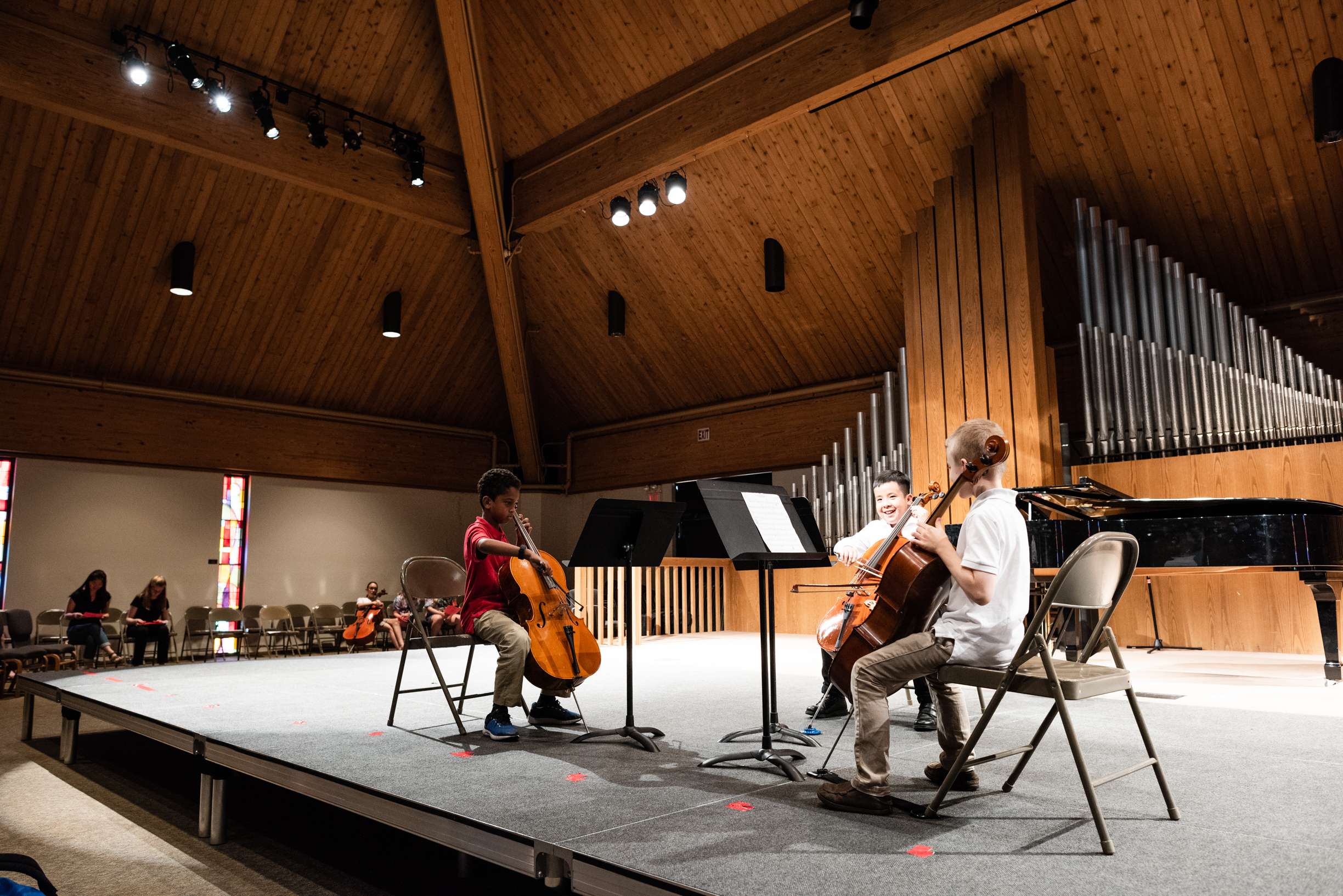
Ian was lucky to be arranged to join a chamber group of 3 cellists, with matching skills and character, to learn and prepare for a performance of Michael Kibbe’s Chant and Fugue by the end of the week. Miss Julia Wen, their tutor, made sure that the sessions were fun-filled, yet focused and effective, in enriching the kids’ skills as chamber musicians.


As an enrichment program, Julian was able to join a thoroughly enjoyable class called ‘Fiddle Jam’ playing folk music and learning the basics of improvisation.


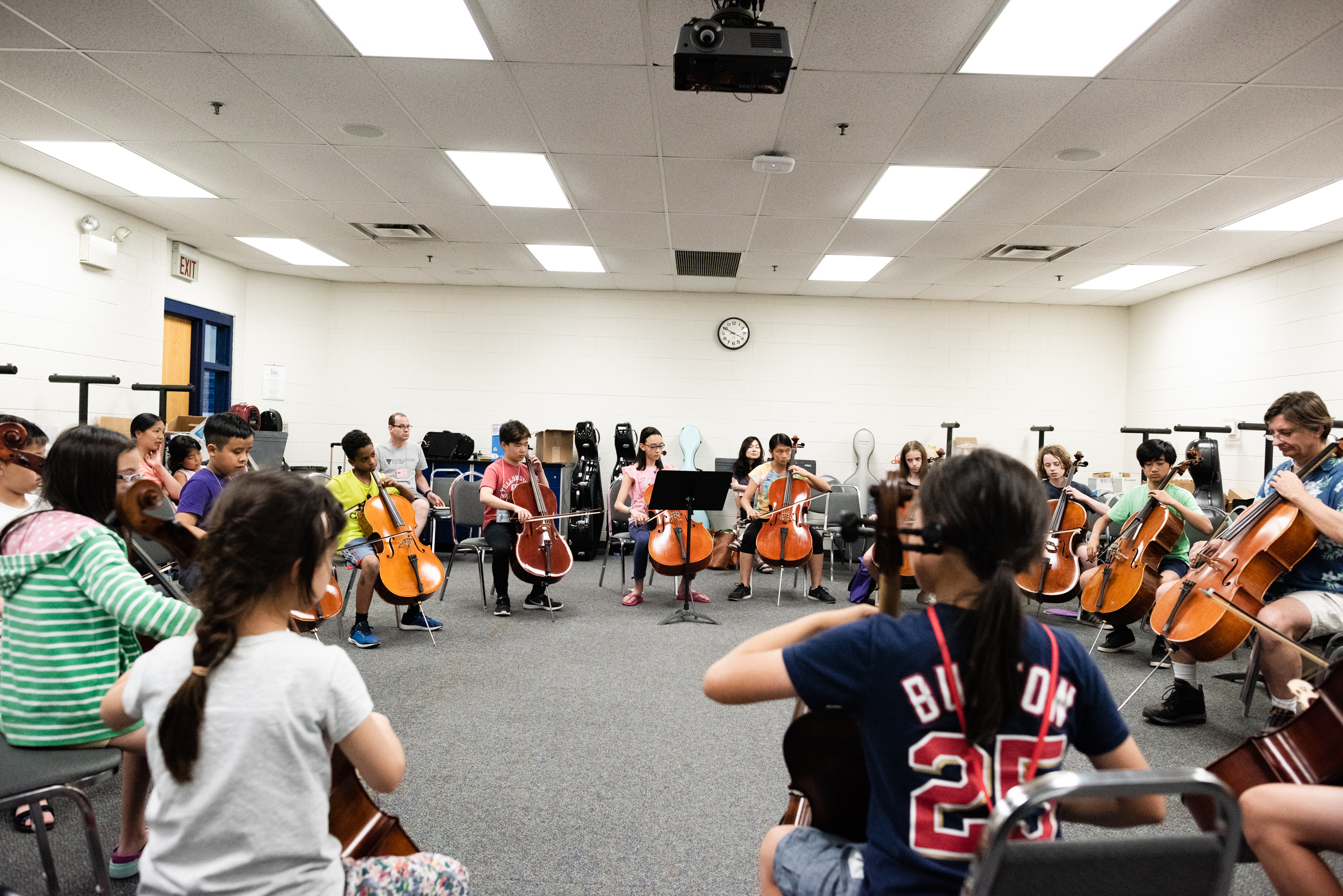
The Cello Choir was the cellists’ privilege – as we learned that only the cello had the broad range to allow it to do the ‘cello parts’ as well as covering for some violin and viola parts – at this ‘mecca’ of cellos in the world of Suzuki – there were so many cello students that filling the whole orchestra with capable cellists was nowhere difficult. Under the direction of Mr. Aaron Kaplan, the ‘choir’ learned and perfected pieces as beautiful as they were challenging- including Bernstein’s “America” and “Libera Me” from Fauré’s Requiem, skillfully adapted for the cello choir.

Scattered throughout the week were the lunch time and evening concerts, held in the iconic Olson Chapel. Students passing auditions could get a chance to play a solo piece in one of the recitals – Julian was lucky to be able to perform the 2nd movement from Vivaldi’s A minor violin concerto- the beautiful hall and wonderful acoustics certainly made it a larger-than-life experience for the young man. The opportunity to listen to the performances of students of all levels as well as faculty members was also enjoyable and highly educational for music lovers and learners.   

Between classes, students, parents and faculty had ample opportunity to mingle, play ball games and lawn games. Ian and Julian particularly enjoyed swimming in the pool in the hotel, which was just across the road from the campus.


The week culminated in orchestral, chamber music and group-class concerts, where the groups gave performances of pieces they learned and rehearsed as a group while in the camp. The degree of concentration and musicality displayed in the concerts were incredible – the audience certainly bore witness to the actualization of Dr. Suzuki’s ideal – the children and youngsters really played as if music were their mother tongue – spontaneous, genuine and pure.

No sooner than the camp drew to an end, Ian and Julian asked to return next year. And I thought we probably will, if they work hard to earn it!

Ian’s favorites:

  • Mr. Holmes was particularly funny. He always made funny gestures or actions while we were playing our repertoire in group class.
  • The environment was good and the weather was perfect.
  • Food in the canteen is really good!
  • I made new friends through the CSI and I hope to see them again next year.

Julian’s favorites:

  • In Master class with Ms. Spring, I benefited from focusing on one learning point each day.
  • Fiddle Jam class with Ms. Crystal Plohman Wiegman at the end of every day was so much fun. Although I was tired, but the fiddle music really cheered me up. I enjoyed playing new music and improvising with other kids. The fiddle jam performance and cookie party on the last day were highlight of the programme.
  • Swimming pool in the hotel was also one of my favorites.

SUZUKI SUMMER REFLECTION: Caleb Chung

August 17, 2018 By Suzuki Music Academy of Hong Kong

My WWSI experience

   By: Caleb Chung

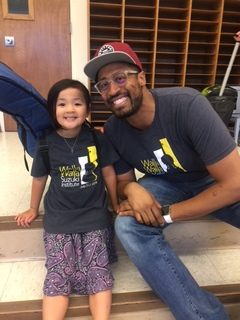
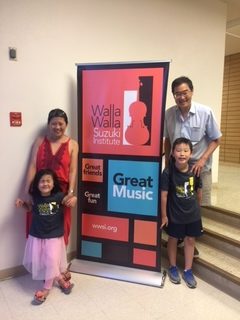
Very few people have heard of Walla Walla, and some thought it was in Hawaii!  We drove 5 hours east of Seattle to this town of 50,000 – and mom and dad said it was very special. It has 200 wineries and no one really knows about it!  We found it because we met the institute director Miss Julia Salerno in another institute two years ago called GMSI( You should go too) – and we are so happy we did!


In Walla Walla, there were a lot of things to do but let me tell you about the learning.


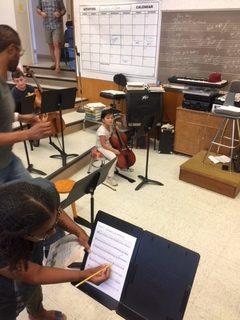
It’s just like HK! You get private lessons and group lessons everyday for five days.  The private lessons are almost the same as typical lessons, but are called masterclasses, so most of the time you only get 15 minutes, but you get a lot out of it. In the group lessons, you get an advantage either way. If you are advanced for your book you get to review. If you just started your book, you get to work on the pieces that you are working on. You also get to meet new friends, and the next year, you will hopefully advance together and that is nice.

In the camp, you also get electives. Electives are musical related activities and there were four available – Steel drums, Dalcroze, Chamber, and orchestra. I chose Steel drums, chamber, and orchestra. They were very enjoyable.. In chamber, I got taught by renowned suzuki teacher named Dr Glenn Springs. The song that we learned was called six petite trios. In orchestra, our teacher was really funny. His name is Mr Bruce Walker and he has a super high voice!  I was in violin one and the song that we played was called symphony one. It was written by William boyce and was played at the royal wedding. My sister Chloe thinks he is very funny and calls him funny man. In steel drums, I had Mr Jaggabad. We learned song of the wind, Shake de papaya down, go tell aunt rhody, Twinkle Twinkle, and F major scale.

In WWSI, There is something called honors. You get to play a solo piece and it is really nerve wrecking but exciting. I played Vivaldi concerto in A minor second movement in book five. I think i did well and everyone clapped!

At camp everyone was very nice.. Sometimes if you are lucky enough, you get a free period or at the end of the day you get to swim in the university swimming pool which has a diving board and a basketball hoop!

Overall, I think WWSI was an amazing experience and you should come too! I hope to see you next year in Walla Walla Washington!  

Calling out to Children’s Vital Forces

March 15, 2017 By Diane Slone

Dr Shinichi Suzuki

from Nurtured by Love                              ~by Shinichi Suzuki


Aspiring to Ever Higher Quality

The first piece our young students learn is the “Twinkle Variations”. Only after hearing a recording of the piece at home every day does a child learn to play it on the violin. Carefully, carefully, she practices. Once the child has learned to play the entire piece, the teacher will say, “Aha, now you’re able to play ‘Twinkle’ all the way through! Let’s move on, then. We’re going to start you on lessons for playing ‘Twinkle extremely well.”

This is indeed a most crucial point, aimed at heightening the quality of the child’s ability. It marks the beginning of lessons in pursuit of better tone, more precisely executed motor functions, and increasingly refined musicality. Using these teaching materials, we foster ability. This approach of ours enables all of our students, without exception, to acquire solid proficiency. Their tone gradually improves, their movements grow ever more fluid and dynamic, and their performances become more and more musical.  Ability, in other words, develops.

I am convinced that every child grows to become respectable, and I have never once been betrayed by this conviction. I am determined to help every child become praiseworthy. Unless I do this, I cannot live with myself. In order to confirm whether our students are developing their abilities, I conduct tests of various kinds. Below for example is one game I play with them to assess their proficiency.

How Many Legs Do You Have?

To children who are already able to play the “Twinkle Variations” with sufficient ease I give the following instructions while they play the piece: “All right, let’s have a game. You’re going to answer my questions while playing violin, ok? Be sure to answer loudly, and don’t stop playing, whatever happens.”

I then raise my voice to ask them, “How many legs do you have?”

Amused, the children answer in unison at the top of their lungs “Two!”

Of course, if they can do this while correctly playing the piece, it means the they ability they have acquired is soundly developed. If there is a child among them whose ability has not yet been sufficiently fostered, it will take everything in him simply to continue playing, with the result that he is unable to utter a syllable. If he nevertheless produces an answer, his hands stop playing.

“How many eyes to you have?”

“Two!”

“How many noses?”

“One!”

Even as the children continue to play through “Twinkle”, laughing sweetly away, they are further developing the capacity to enjoy such games with me. Everyone, without fail, develops in this manner. And this acquired ability nudges their overall ability to an even higher plane. This is no different than the fact that we all have the ability to handle a variety of tasks while speaking Japanese without mishap….


Calling Out to Children’s Vital Forces

With more advanced students, the test-game methods become more sophisticated.

« Previous Page
Next Page »

25/F Times Media Centre
133 Wanchai Road
Wanchai, Hong Kong

directions

Suzuki Music Academy of Hong Kong believes:

Follow us on Facebook

Search

  • HOME
  • PROGRAMS
  • EVENTS
  • GALLERY
  • REGISTER

Copyright © 2026 · Magazine Pro Theme On Genesis Framework · WordPress · Log in