• Mission & Community
  • Contact
  • Register

Suzuki Music Academy of Hong Kong

"Music Exists for the purpose of growing an admirable heart" ~Shinichi Suzuki

"Music exists for the purpose of growing an admirable heart"
Shinichi Suzuki
  • Home
  • About SMAHK
  • What is Suzuki?
    • History of the Suzuki Method
    • About the Suzuki Method
  • Programs
    • Instrumental Program
    • Rising Stars Program
    • Little Stars Early Childhood Music
    • Yo Yo Ma Program
    • Faculty
  • Events
    • Calendar
      • Download Calendar
    • Events sign up
      • Graduation Concert
      • Bach in the Subway
      • Prospective Family Parent Seminar
      • T-Shirt Orders
  • News
  • Gallery
    • Photo Gallery
    • Video Gallery
  • Video Gallery
  • T-Shirt Orders
  • School Calendar Download
  • Conference Photos
  • Studio Recitals
  • Photo Gallery
  • Register
  • Contact
  • Faculty
  • About Suzuki Music Academy of Hong Kong

Reflections of the Performers: Sander Day and Ayden Siu Book 4 & 5 Violin Recital

November 29, 2024 By Suzuki Music Academy of Hong Kong

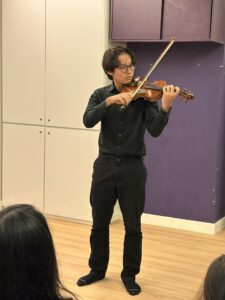
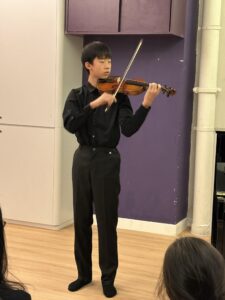
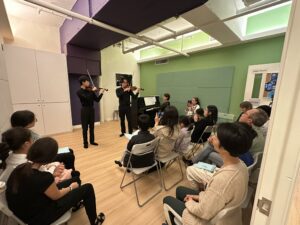
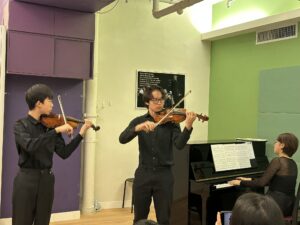
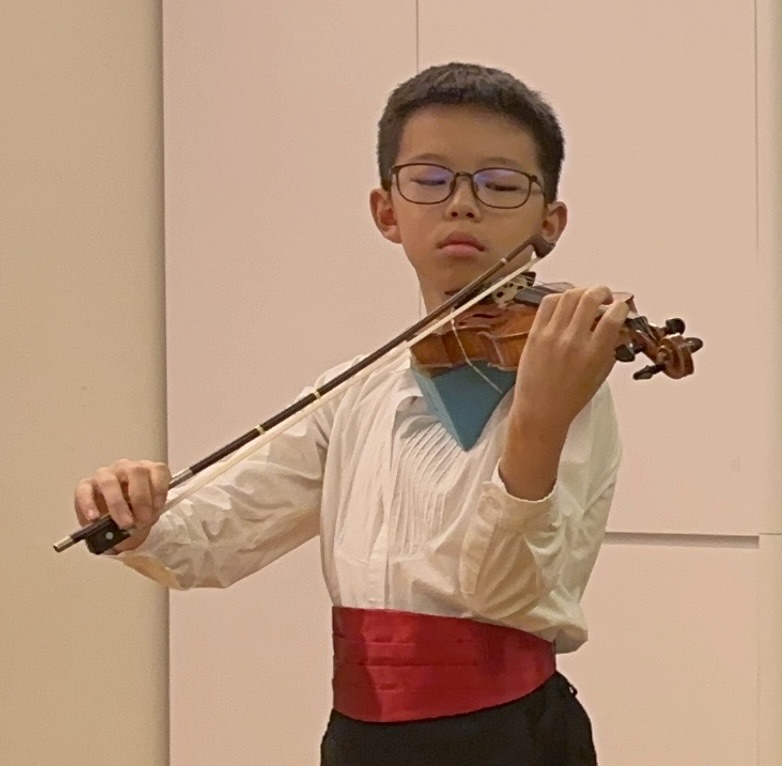
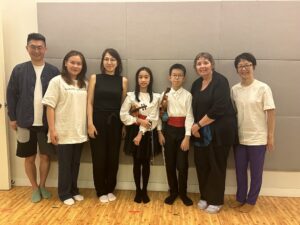
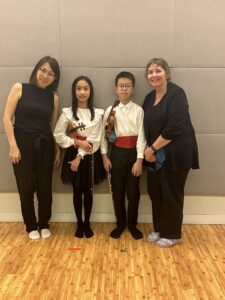
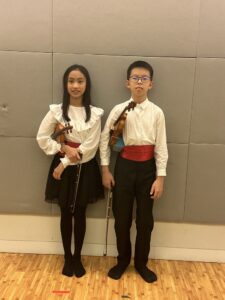
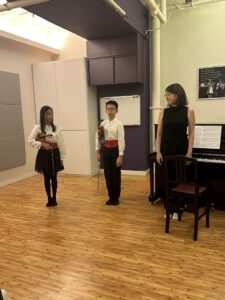
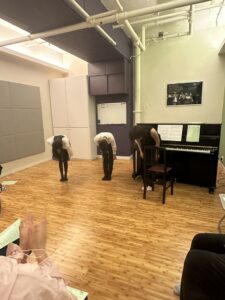
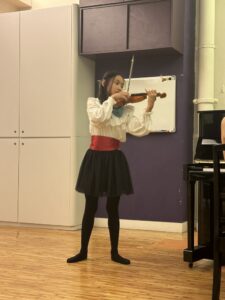
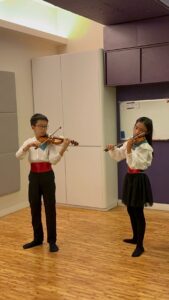
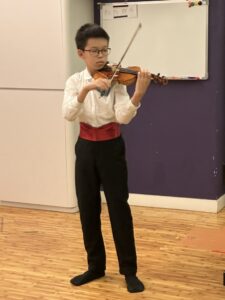
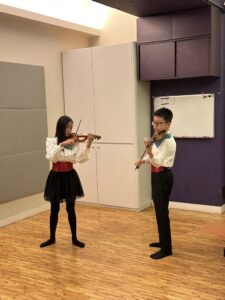
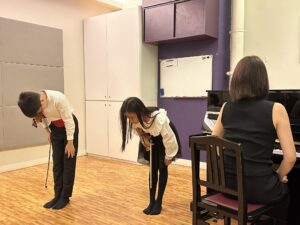
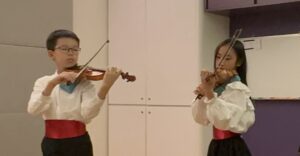
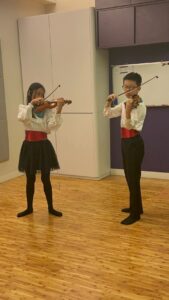
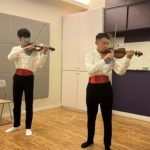
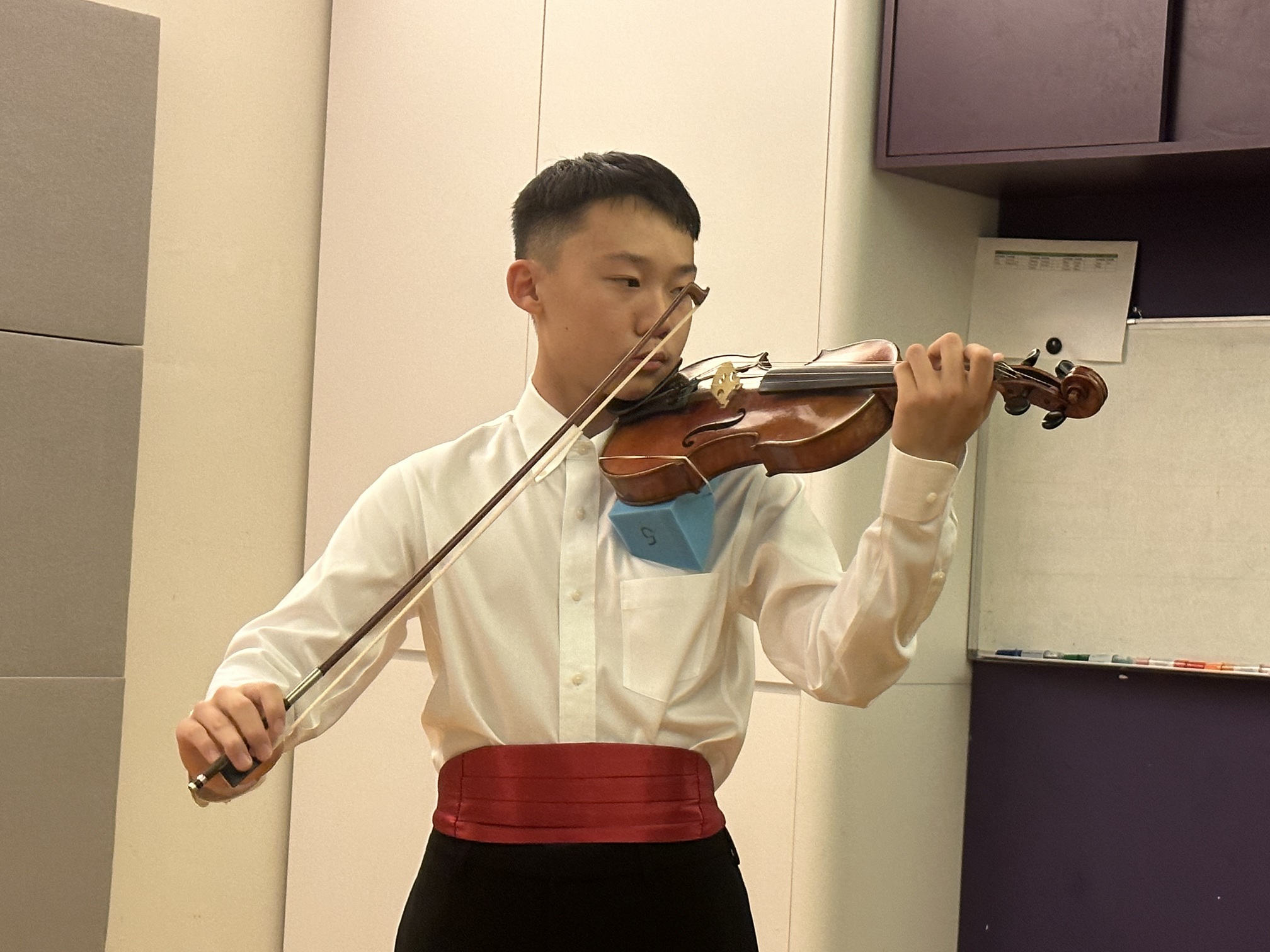
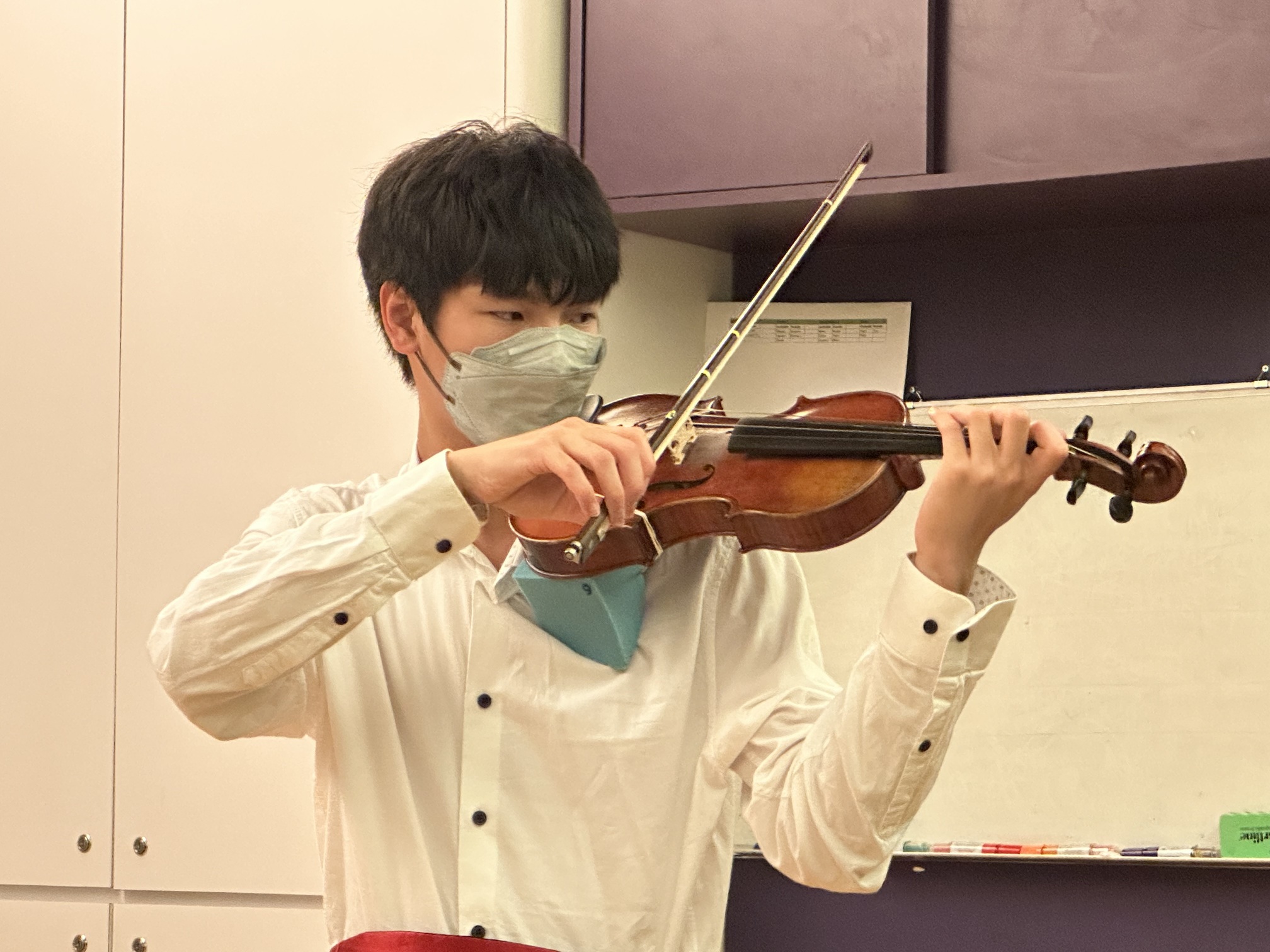
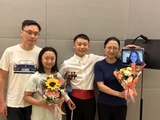
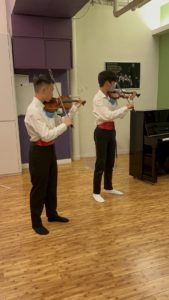
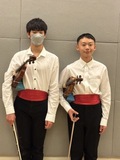
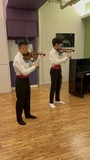
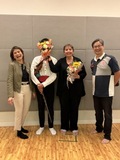
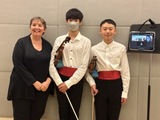
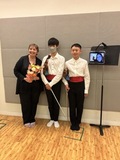
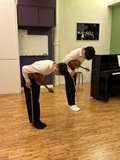
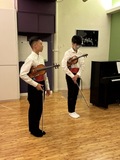
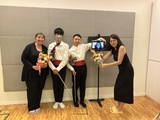
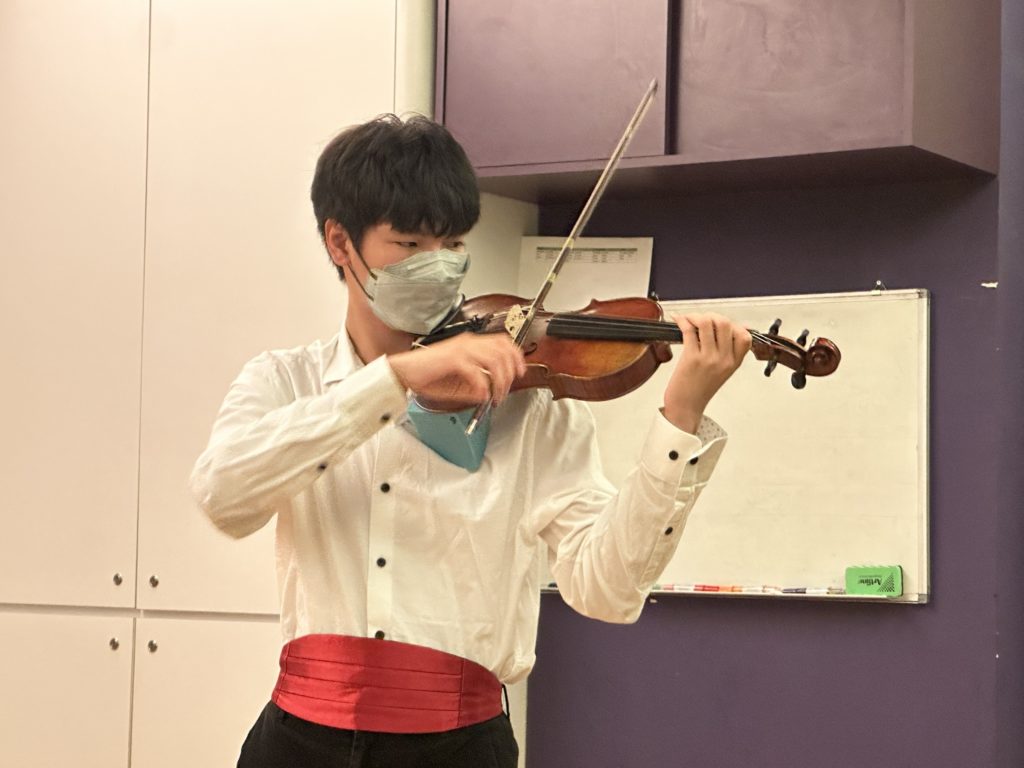
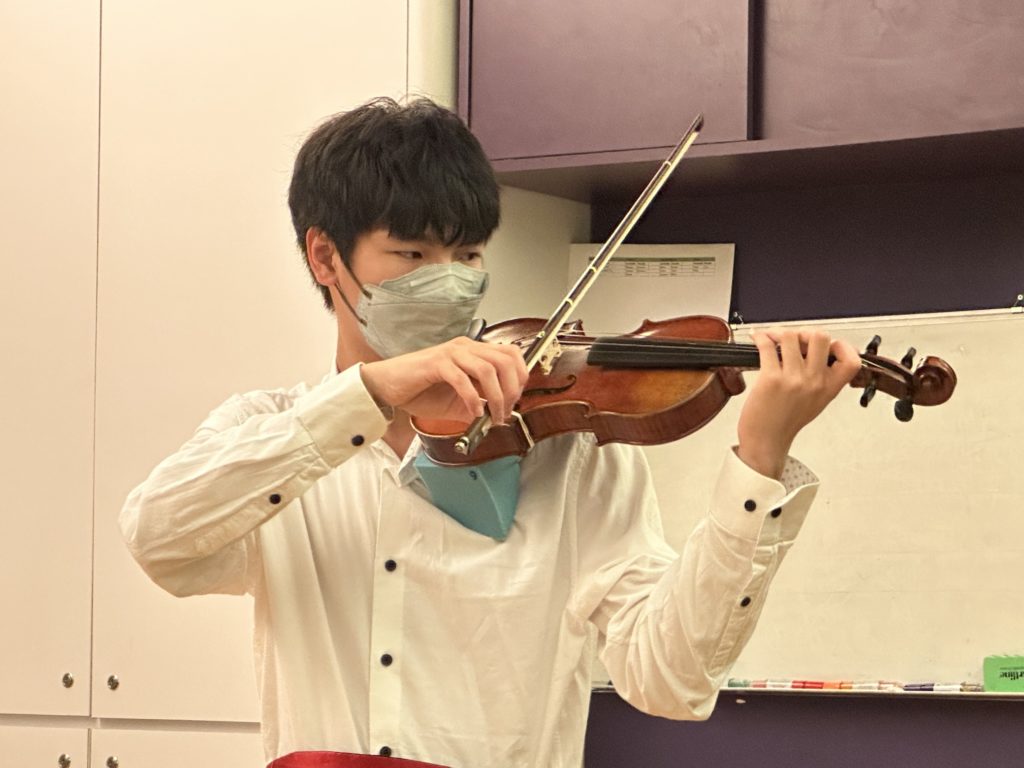
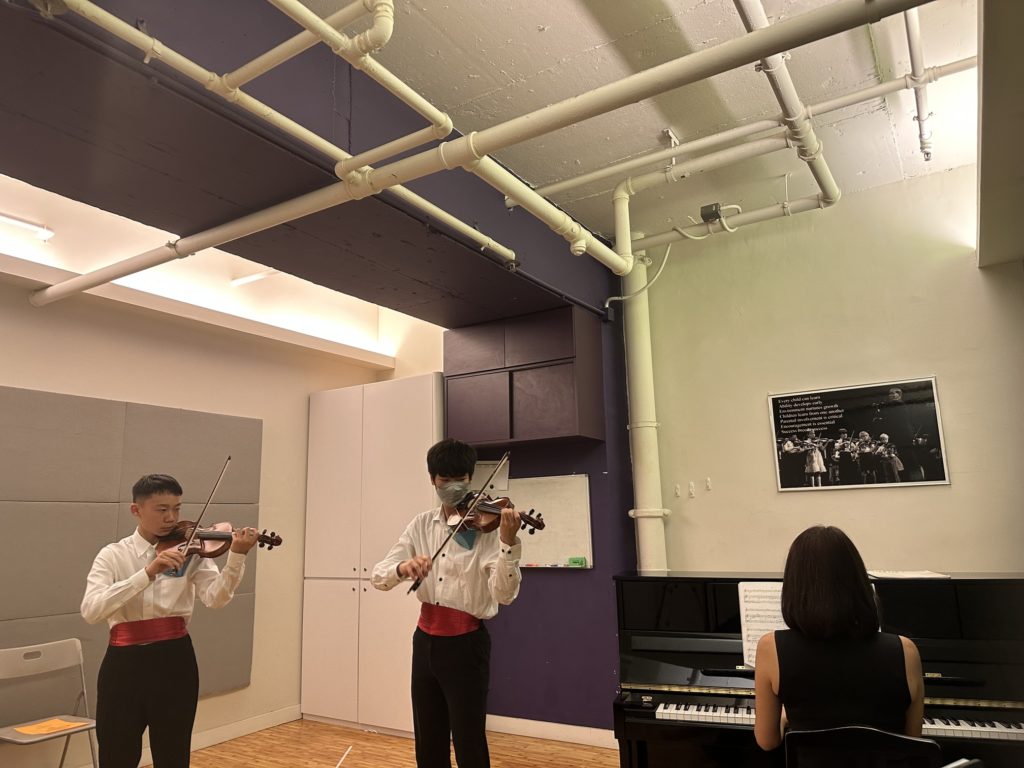
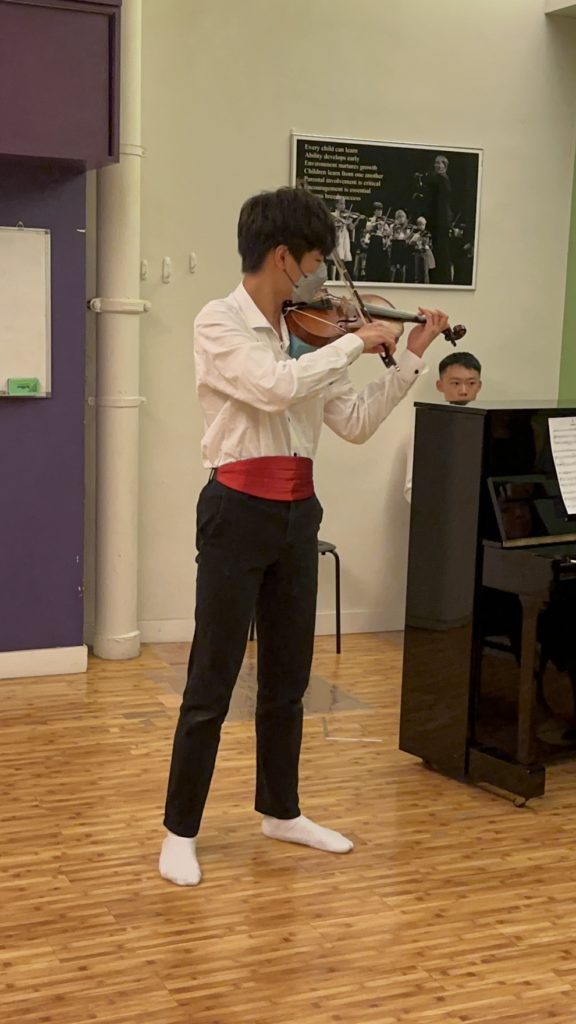
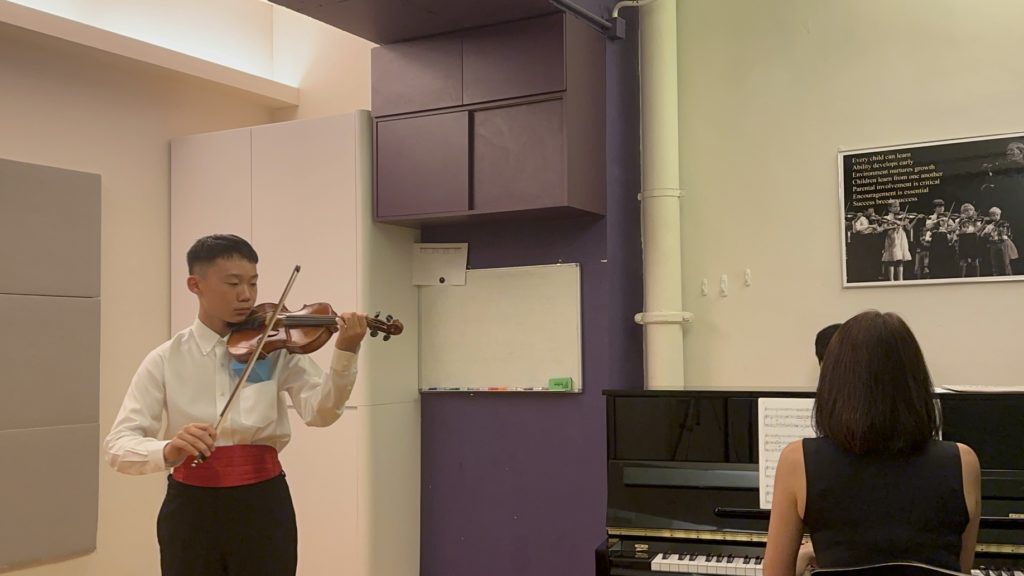
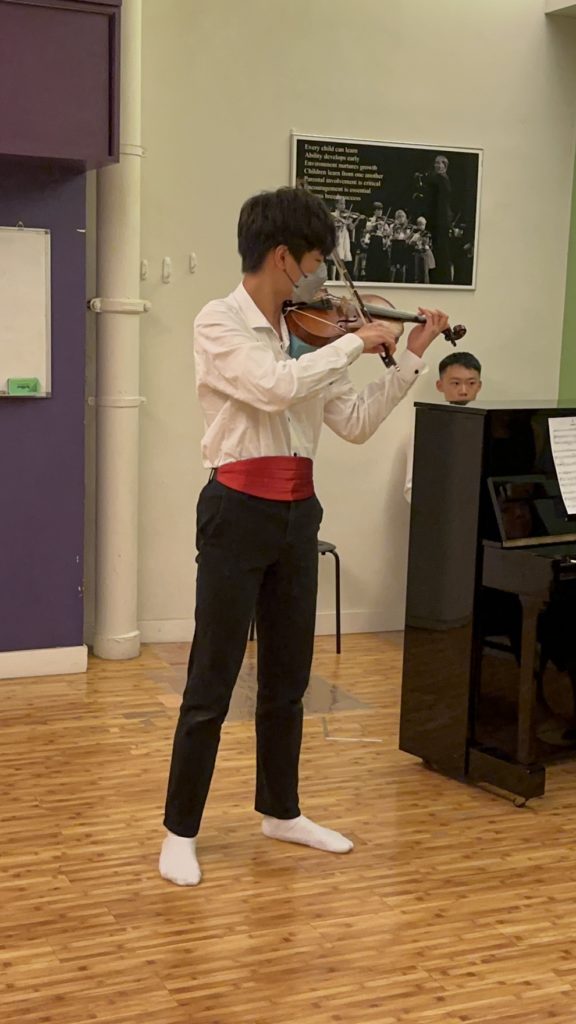
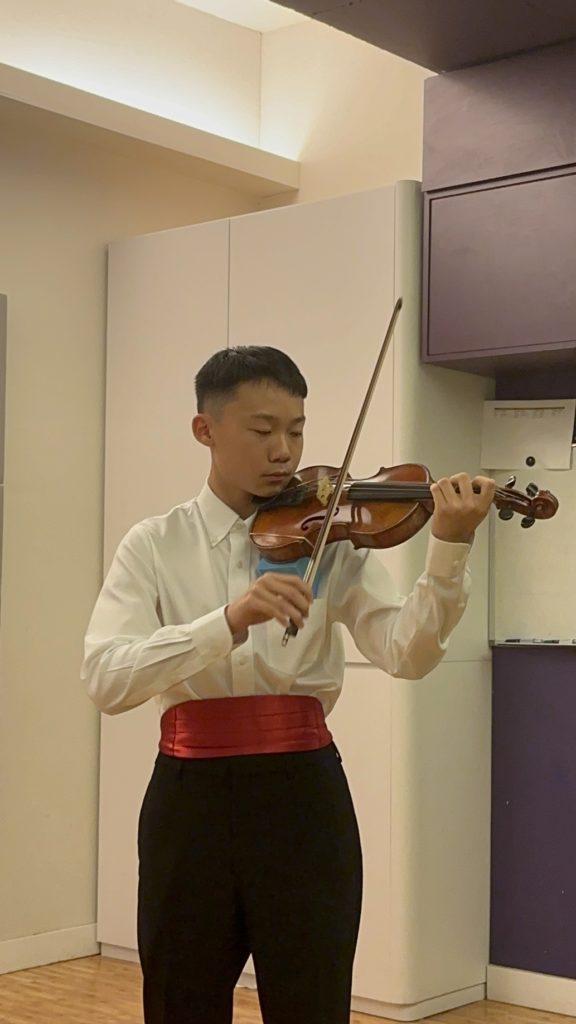
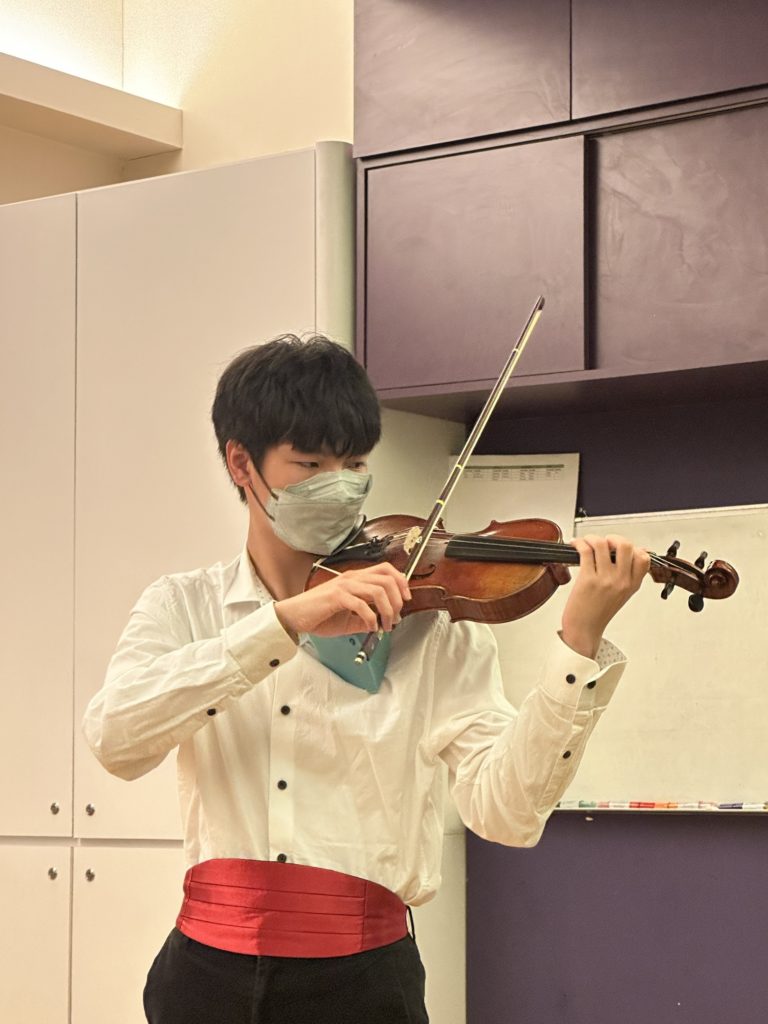
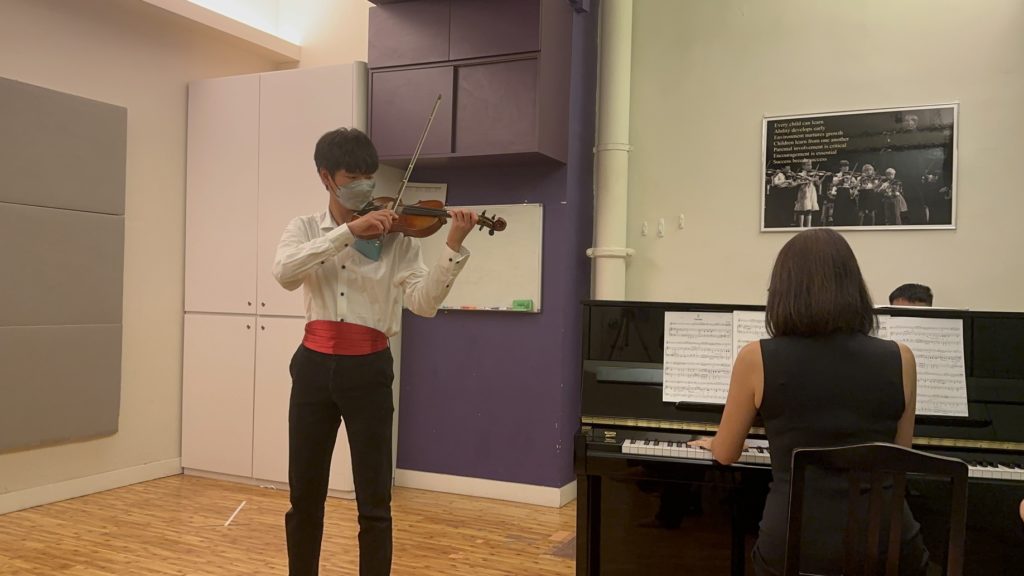
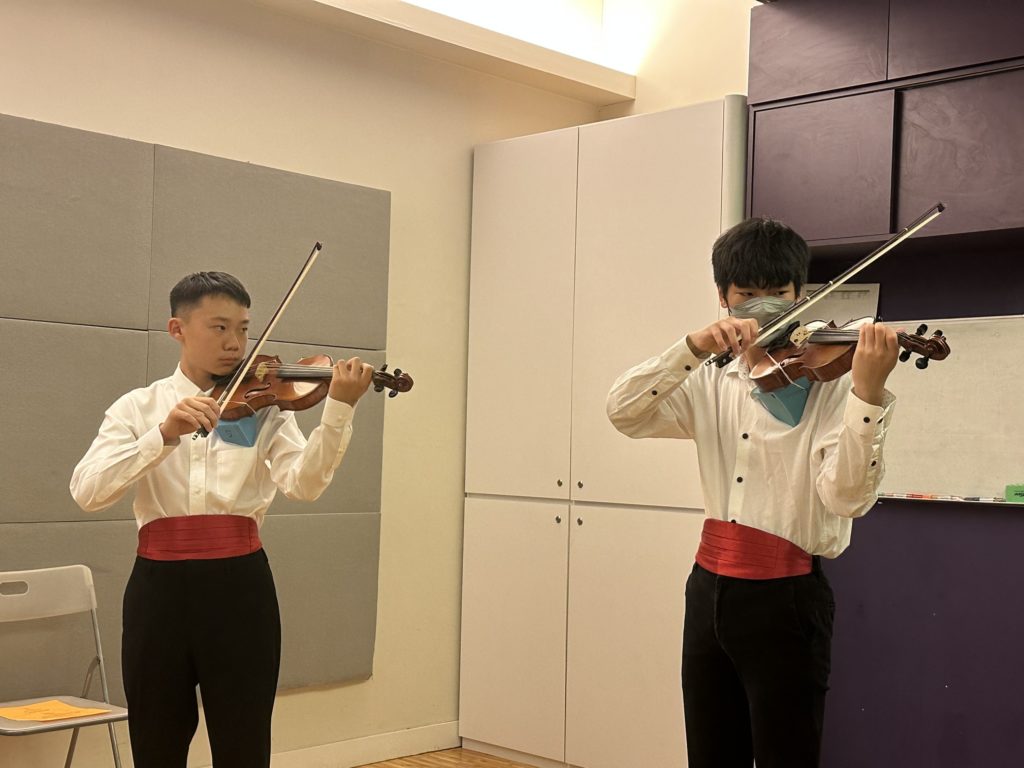
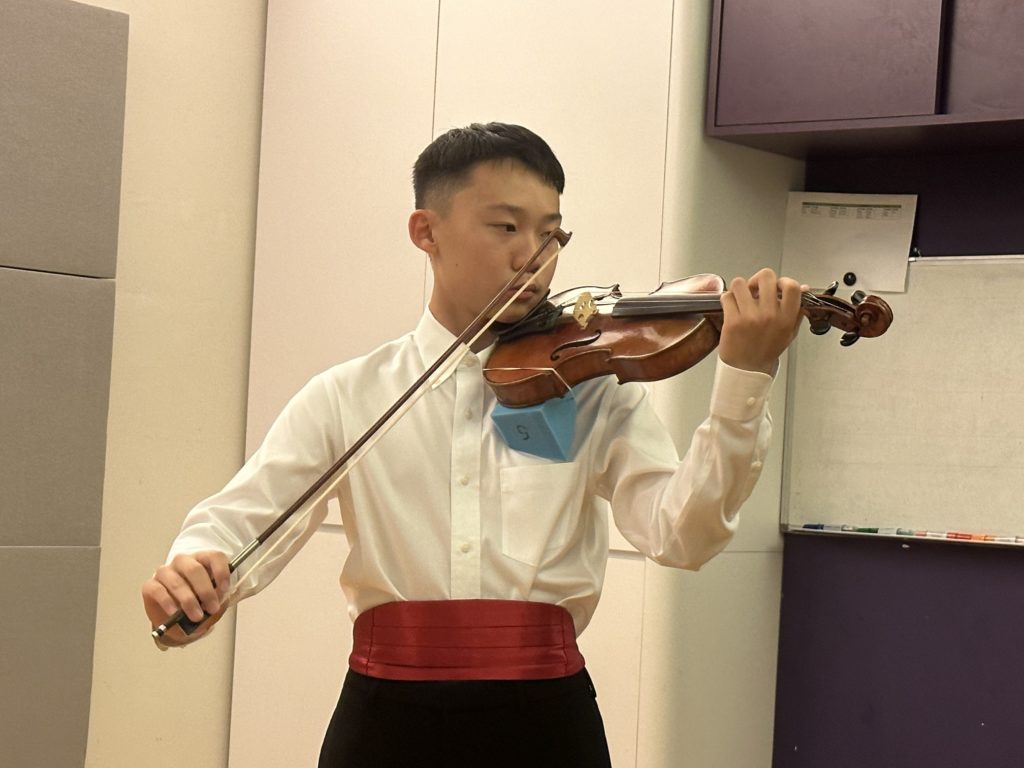
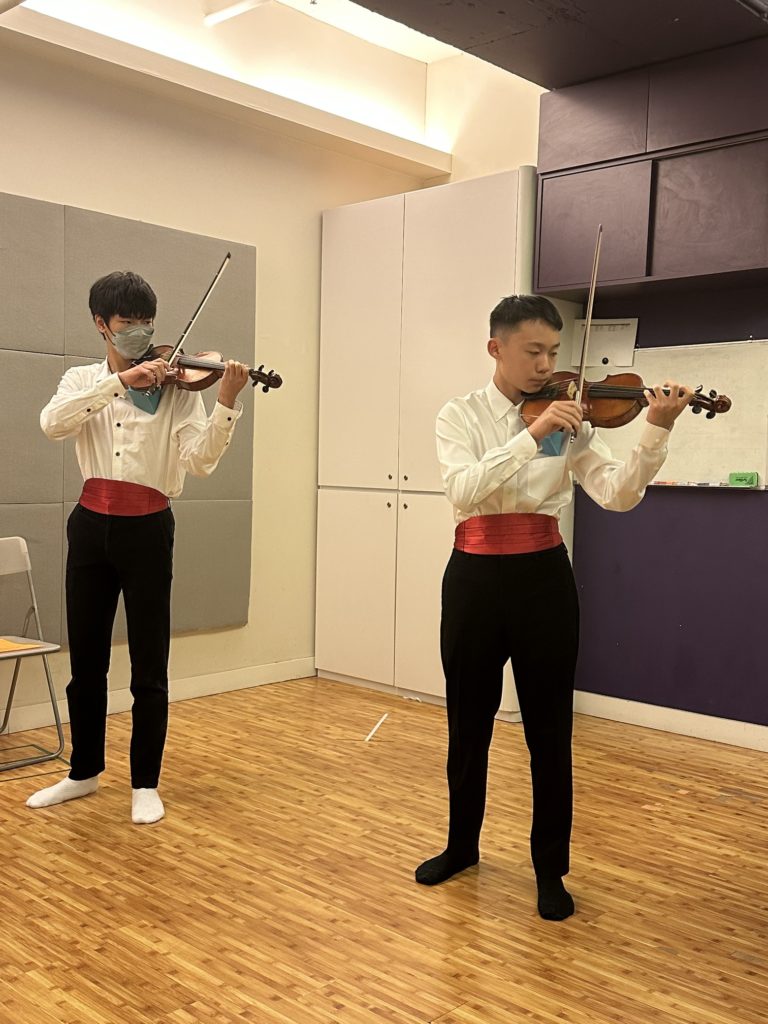
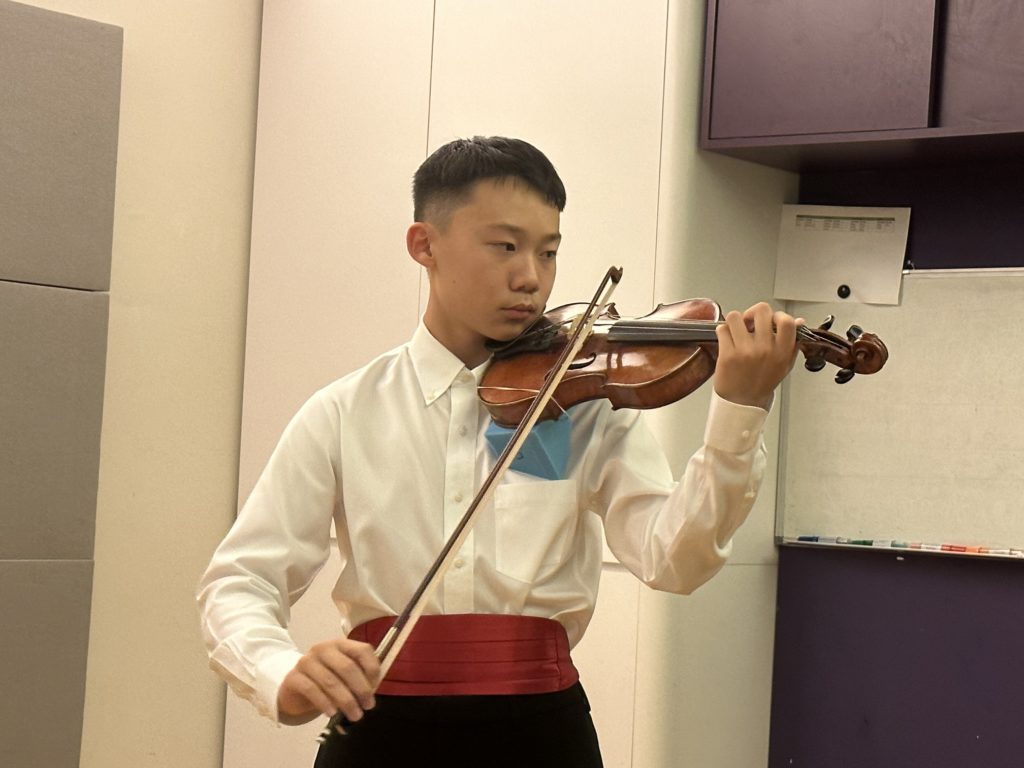
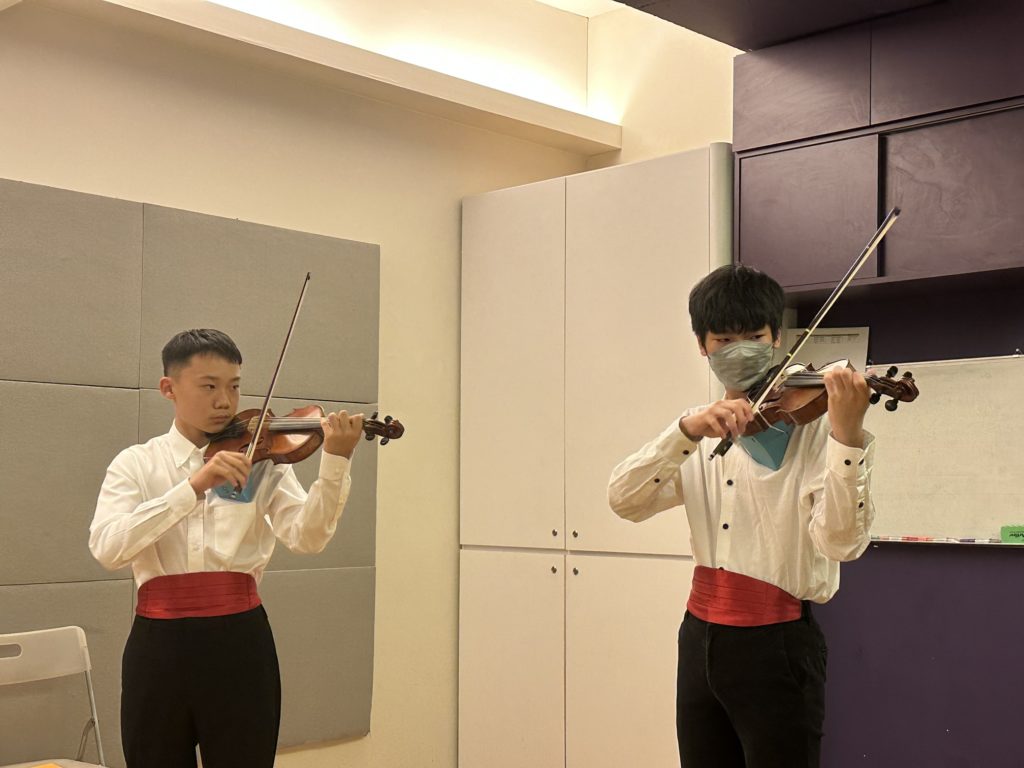
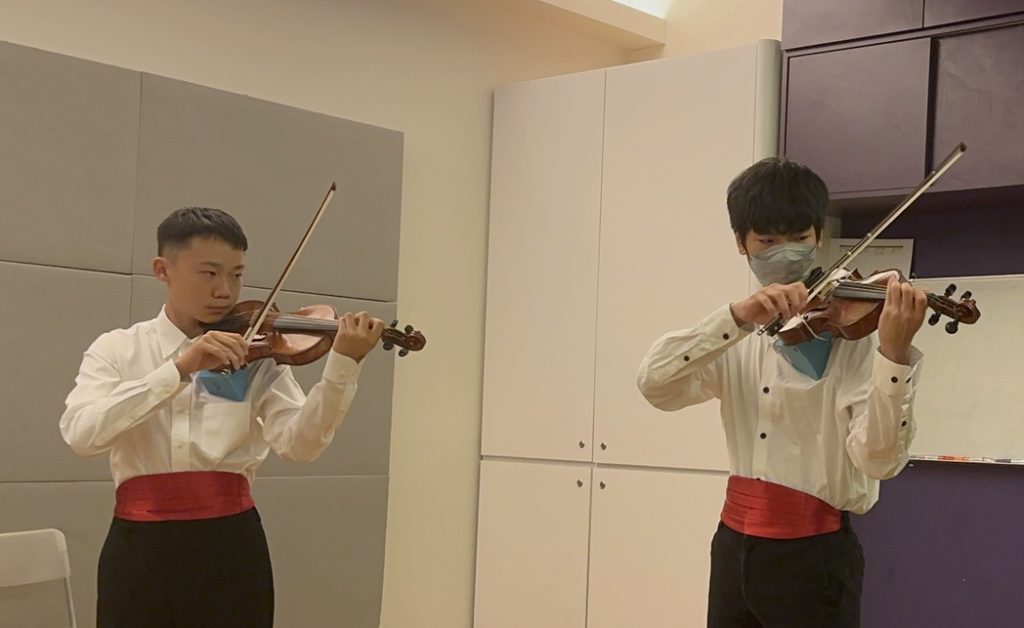
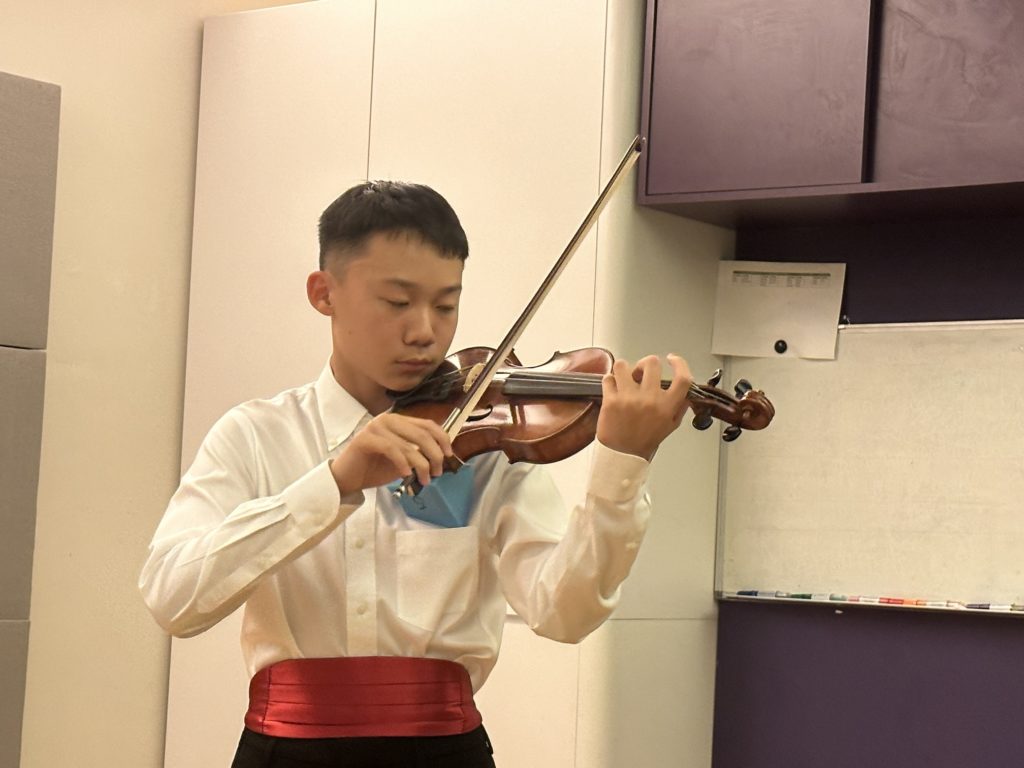
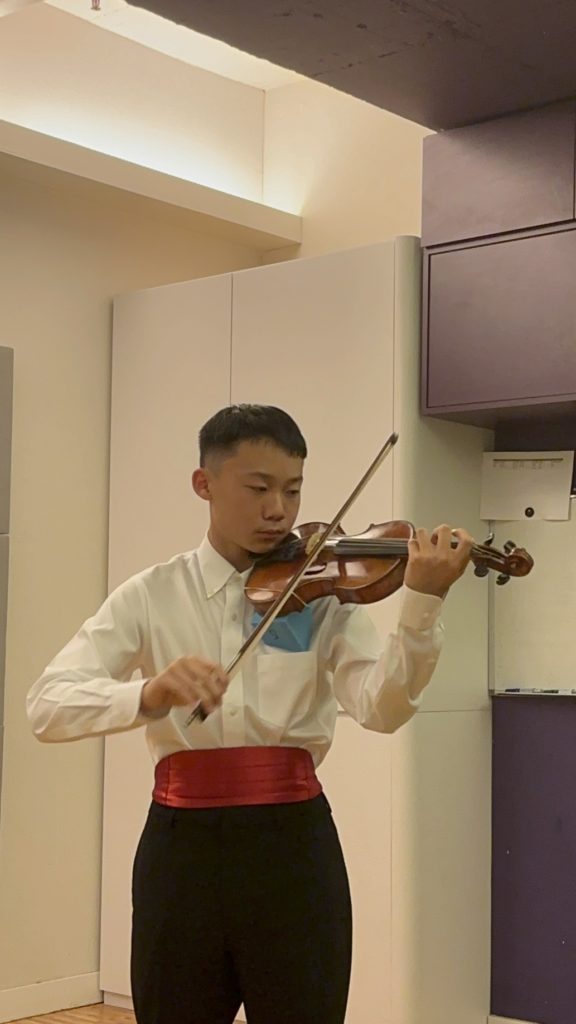
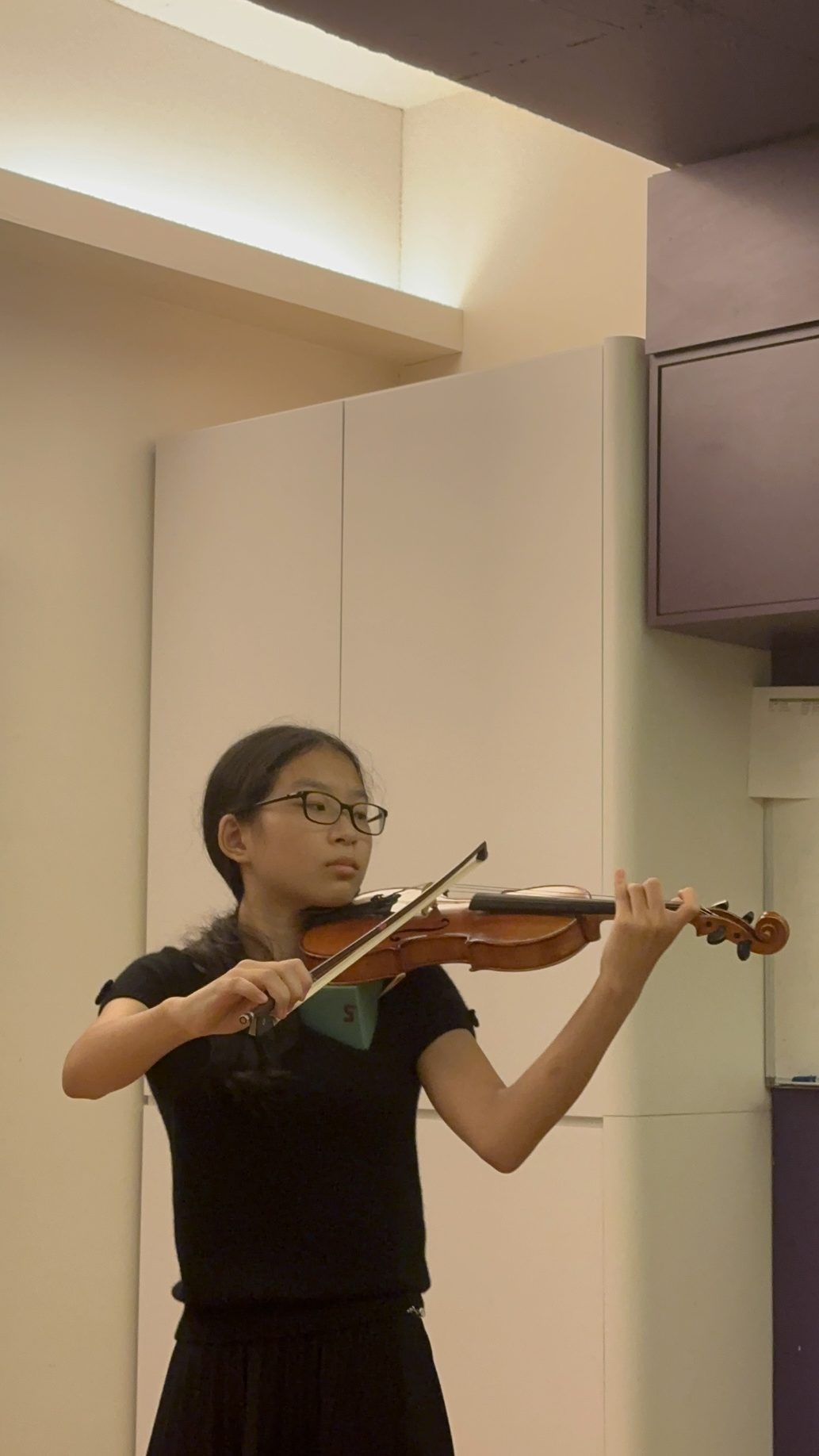
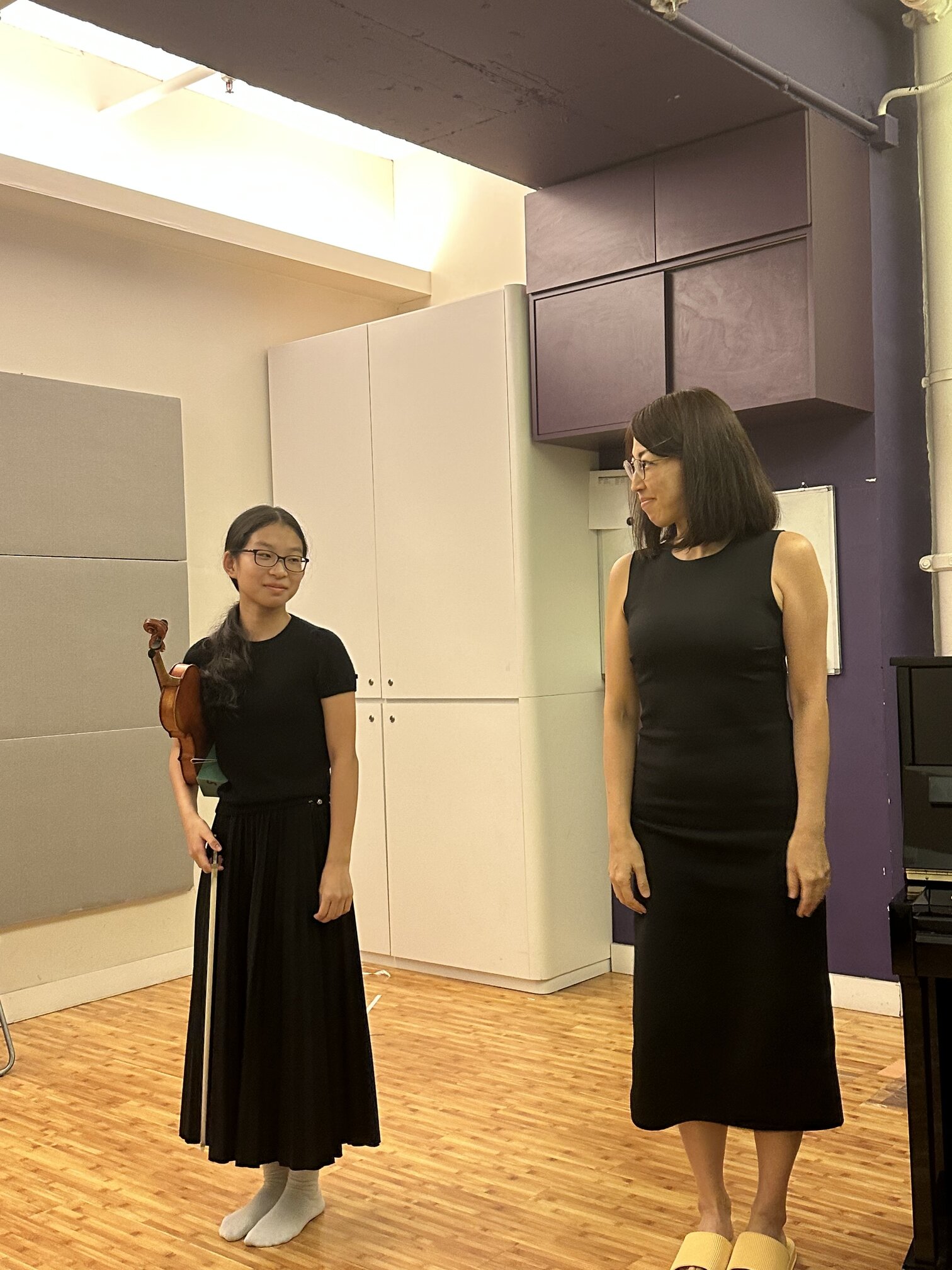
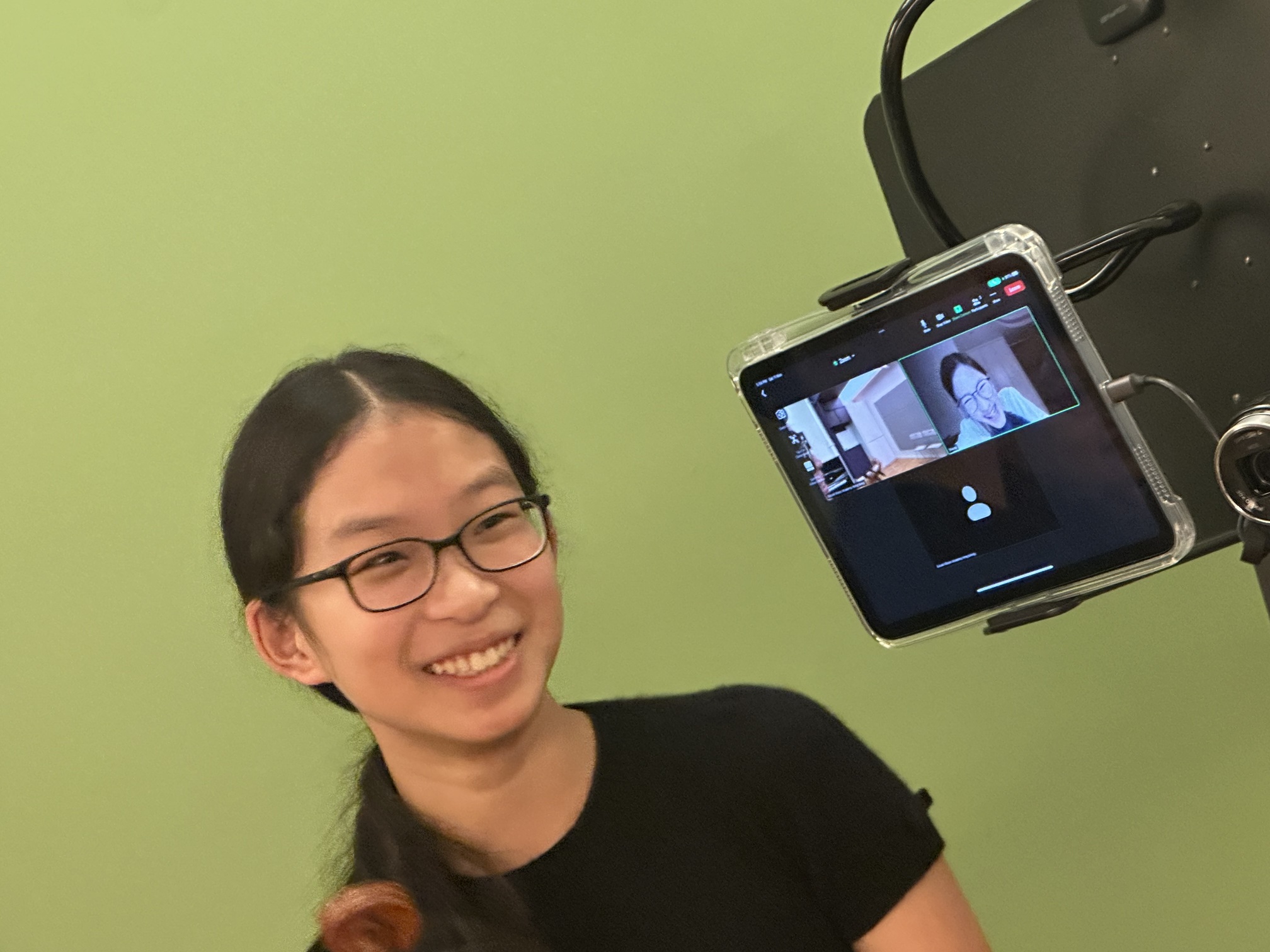
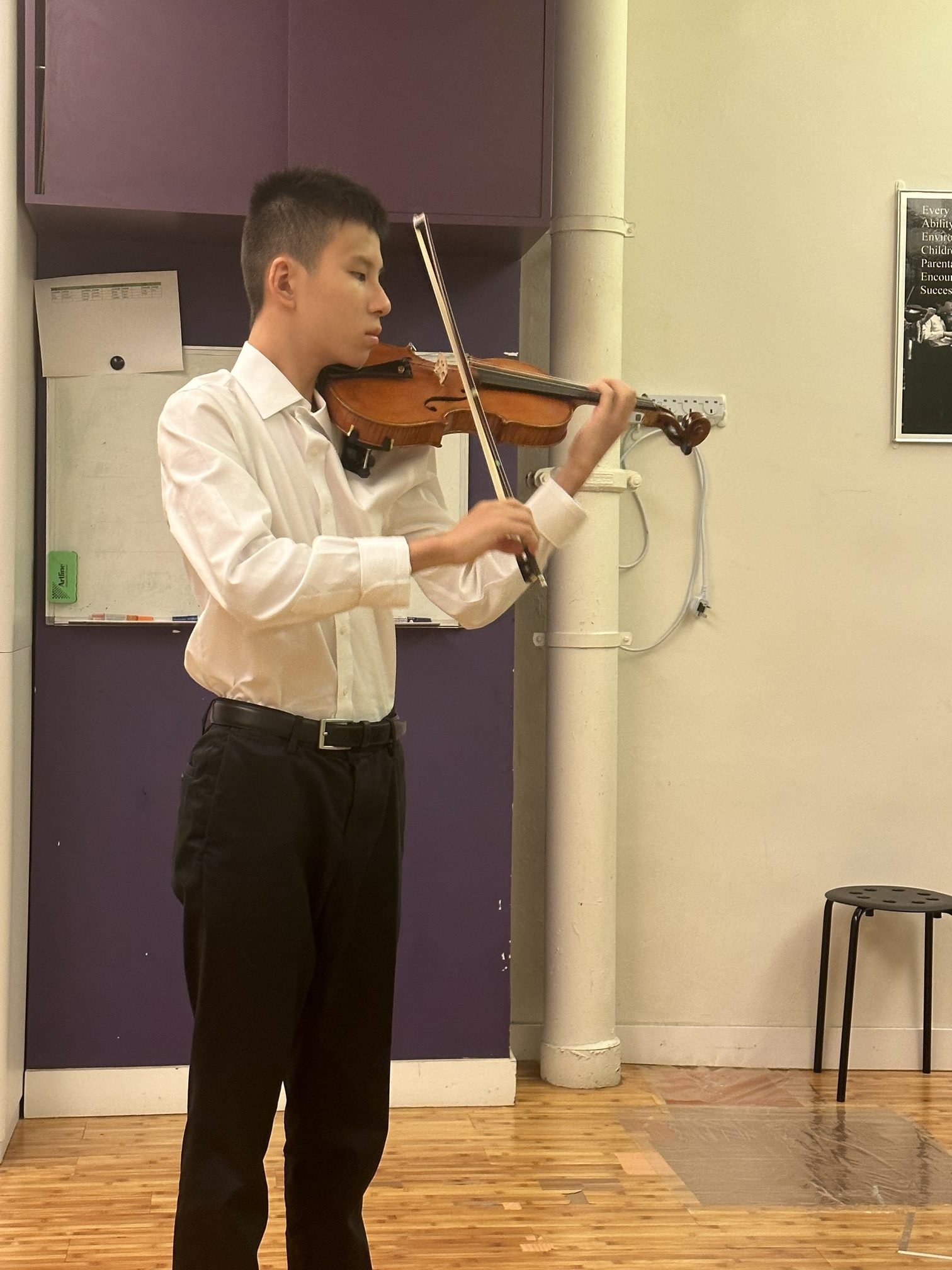
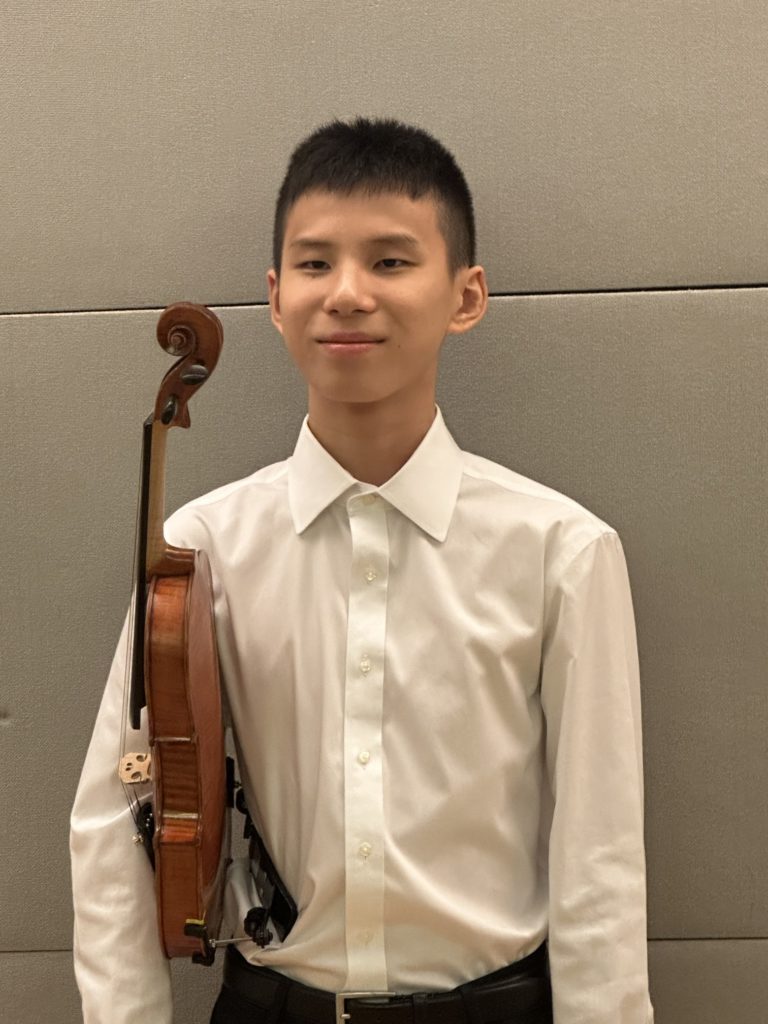
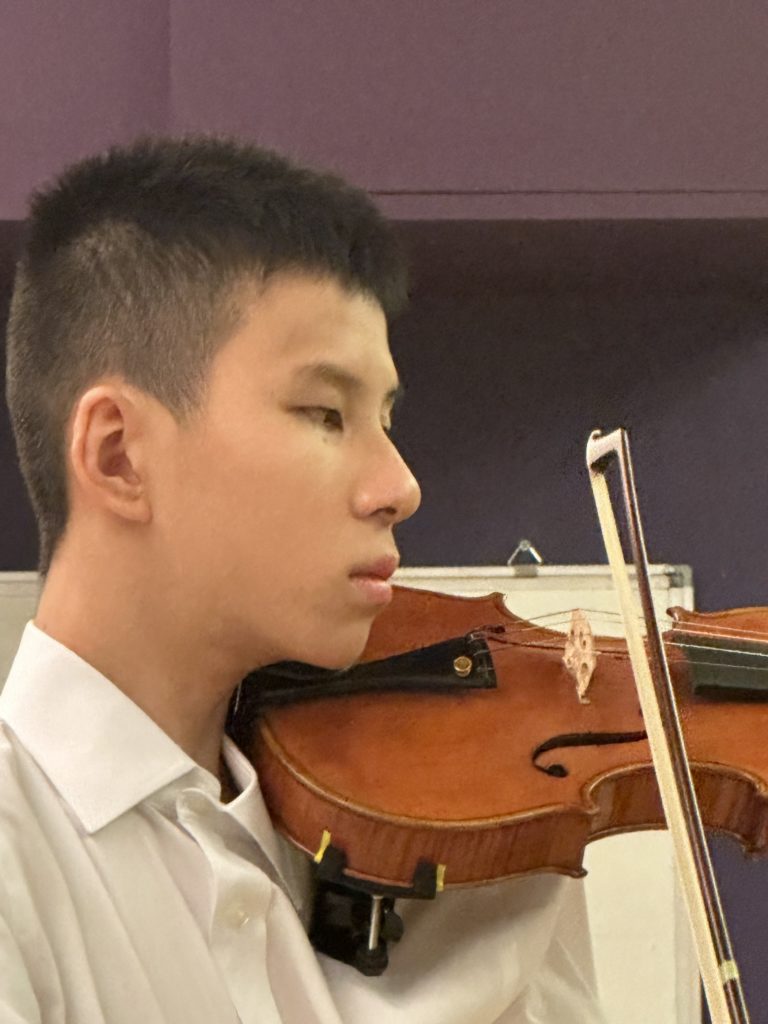
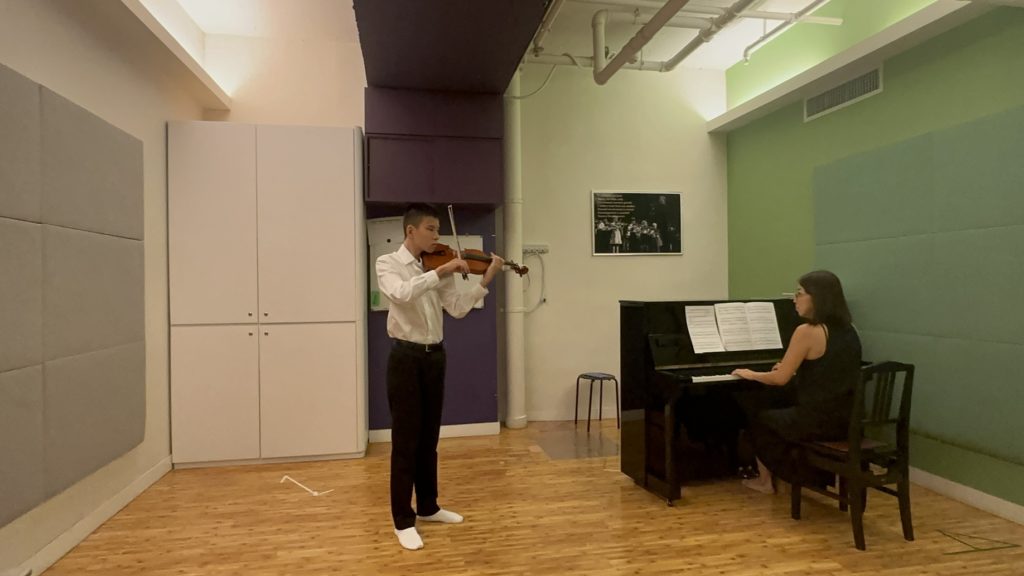
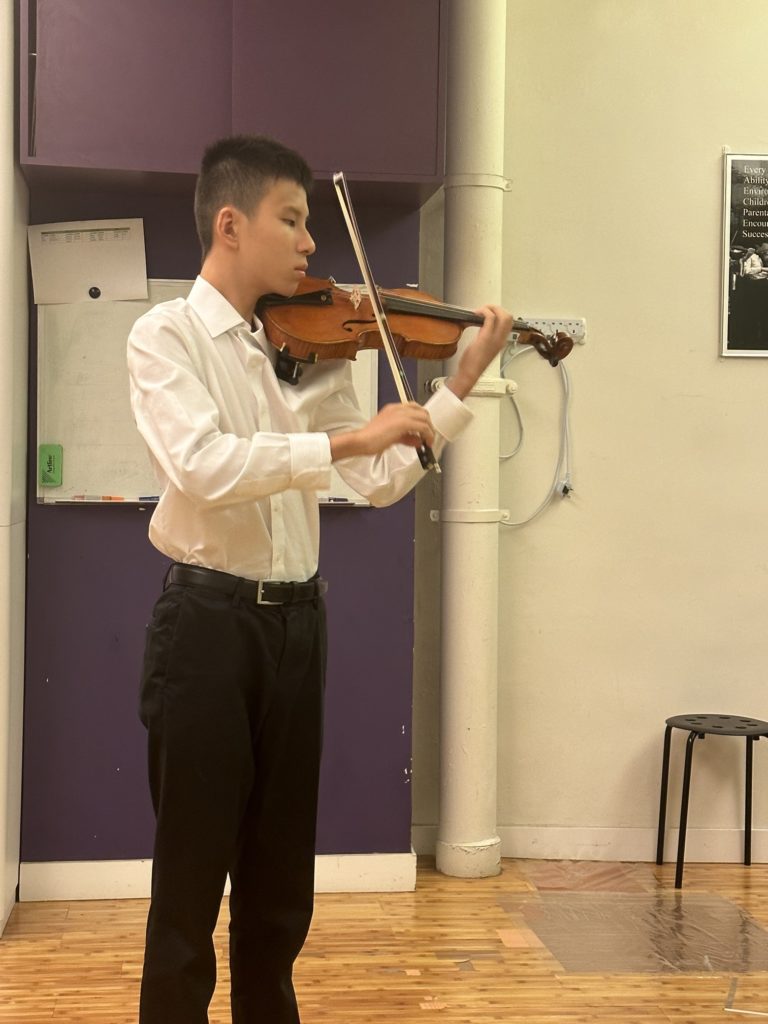
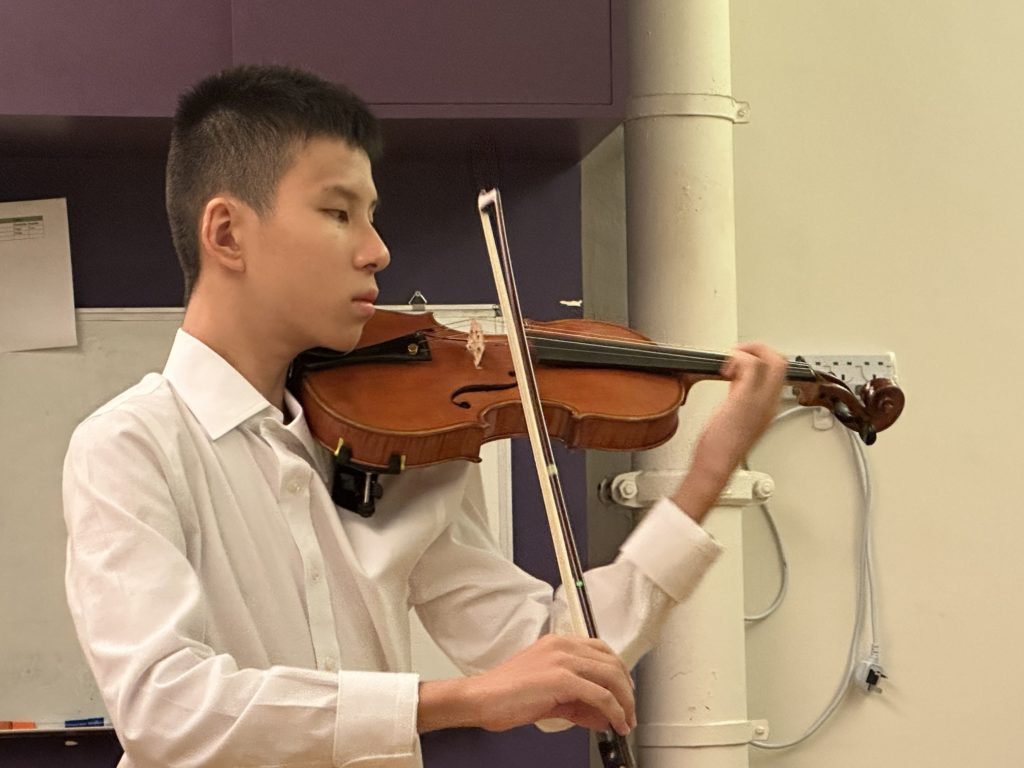
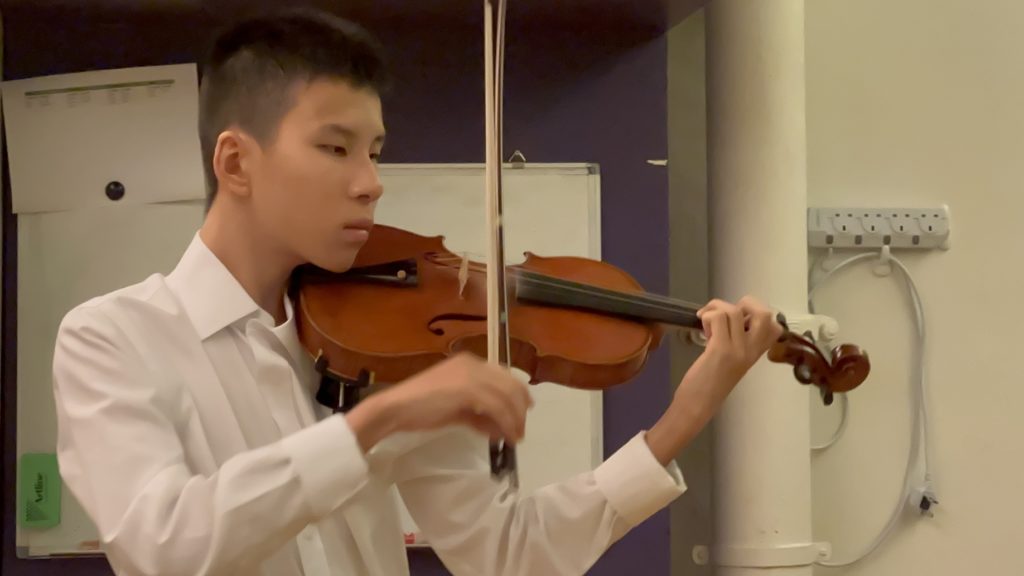
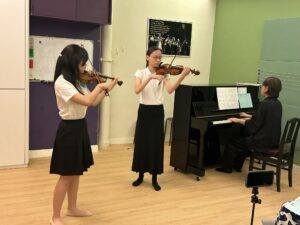
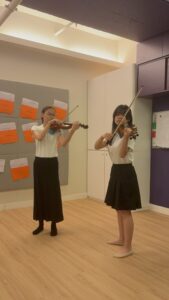
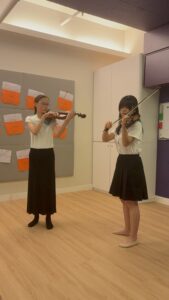
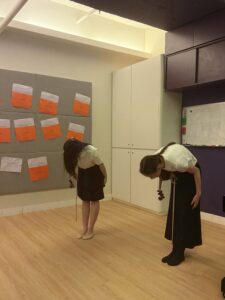
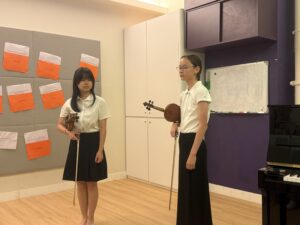
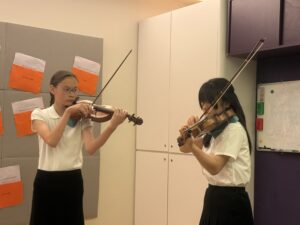
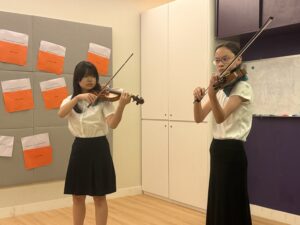
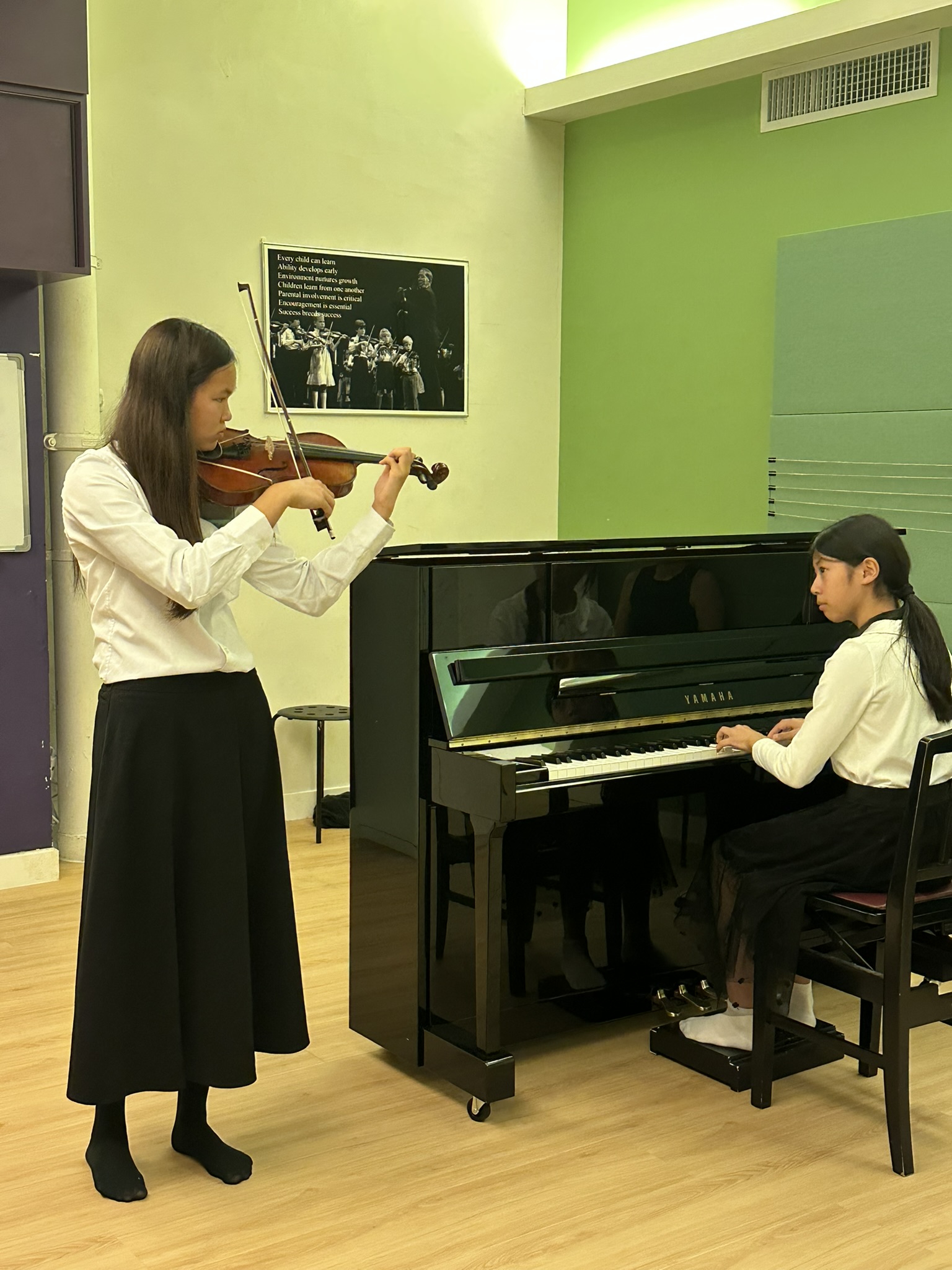
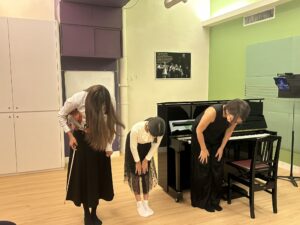
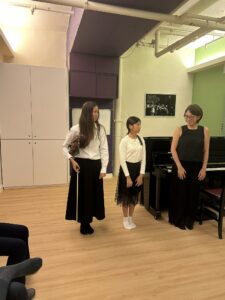
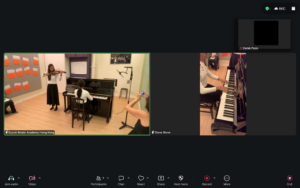
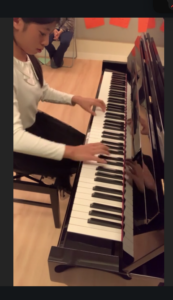
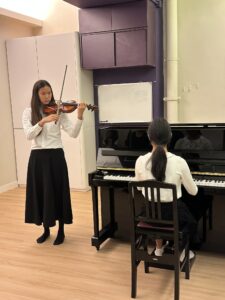
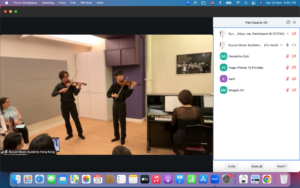
Ayden and Sander performed their Book 4 & 5 recital together. Quite an accomplishment, as the level of responsibility for this recital is quite a bit more than students have had previously! Please enjoy their reflections on the experience.
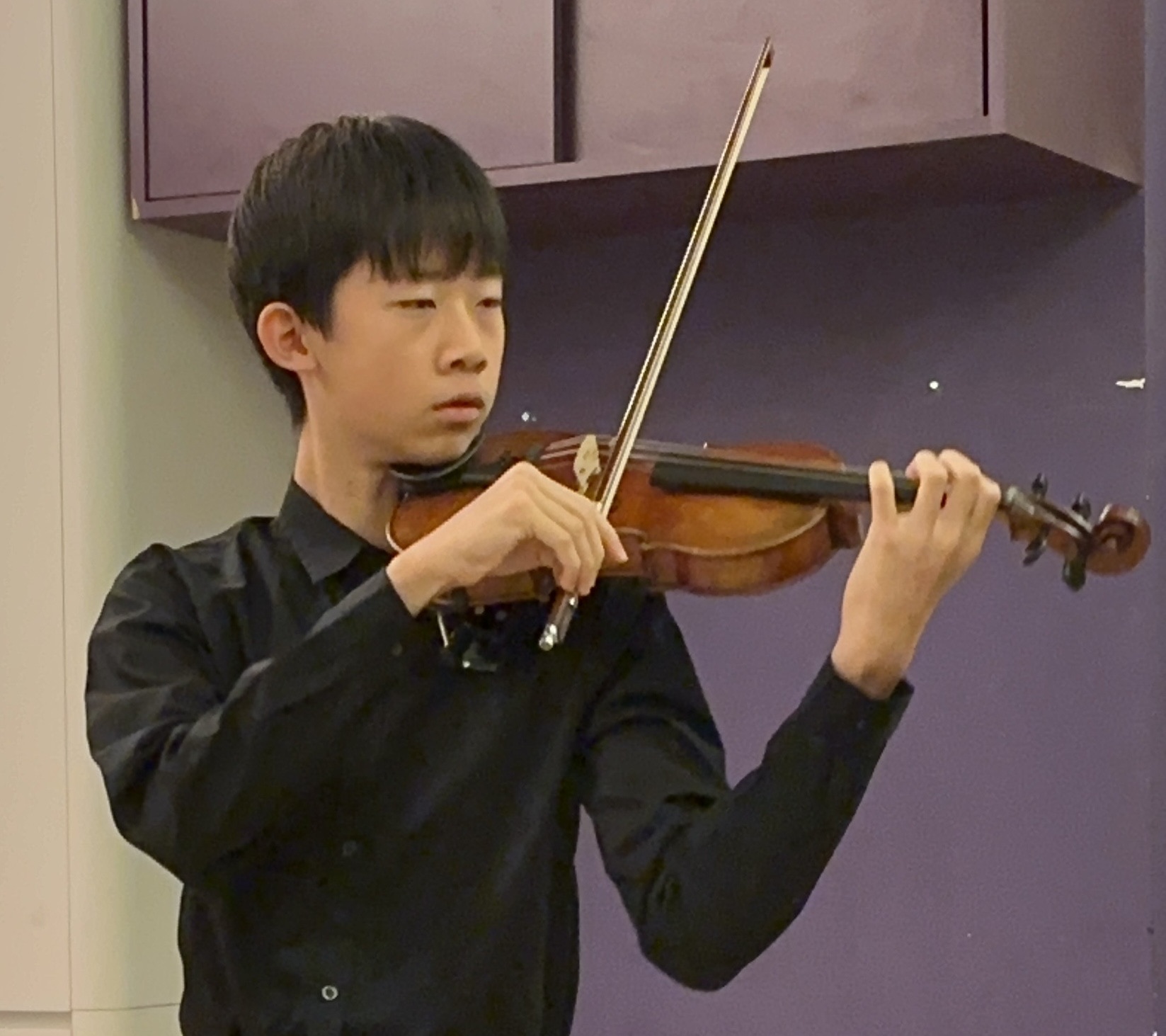
~from Ayden

This book 4 & 5 recital is very different from all my past recitals. It not only encompasses two Suzuki books, but also student-led responsibility. We are responsible for working on all joint pieces preparation and making plan independently without parent involvement. I had to organise multiple practice times together with Sander for our joint pieces before joint lessons. During this process, we encountered challenges, like how our schedules conflicted and how to make plans on individual practice for areas like tempo, dynamics changes etc. This is especially evident in Bach Double where we needed to pass the melody back and forth, and where we had to phrase different parts together which was difficult to work on.

Reflecting on the book recital, as I had dedicated extra time to commiting quality practice to my solo pieces according to Ms Diane’s comments from lessons. I felt the solo pieces, although at the start had a lot to work on, were not very challenging during the recital. One of my favourite moments during the book recital was having the opportunity to perform the entire Vivaldi Concerto. This became my most memorable solo piece. The Vivaldi Concerto starts from Allegro, to Largo back to Allegro. This big change in mood required me to spend enough time to change the atmosphere before starting. I thought I have done it smoothly during the book recital. Furthermore, I also thought that I had used vibrato and created dynamic contrast well throughout to help set the atmosphere. 

Overall, I enjoyed the process of collaborating with Sander as a new student-led experience and felt our work and dedication towards performing during the recital to be accomplishing and successful.
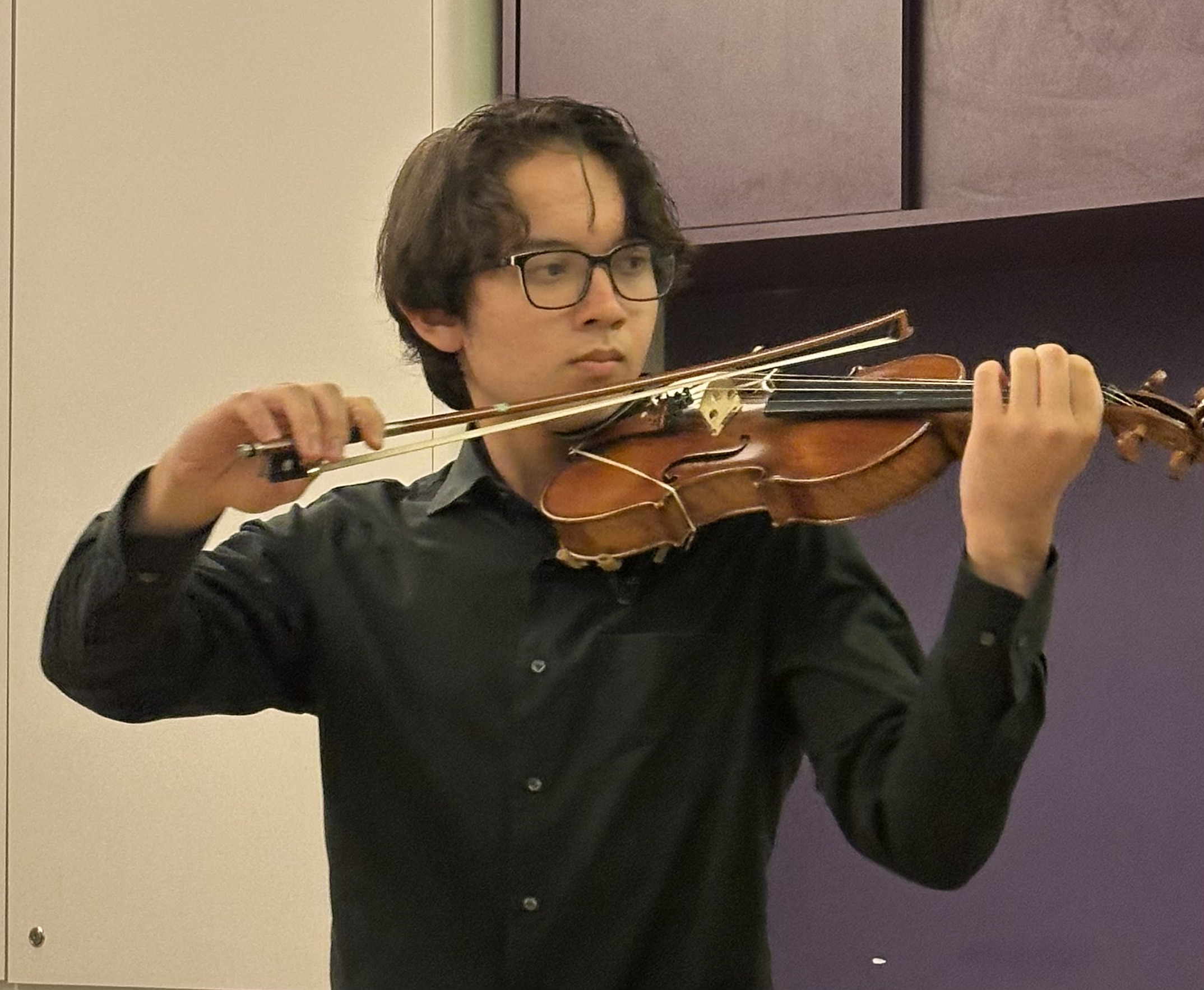
~from Sander

Looking back on the process as a whole, I have a few large takeaways, a few of which are positive, and a few of which are areas of improvement. 

Firstly, in terms of large ideas, I think that a positive of the recital was how well not only Ayden and I prepared (grew to the occasion to efficiently and effectively do so) and performed the pieces sounding in most cases together. In terms of a large area of improvement that I would note, I think that in many of the pieces, the parts that had previously come out as areas for improvements sounded generally good, however, parts that had not had as much attention seemingly may have had mistakes in them while playing them during the recital, even if they had not in previous practicing.

Moving on into individual piece feedback, going chronologically, I felt that Country Dance was good in terms of the energy that I was able to bring out and character. Overall it felt solid, except for the rhythm section where I kept going back and forth (I suppose that is simply because I was not confident enough with it at the time). 

Next, in terms of Seitz (5.3), the piece overall felt good. I had a special focus on dynamics and character at the beginning, and I felt the articulation of the double stops was sound, however, I did notice that the tempo was not always consistent (i.e. the tempo did not get back to a tempo). 

Further, on Vivaldi (all movements), (similar to what we discussed in lesson) the parts of the piece that we focused on for significant amounts of time no matter if they were challenging or not, seemed to go well. This may have been slightly due to tempo shifts (similar to Seitz). As well, I knew immediately when I started the third movement that I had forgotten to leave the breath in between, even though it had been something we and myself had practiced and tried to internalize. 

Lastly, for German Dance my only notable comment on the piece was that it felt it was going well until I started to, I will say, overthink the fingering, and then it led to the piece sounding partially sloppy and incoherent.
Reflections of the Performers: Isabel & Chloe Book 2 Recital

June 19, 2024 By Suzuki Music Academy of Hong Kong

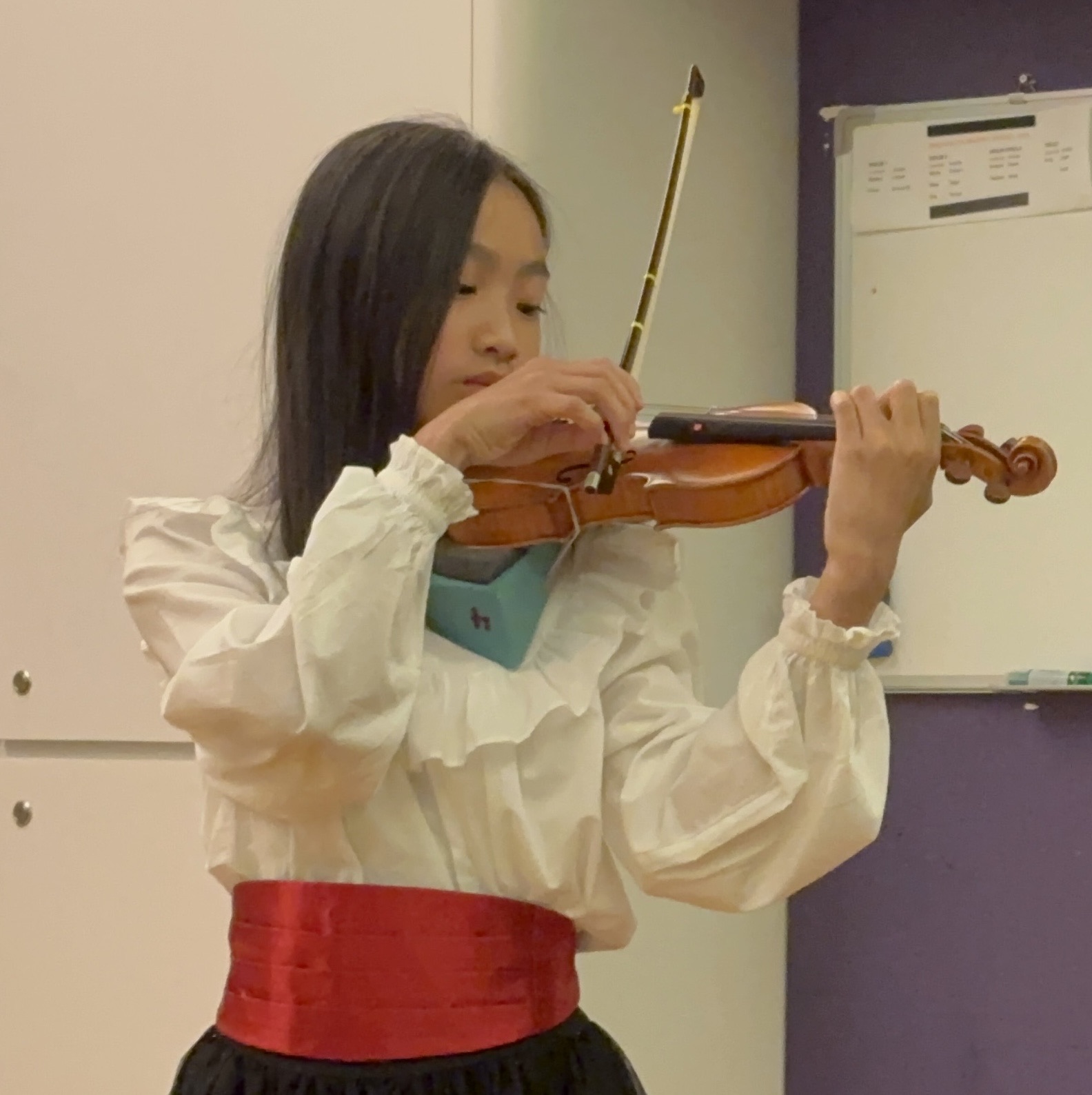
Chloe and Isabel gave their Book 2 Recital on the last Saturday of our Spring Term! Here are their reflections on the experience:

~from Chloe

    I was really excited when I heard my partner was Isabel, since we did our Book 1 Recital together too!
        Isabel and I were both really nervous in the beginning, since there were 5 guests who came to watch, and it was a lot more people than in the dress rehearsal. Consequently, during the first piece—Happy Farmer, Isabel forgot that I was leading, and led the bow, and gave the cue. So of course I was really confused, and messed up the beginning. Fortunately, we somehow managed to start again, with me giving the cue, and the rest of the piece went really well. 
        Our other two joint pieces—Twinkles and Musette was really good. In Twinkles, we both remembered to have eye contact after every section. In Musette, we didn’t forget to do the dynamics and phrasing we were working on the last few weeks. The only thing I think we could have done was a bigger retard and diminuendo in the end.
        I think part of why the joint pieces were really great, is because we practiced them over and over during all the joint lessons, dress rehearsal, and our practice-playdate. Yup! On June 10, Isabel went over to my place and we practiced all our joint pieces with our concert dress on! After 45 minutes of practice, we decided that we were fine, and started to play games! She even stayed for lunch! 
        Anyways, back to the recital. Slowly but surely, I got more confident throughout the performance. I think my best piece that day was Two Grenadiers, since I used my whole bow, did the crescendo, and used my elbow for the up bows, to create a grand forte sound. I also really liked Chorus from “Judas Maccabaeus”, because I used my thumb and elbow together to create beautiful tone. In Boccherini Minuet, I did a lot of dynamics in the C, D, and E sections, but I could definitely make the trills sound clearer. In Hunters Chorus and Gossec Gavotte, my eighth and sixteenth notes were kind of mushed together. I really liked Gavotte from Mignon’s pizzicato ending as well. I did elbow circles, and pulled the strings sideways. 
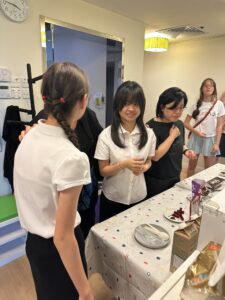
        After the recital, we had a lot of snacks, drinks, and candy, at the reception. Everyone was just chatting, laughing, and eating. 
        Lastly, I want to thank all the people who have helped me make this recital happen. Ms. Diane, for teaching me all the pieces I performed. Ms. Marie Ann, for organizing everything. My family, for supporting me along. Ms. Sonomi, for collaborating with me. Isabel, for being a great friend and partner. And Isabel’s parents, for bringing the amazing food!
        All in all, the whole recital was a fun and enjoyable experience, and I look forward to my future Book 3 Recital too!

~from Isabel

I think that my book recital with Chloe was successful because we worked well and we could identify what problems there were in our joint pieces and we practised this more when Chloe invited me over to her house and we mostly practised Musette because we needed to practise being in sync. After that, we played with Chloe’s little sister and ate lunch. I think this was a very fun experience and I would like to do another recital with Chloe.

Reflections from the performers: Emma & Andrew Book 2 violin recital

June 6, 2024 By Suzuki Music Academy of Hong Kong

~ from Andrew

This recital did not go well in the preparation. I had trouble getting my violin ready in time for the practice before the recital; I even forgot to wear the formal clothes and had to re-wear them after I still wore my bright-colored shirt inside my recital uniform. I should have thought about how the clothes would be visible and distract the audience and show that I did not care about the recital, instead just wanting to get over with it.

         Then there was the group practice before the recital. We started great by reviewing the joint pieces together and after playing through the first two pieces, we poorly decided to practice our solos, which was not an instruction you gave us. I really should have listened because later on in the recital I had some trouble paying attention to the tone and listening to my partner.

         Lastly, there is the recital. I think our performance improved as the recital went on. I enjoyed how I listened to my sound to improve my tone. But for me there were some choke points in a few pieces; Ignored ones led to some problems later on as the same section repeated. Sometimes during the joint lessons, we could not remember the practice assignments and we had to review them again, which took a long time.

         The dress rehearsal was troubling for us to play with a good tone. So then I spent lots of time at home practicing tone and correct position so then the recital could go well.  Next recital I should prepare more as the pieces got more advanced as well and mistakes get harder to avoid.

~from Emma

I want to say thankyou to Ms. Diane, my violin teacher, for helping me through this recital.

I liked how I got to play harmony in Musette. Over all the years I have played the violin, the only time I had formally played harmony was for twinkle, so I was really happy when I found out I got to play harmony in Musutte. 

2 months to prepare for a recital seems like a lot at first, that’s what I thought at first. I made a big mistake, I didn’t practice because I had around 2 months to prepare, and pushed everything till the last minute. The few days before my recital, I had to sleep very late just to make up for the time I had lost.

During the recital I felt really nervous, I had spent enough time for people to think it is an average recital. But deep down, I know I could’ve done much better.

This was the busiest time of my life, I had to juggle practicing the violin, school work and practicing the piano for the last few weeks. It was supposed to be less busy, but I didn’t use my time well, and suffered greatly from it. But from this recital I learned a great lesson to never waste your time as you can never relive a moment of your life.

“Time is free, but it is priceless. You can’t own it, but you can spend it. You can’t keep it, but you can spend it. Once you’ve lost it, you can never get it back.” – Harvey MacKay

When I have my book 3 recital, I should plan out my time better, so I can have more time to rest, and still have enough time to practice my violin.

  • Screenshot
  • Screenshot

MusiCares visits the Home of Loving Faithfulness

February 6, 2024 By Suzuki Music Academy of Hong Kong

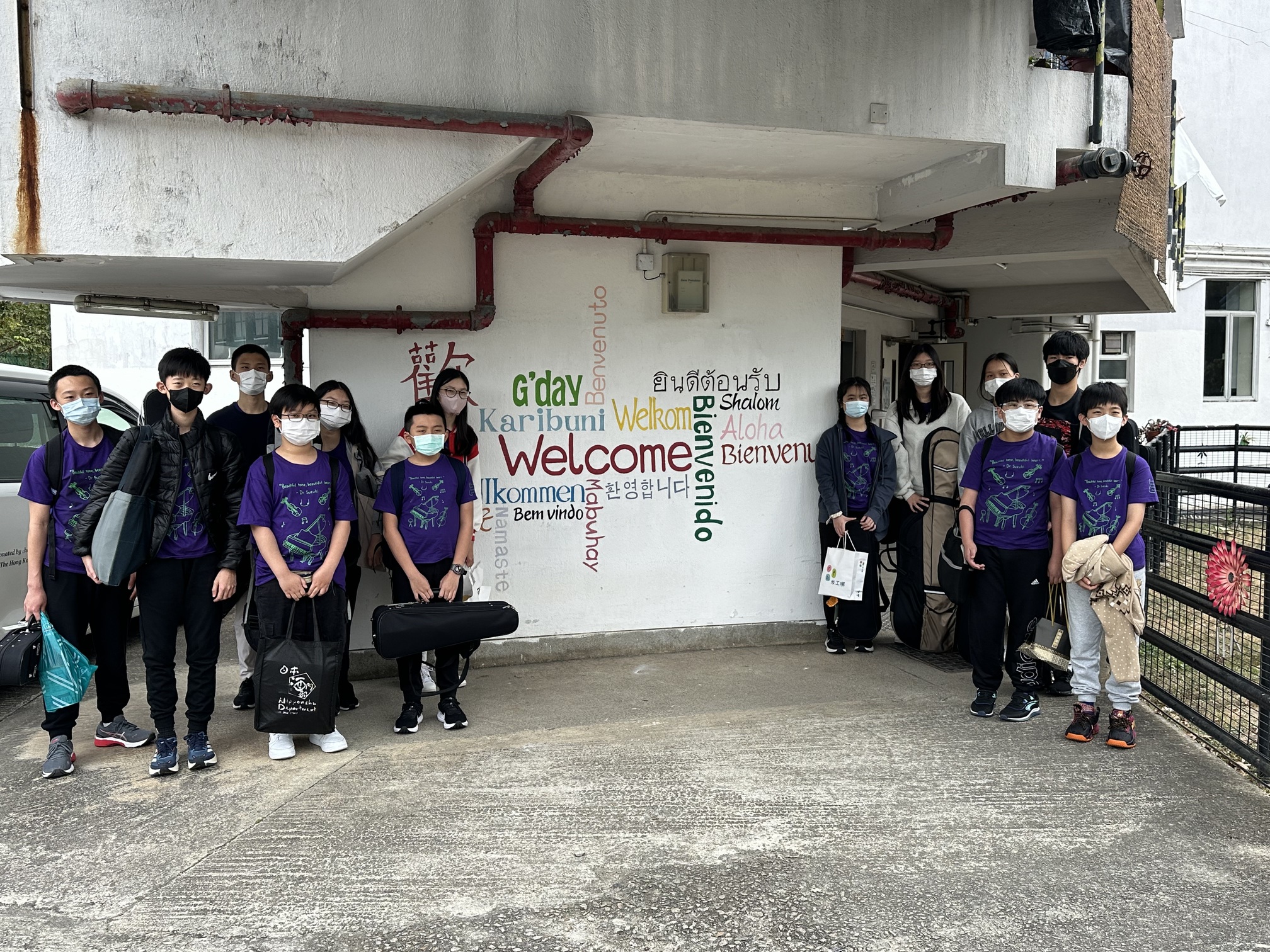
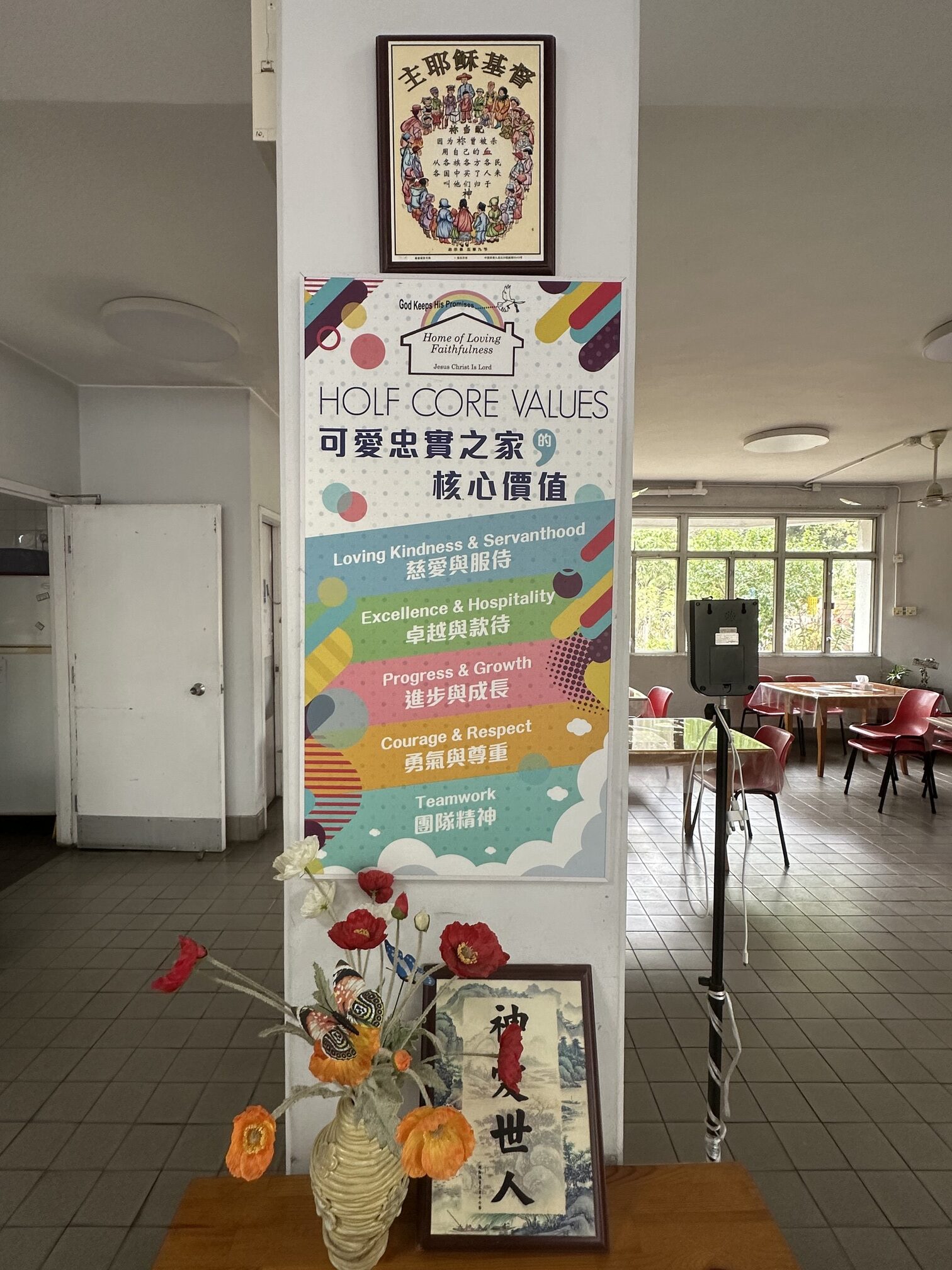
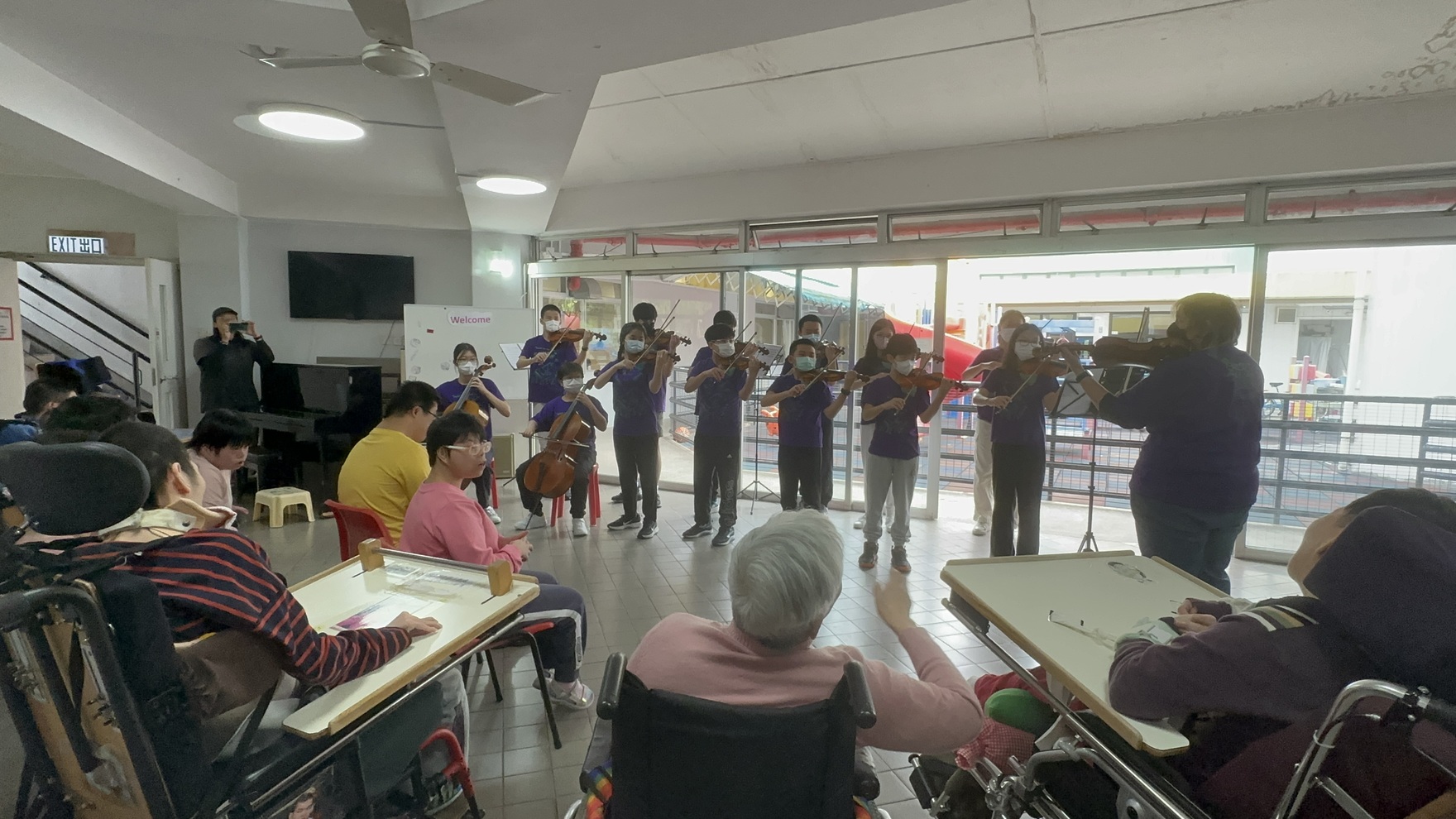
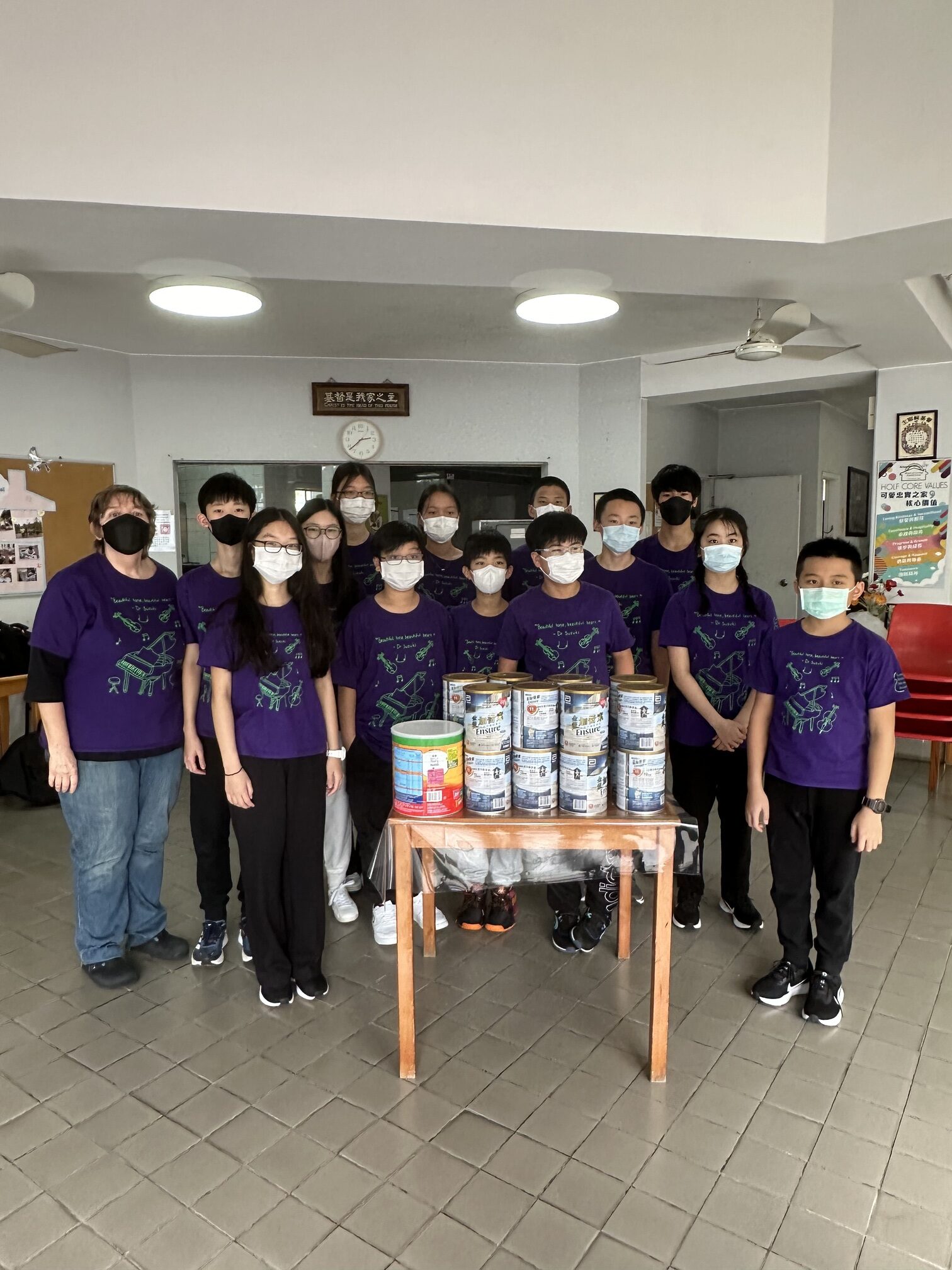
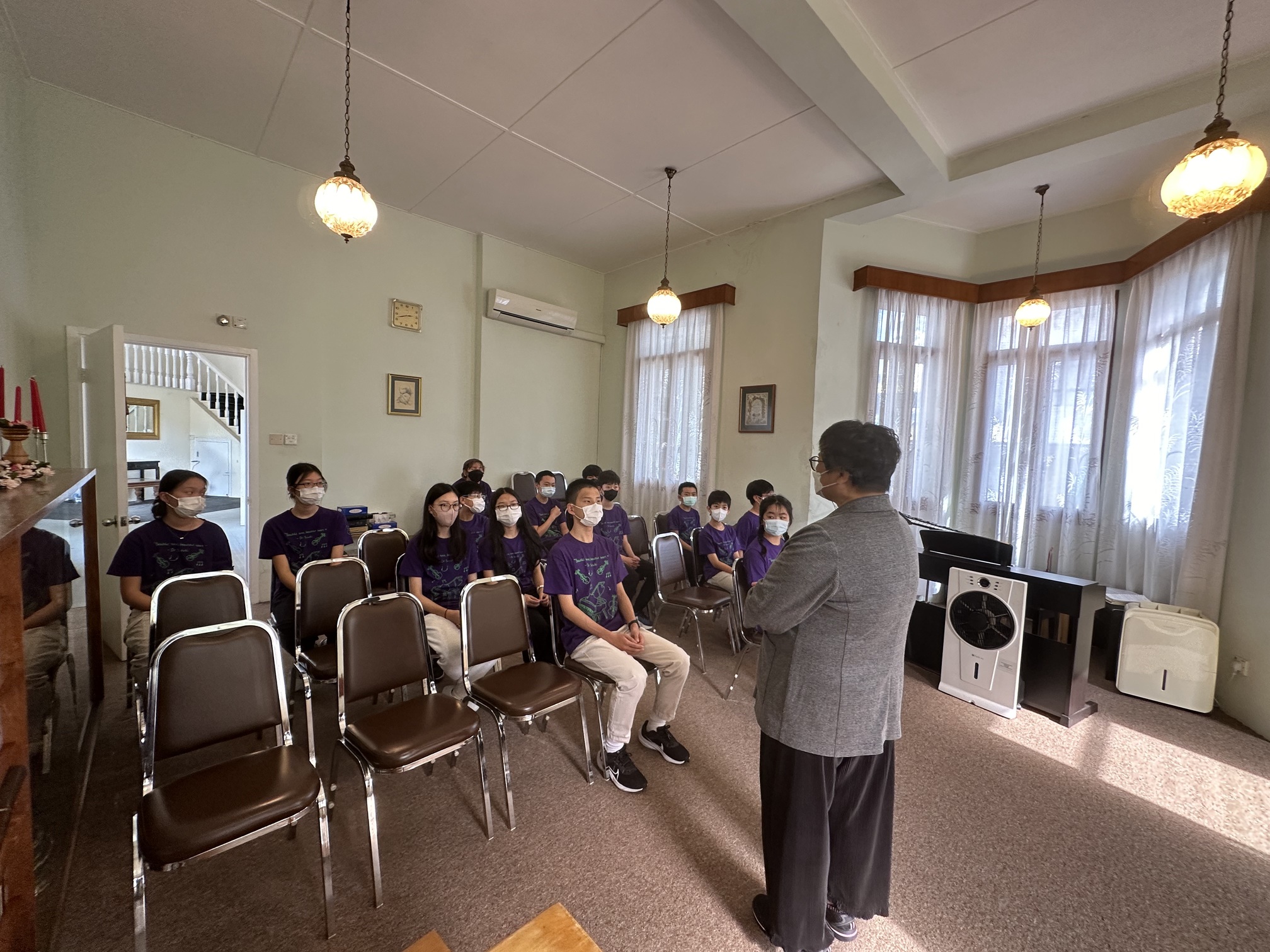
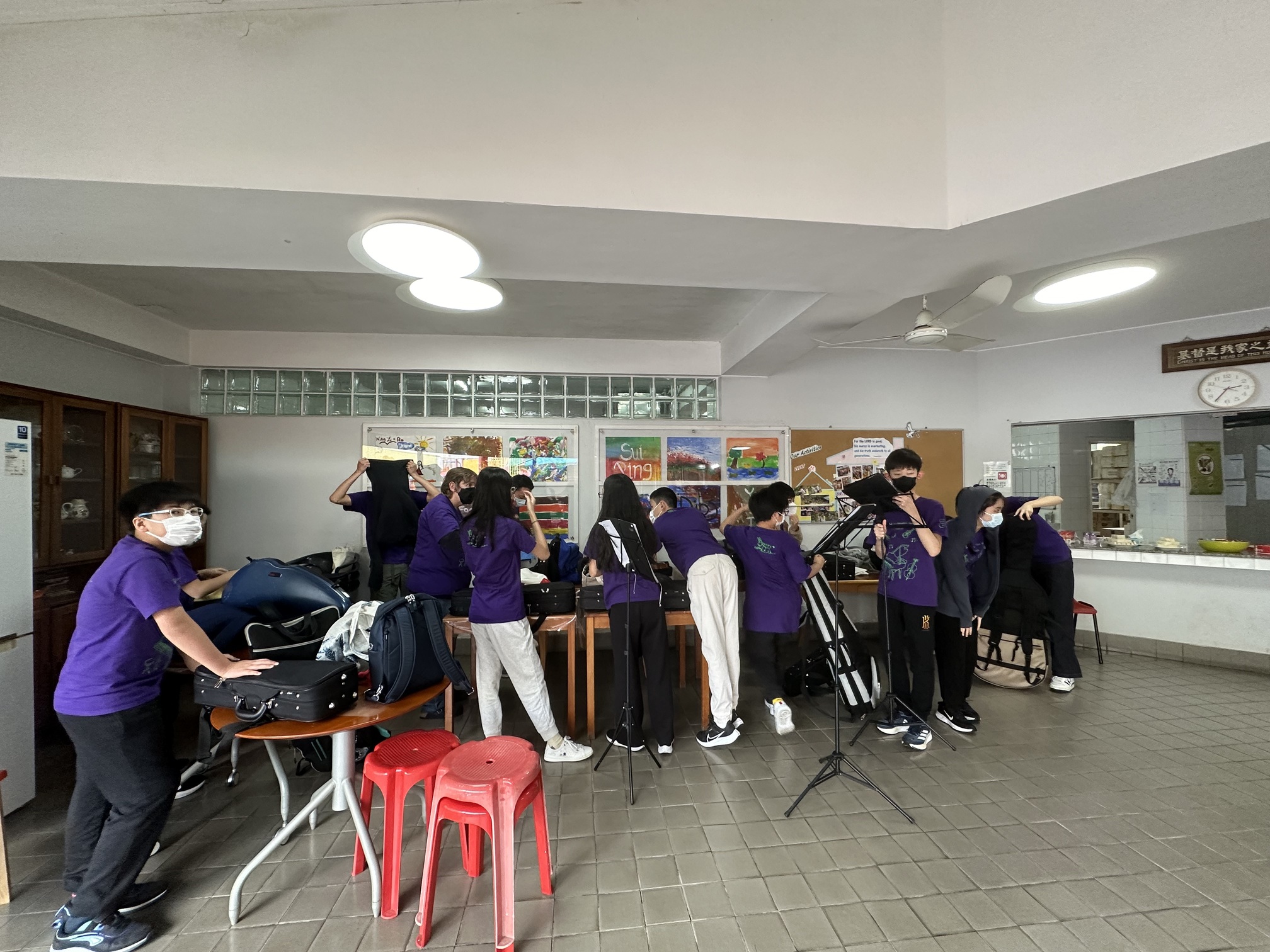
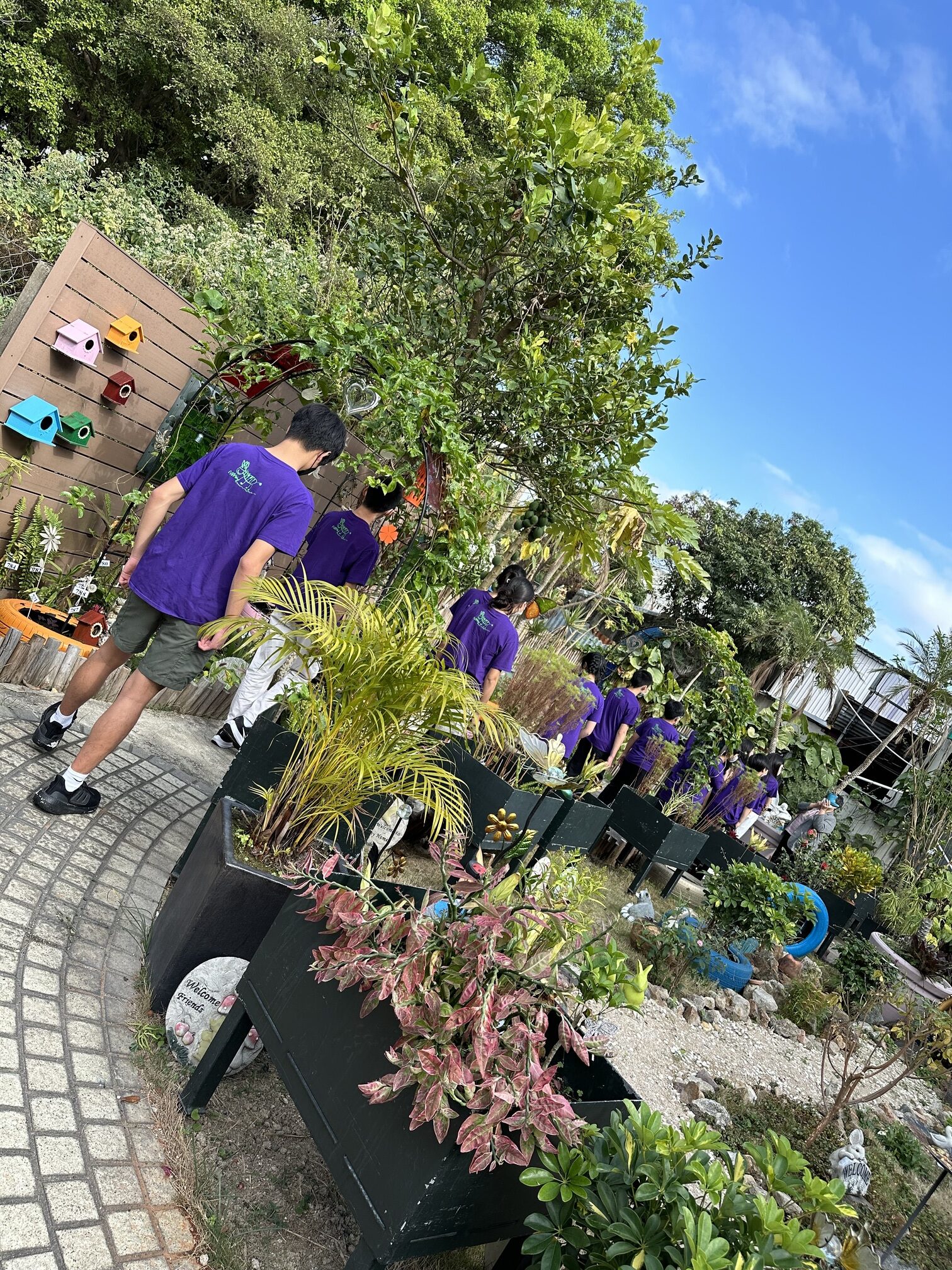
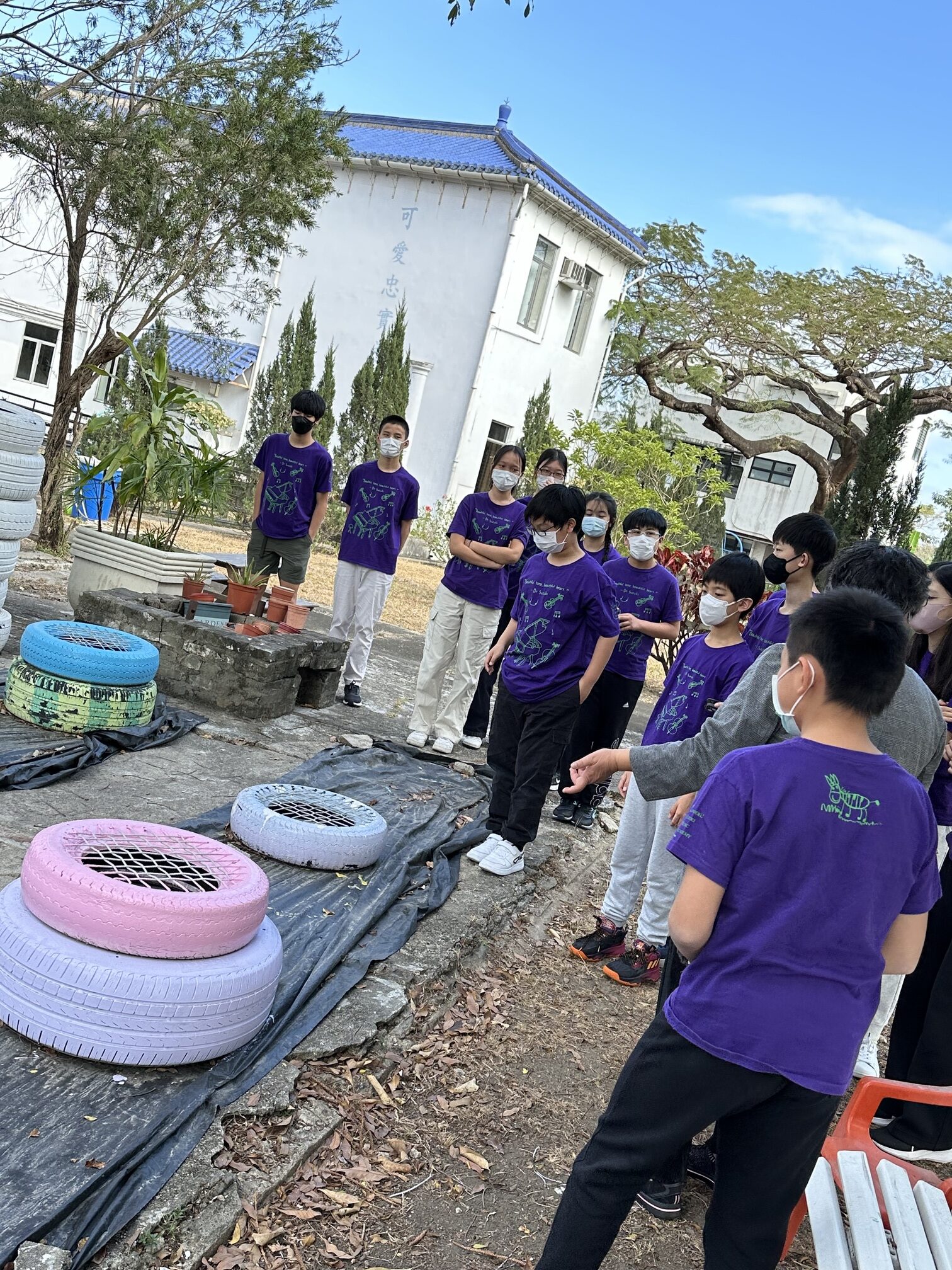
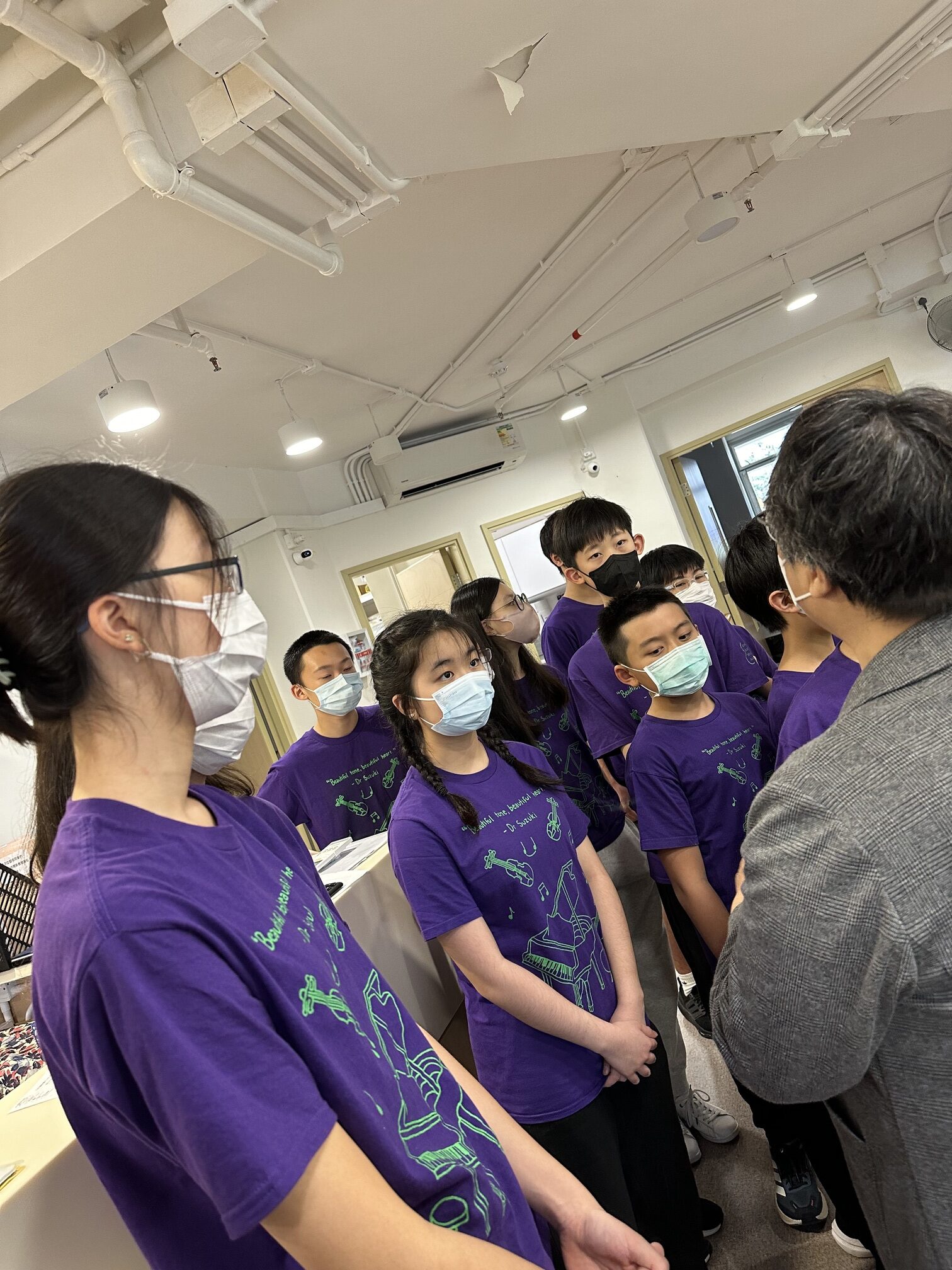
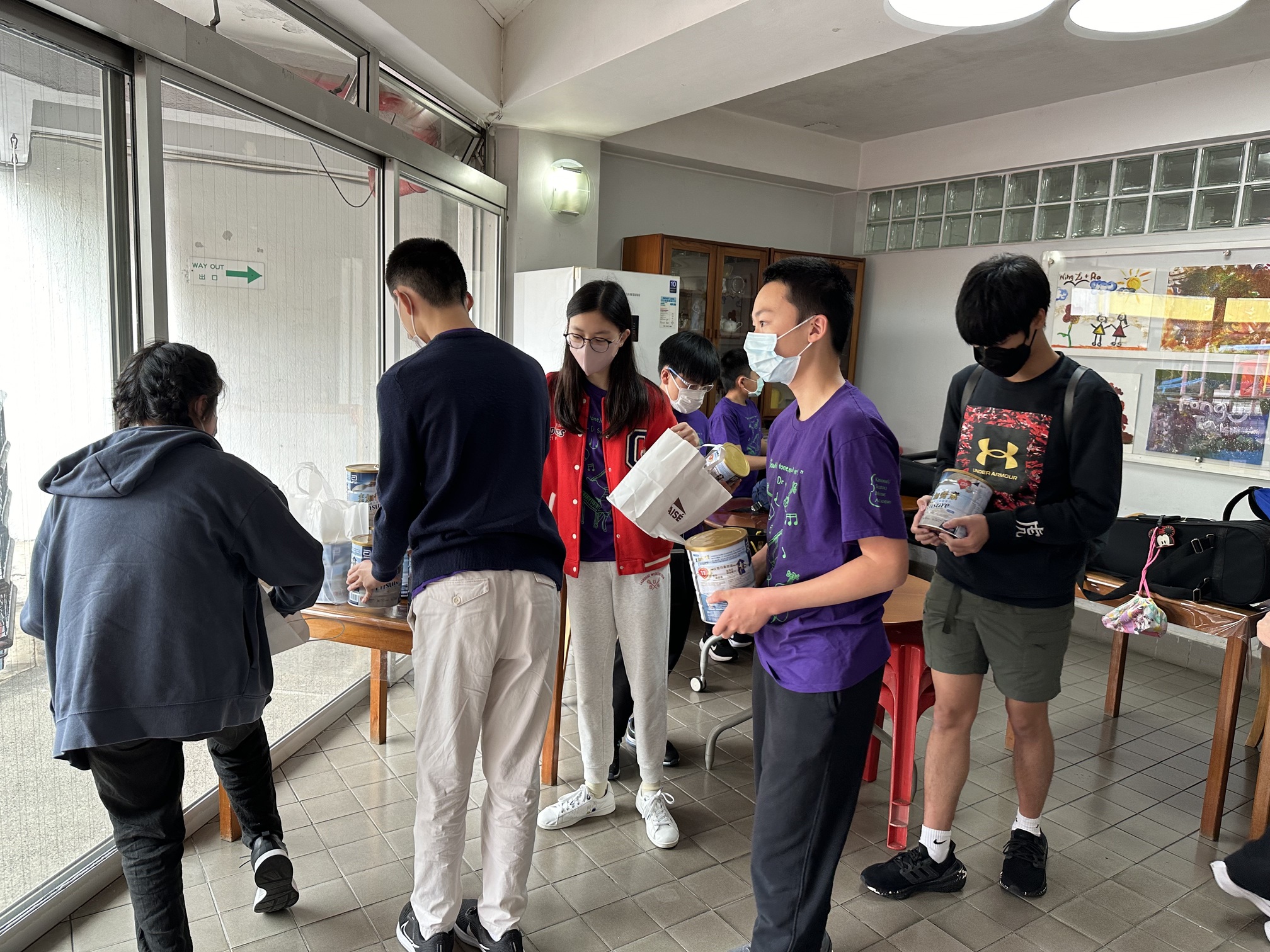
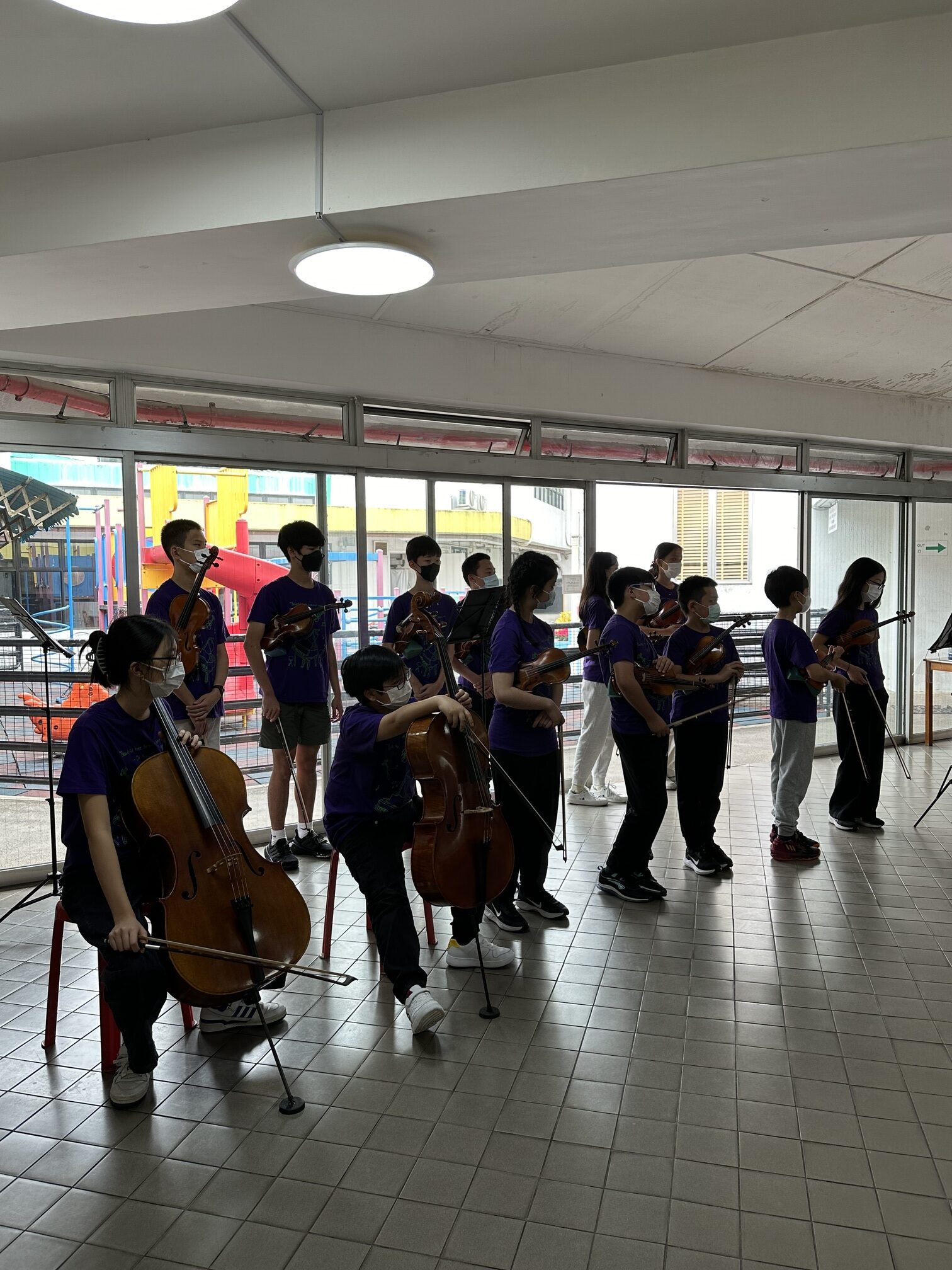
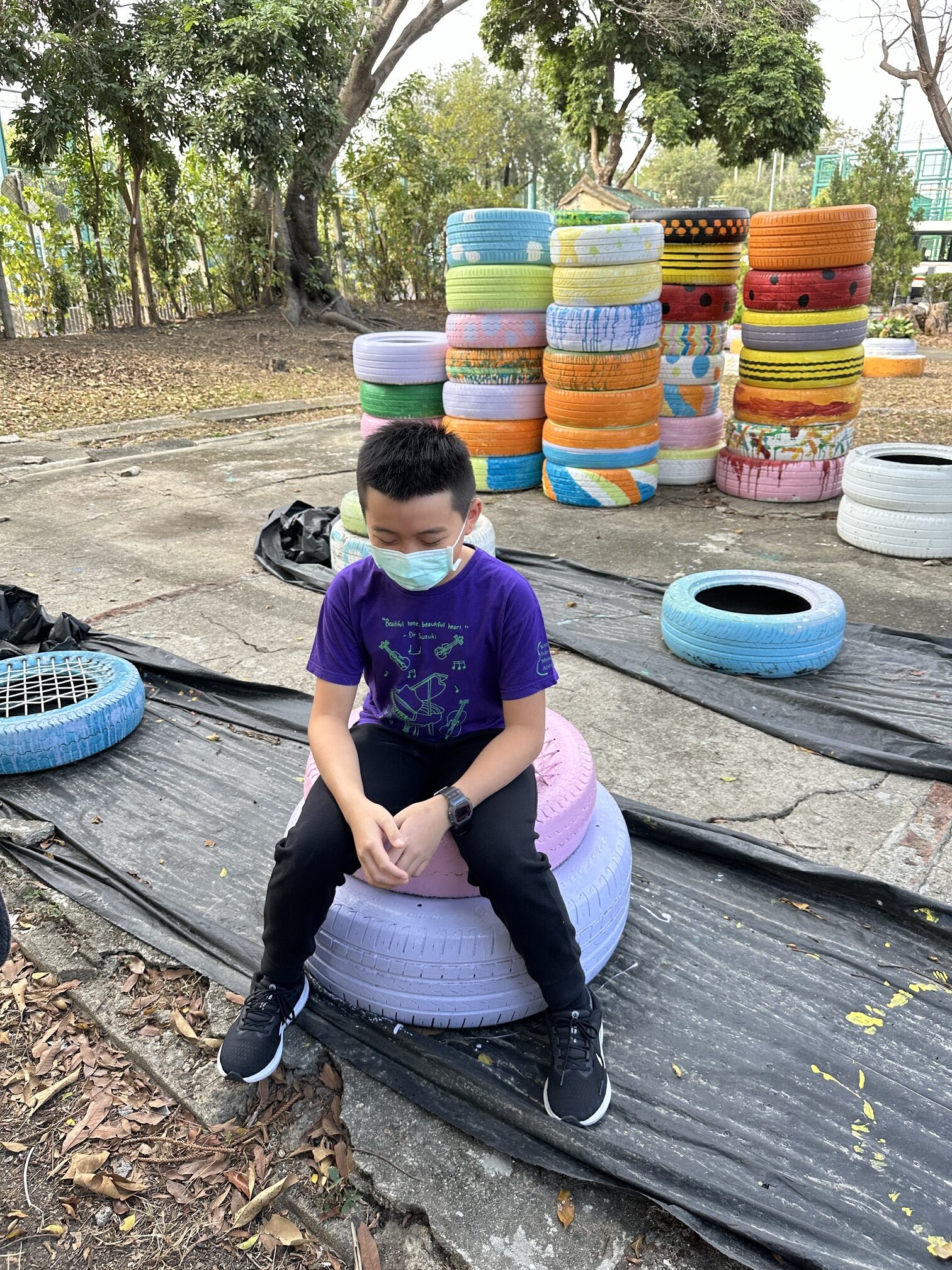
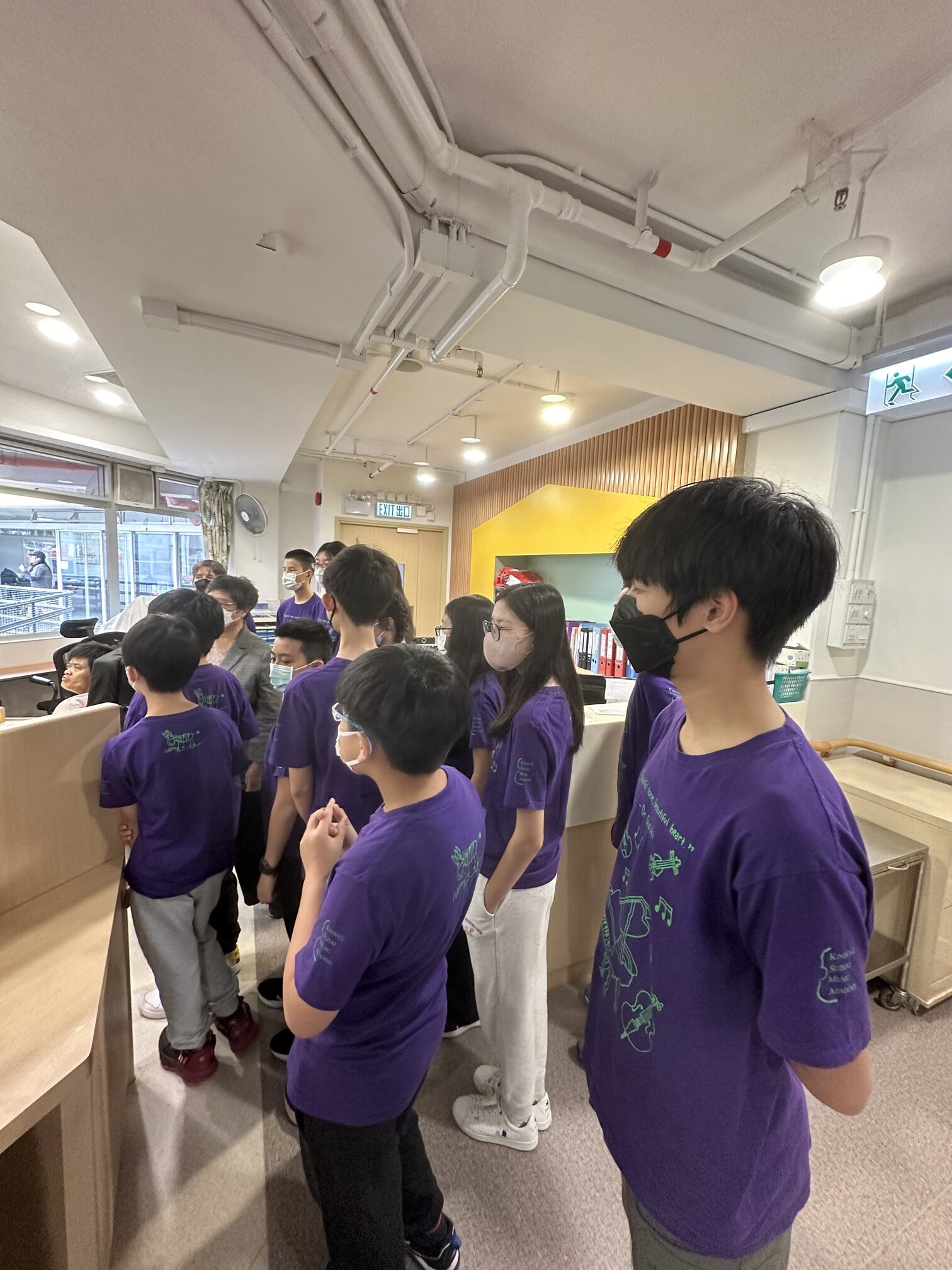
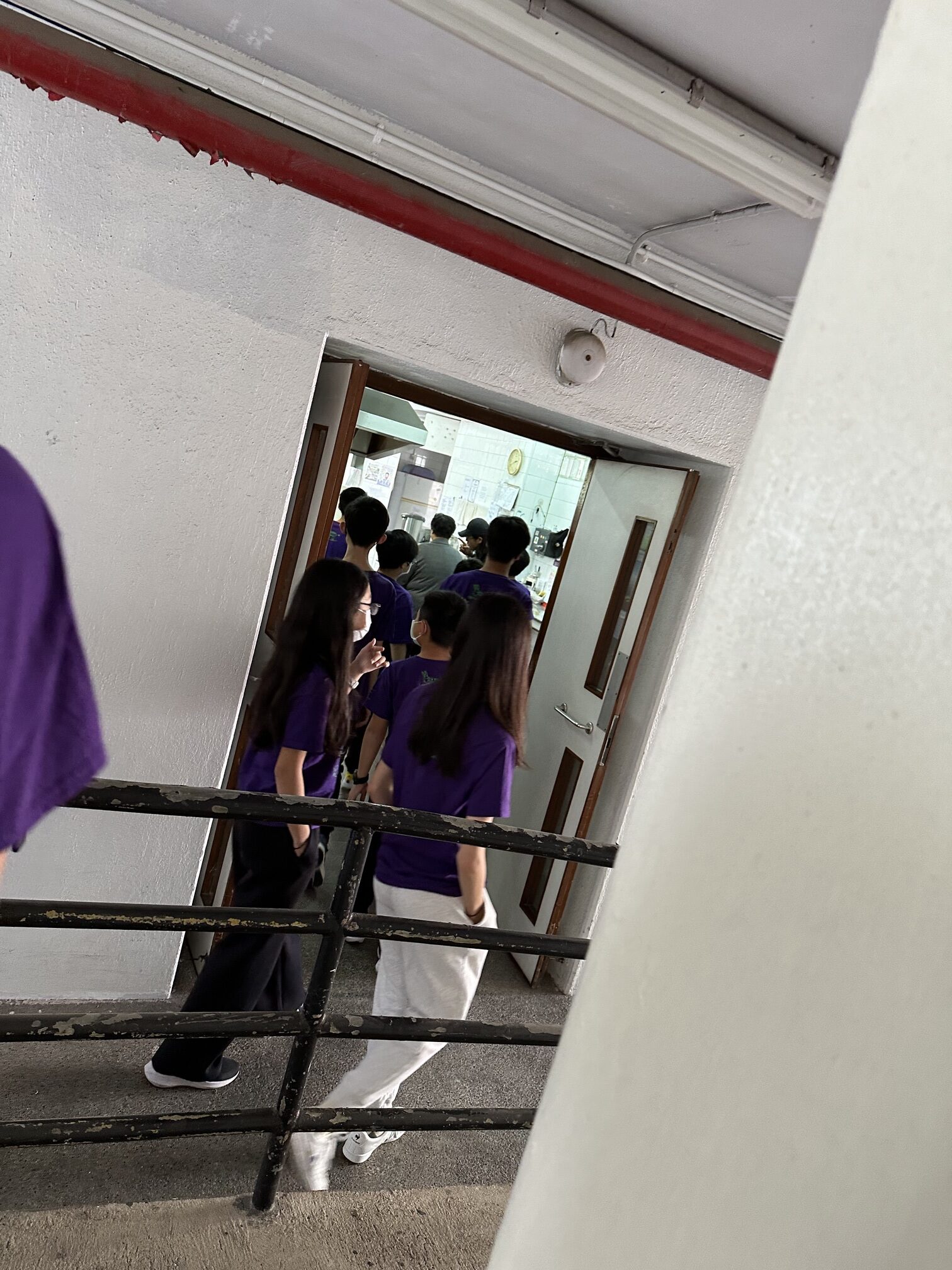
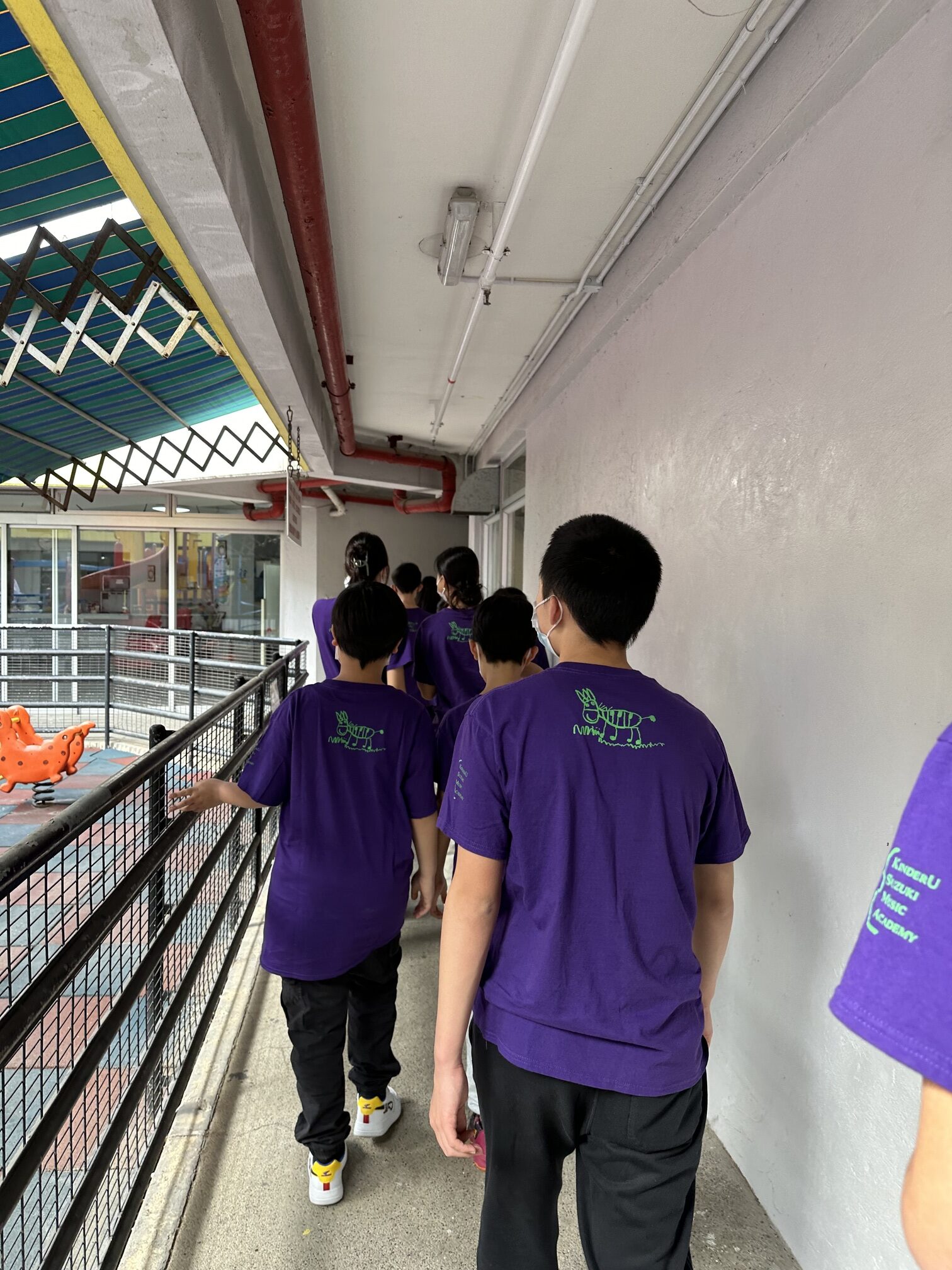
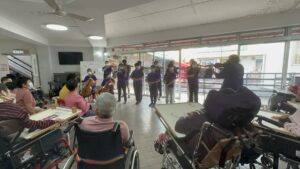
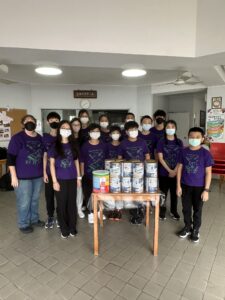
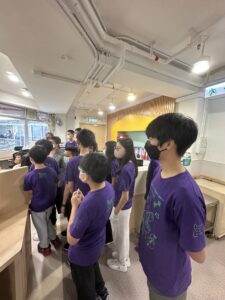
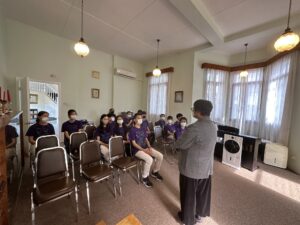
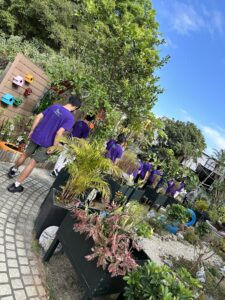
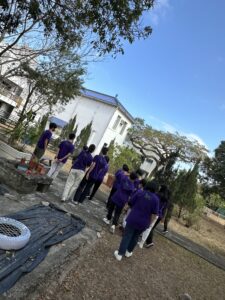
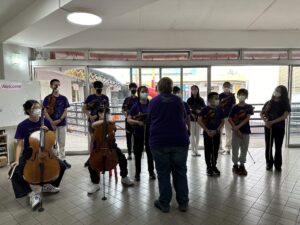
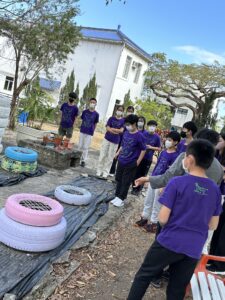
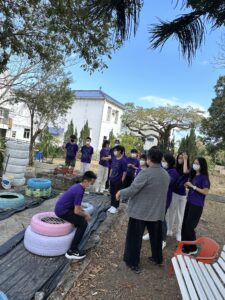
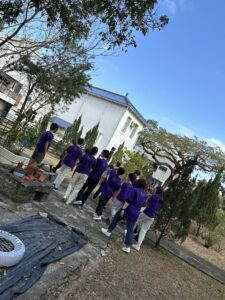
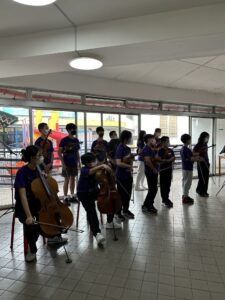
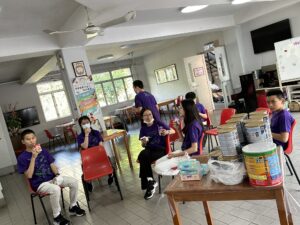
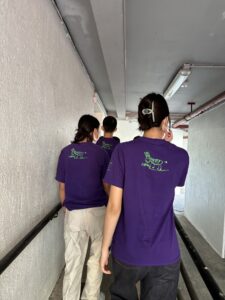
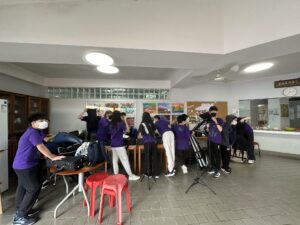
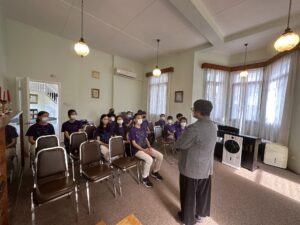
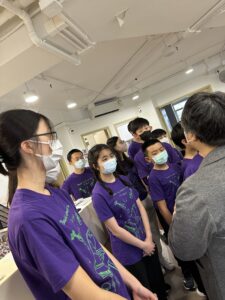
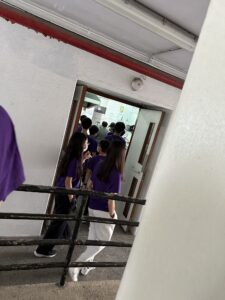
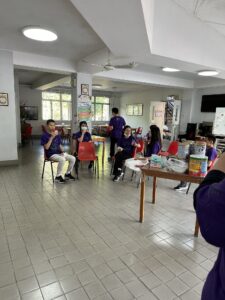
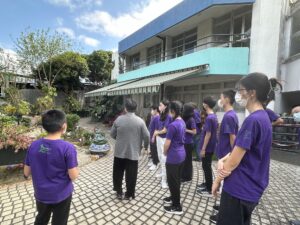
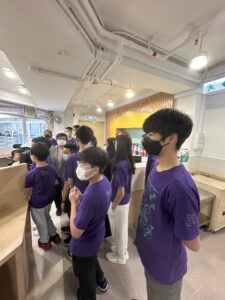
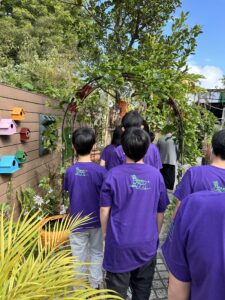
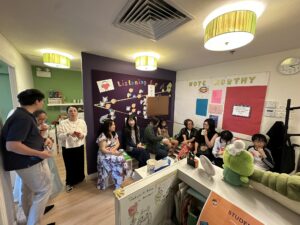
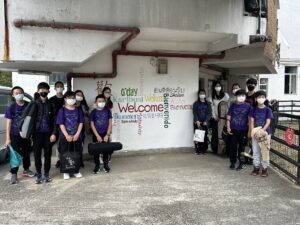
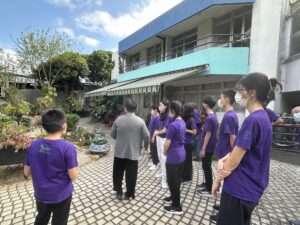
13 members of SMAHK’s MusiCares secondary student community service outreach team had the opportunity to visit the Home of Loving Faithfulness (HOLF).

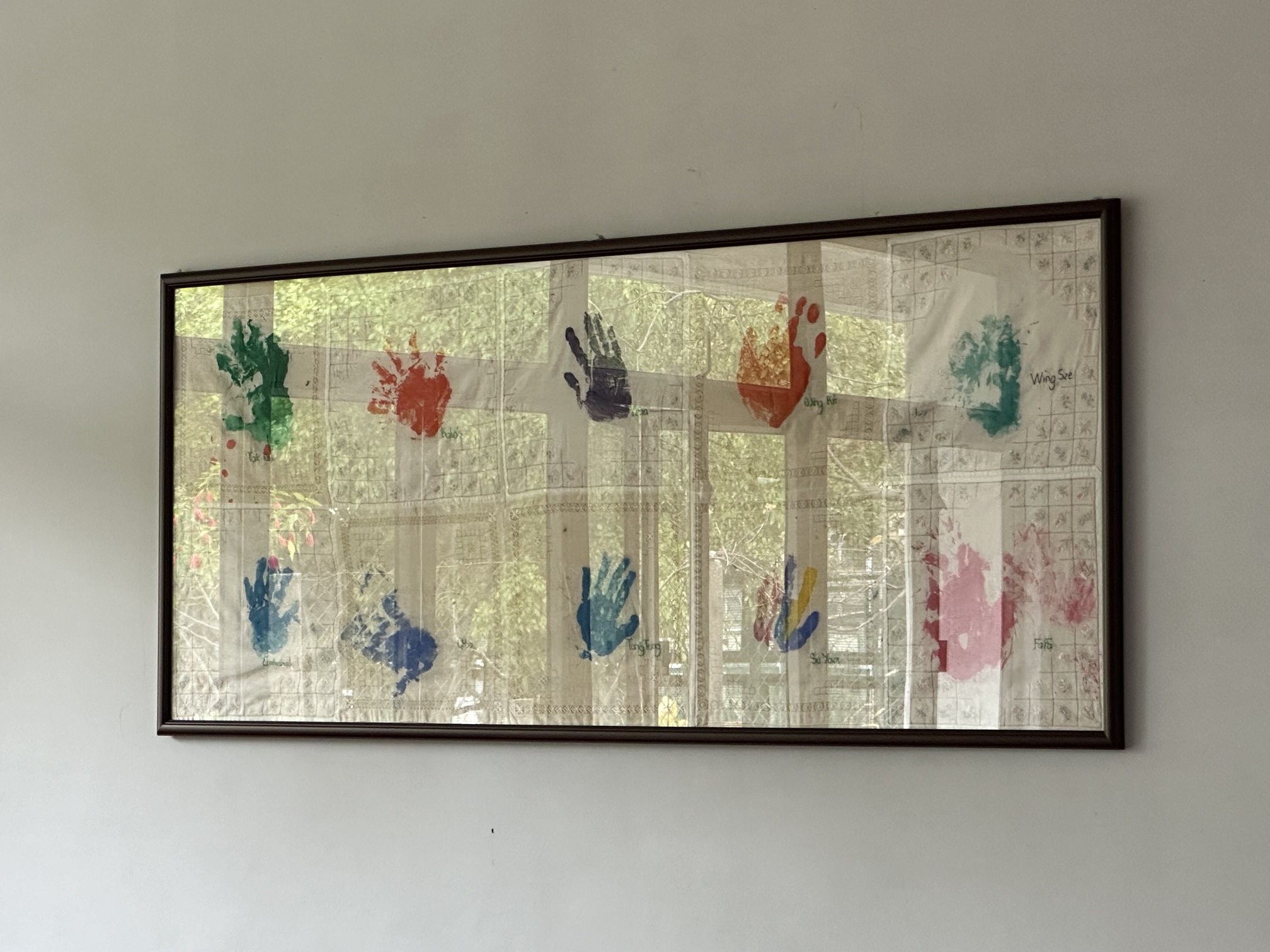
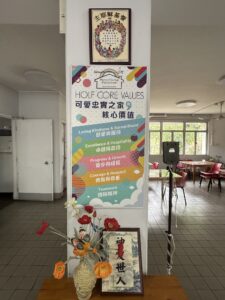
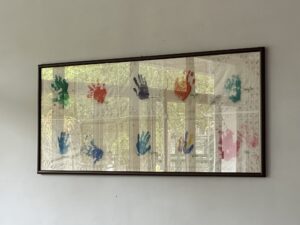
HOLF is a home for the physically and developmentally disabled. Started in 1965 by two women who were missionaries from the UK, HOLF residents are often found as abandoned children.

HOLF provides a home and lifelong care for its children, having currently 15 residents and a waiting list that they cannot admit due to lack of staffing. Because of the severity of each person’s condition, it takes an average of two full-time staff to care for one HOLF resident. Care is provided 24/7.
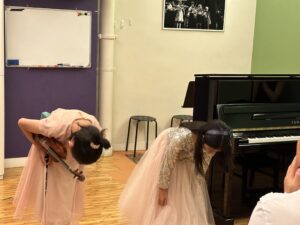
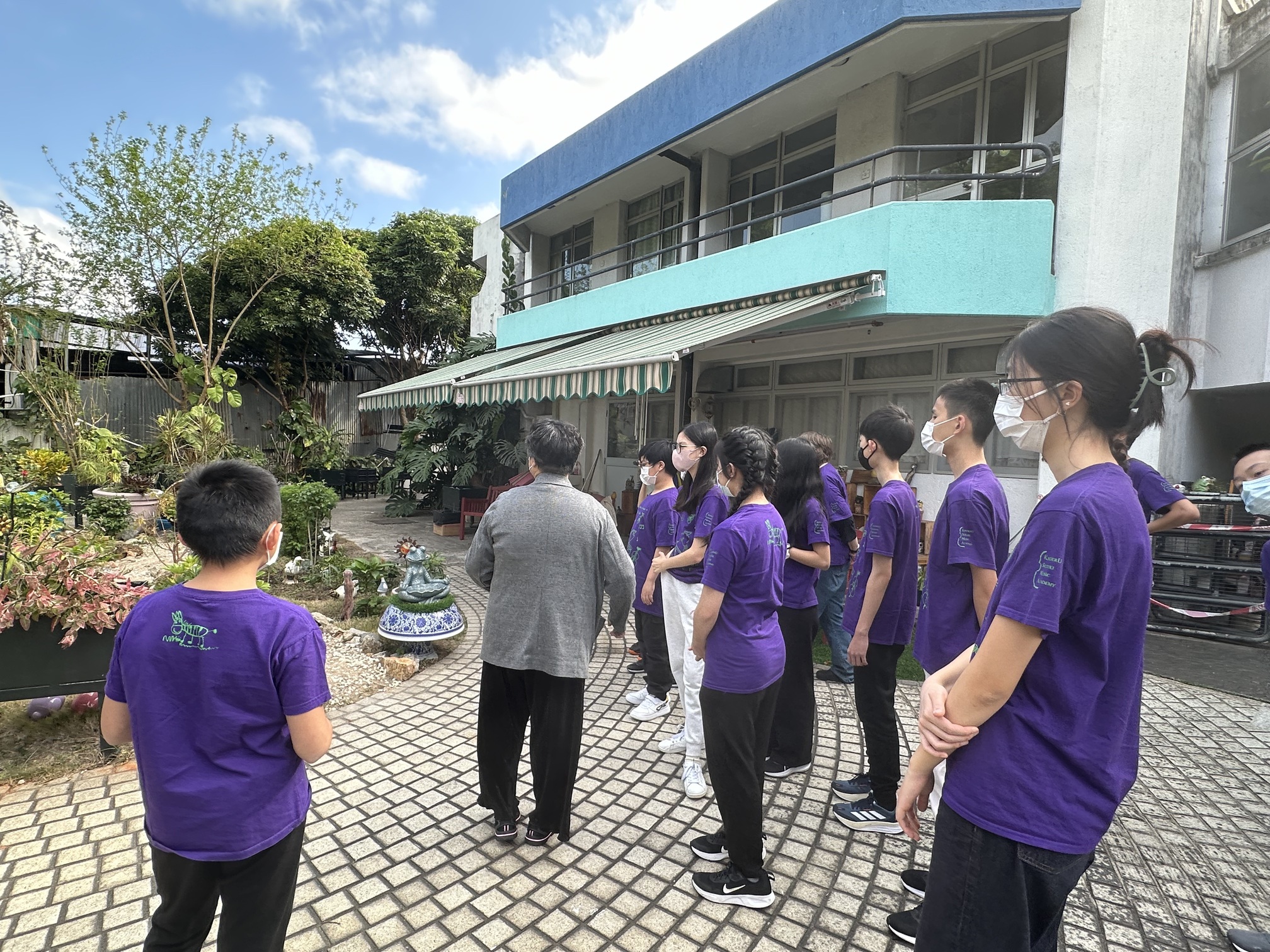
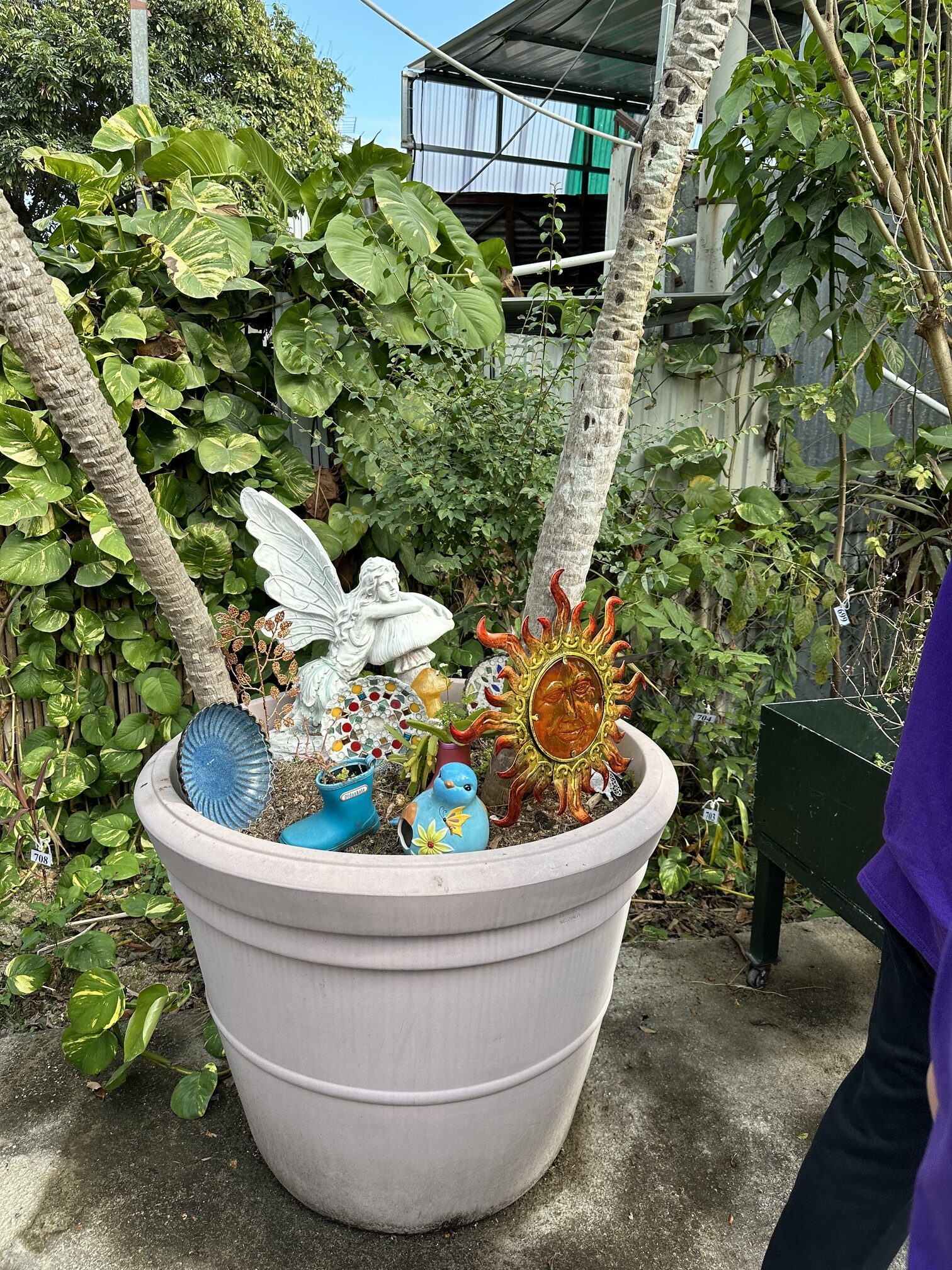
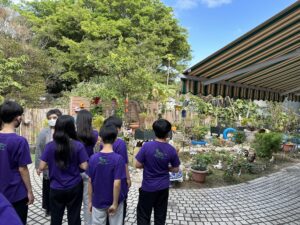
Although direct interaction was limited due to HOLF concerns about germs, it was obvious that the residents appreciated and enjoyed the MusiCares students’ music. In addition to performing for the residents, HOLF treated MusiCares to a tour of the grounds, including their dormitory and a sensory garden.

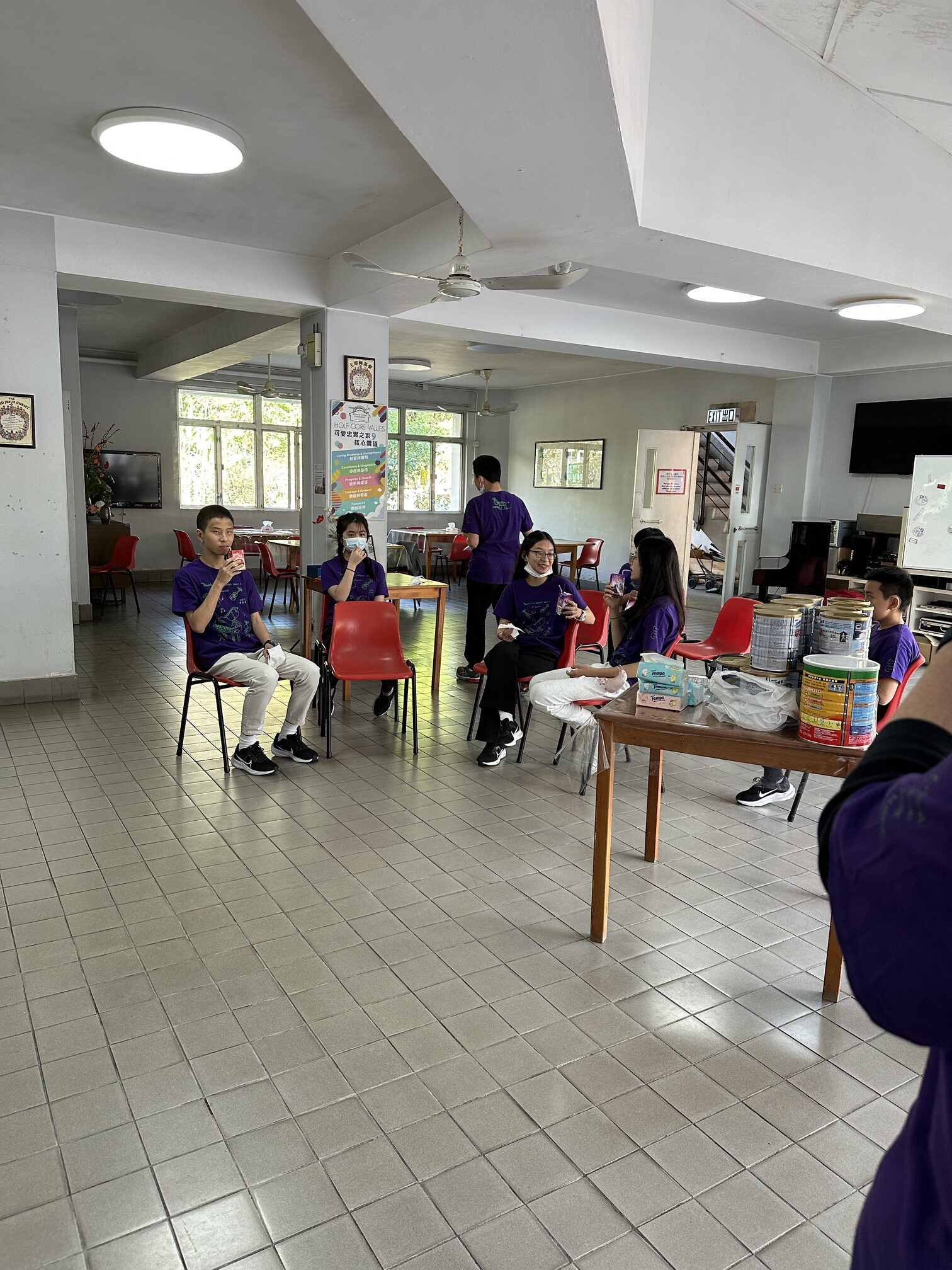
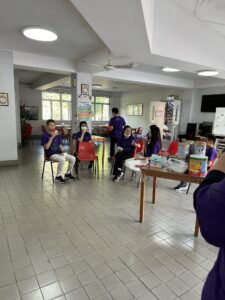
In spite of their own financial struggles, HOLF also provided sandwiches, drinks, and treats for the MusiCares team after the tour.

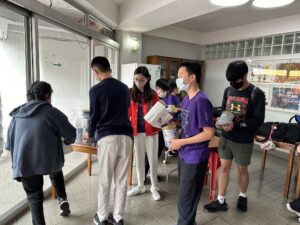
They were especially grateful that students brought individual donations of Ensure to go along with what SMAHK provided as a donation by the school.

This was a very meaningful and eye opening experience for our students. Here are their reflections on the experience:

“This was a new experience for me. Even though the people there were struggling to communicate, I could tell they enjoyed our playing. Perhaps they were empowered to learn how to play music, and I think playing music is a brilliant way for them to communicate. Hopefully there will be an opportunity for them to do so.”

“Through this opportunity, I was able to learn more about the lifestyle that some disabled people have in Hong Kong. This experience has taught me to be grateful about having a loving family. I hope that this experience brought hope showed students awareness regarding the less privileged people among our community.”

“I think that this was an incredibly enlightening experience that allowed us to learn more about the treatment of disabled people, and I also think that it was very impressive for two people to start a home for the disabled that has lasted for almost 59 years despite being understaffed in recent years, and it would be very beneficial to them if we would try to raise more awareness for them and disabled people in Hong Kong as well.”

“To me, the experience to be able to visit and perform in a home for disabled was a great opportunity. Not only did I enjoy performing, but I also was able to observe the residents and the HOFL, and helped me get a better understanding of disabled people’s living conditions and the history of the HOLF. As it was one of my first times I was seeing much different living conditions than I originally thought.”

“It was a very new and unique experience for me because it was one of the first times I had to do something in front of people with disorders that I remember.”

“I think it’s wonderful that two people started this amazing organisation for disabled people.”

“Overall it was a highly enriching and rewarding experience. It was great that coming from a point of privilege, we were able to bring hope and joy to those who are not as fortunate as we are.”

“Thank you so much for doing what you are doing it is helping a lot of people. I hope more people decide to volunteer for this cause.”

“The people there are getting cared and loved, which is what they should all deserve. Hope we can come again soon!”

“I think we should help raise more awareness for this issue. As mentioned in the tour, HOLF suffers from a lack of man power. If we were to do more or host fundraising we could help more people.”

“I think the fact that these people were abandoned as children very worrying, and I know as much as this foundation does, many more of the disabled will continue to be mistreated.”

“Despite the short performance, I think we were able to bring joy to the residents of HOLF. Seeing the residents and their living situation was eye-opening, making me realise how small actions, like performing or volunteering can make a big difference.”

“We don’t often have opportunities to see or experience what people with disabilities do. It is near impossible for us to know what others have been through. Before coming to HOLF, I did not think much of what others may have been through as I had other work to worry about. But after learning more about the hardships with having a disability and how much people are required to take care of just one disabled person it causes my heart to ache. Only have emotions won’t help others. If we have more opportunities to help others through donation and sharing music, it could quickly brighten up some else’s day. Not only donating can help others, it is also really important to help raise awareness so others can receive more help. As a student, I can help by joining initiatives for these causes as well as continue doing my part as a responsible and open-minded resident that can continue sharing music and donating goods.”

Reflections of the Performer: Eric and Wesley, Book 3 Violin Recital

November 13, 2023 By Suzuki Music Academy of Hong Kong

~by Eric

First, I want to thank all the people who helped throughout this process. I want to thank Ms.Diane, Wesley, Ms.Mary Ann, Ms.Susan, and both me and Wesley’s parents. Without the help of all these people supporting me, I would never have been able to complete this recital. 

Out of all the recitals I have gone through, I think this one is my favorite one yet. The reason why is that it was the first recital me and Wesley had the responsibility of preparing some of the pieces. It gave us an opportunity to work together without the influence of teachers or parents, and it allowed us to showcase our progress. Furthermore, the quantity of the pieces in Book 3 is less than the pieces in Books 1 and 2, so it makes it easier to really polish our pieces and shine in our solos. Finally, I think the joint practices helped me and Wesley put together our combined pieces. Since playing our duets required great collaboration (Martini Gavotte’s duet trailed behind the melody, while Bach Minuet’s duet had plenty of moving notes), I think the joint practices helped us perfect our playing. 

~by Wesley

 I would say this book recital is the most successful one i’ve had over the years, i was feeling more confident this time, although i still had a few mistakes throughout the recital.

This is my first time working with eric with some pieces, we would practise the dynamics at home and use it during our practise sessions. i also think we both communicated well wit each other, we were able to figure out who plays gossic gavotte and who plays bach bouree. I personally think i lead gavotte better than bach bouree, and eric is good at leading bach bouree, we made a perfect choice.

For further improvements, i would like to be more confident when i play in front of people, while remembering the things i’ve learned and practised. Especially my dynamics of some pieces.

Reflections of the Performer: Isabel Zeng, Book 6 Violin Recital

November 13, 2023 By Suzuki Music Academy of Hong Kong

~by Isabel Zeng

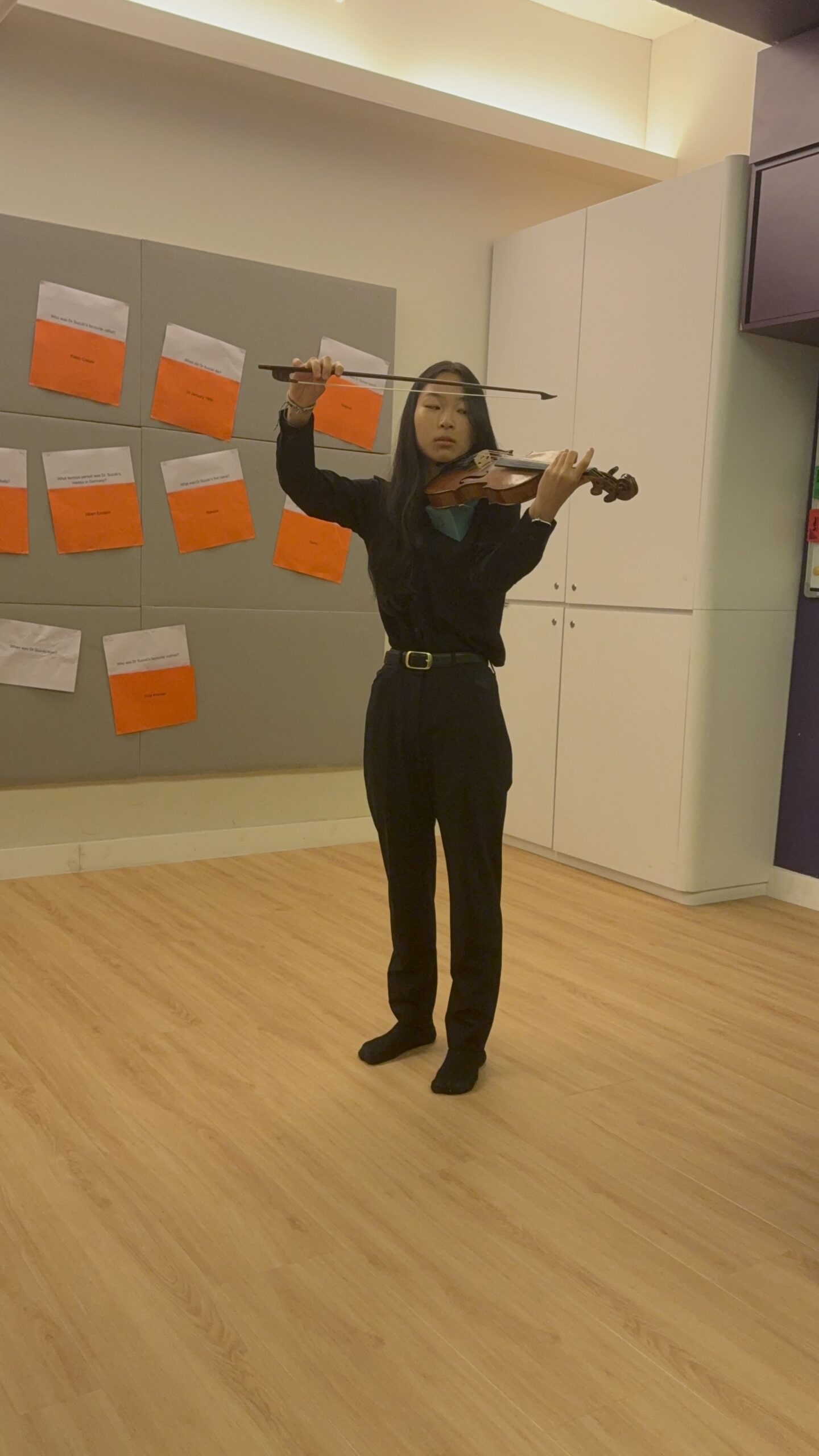
In hindsight of my book 6 recital, I am satisfied with my performance despite some of its errors. My book 6 recital was composed of 8 pieces, one of which being a sonata with 4 movements, and it was also my first solo recital, meaning that I had more freedom with the order of the pieces, but I also didn’t have the support of a friend doing the same thing with me, nor did I get a longer break in between pieces. 

One of the challenges that I faced during the performance were the more technical aspects, such as fingerings. This was especially prominent in pieces such as the 2nd and 4th movements of Handel Sonata in D major, the runs in La Folia, etc where there are multiple shifts combined with (personally) awkward fingerings, in which I need to press on two strings. This was a large challenge, since when I was playing a fast piece and I messed up a few notes, it stayed in my head and made me nervous about the next section which I know to be difficult as well, which then causes my hand to tense up and makes it even more difficult to correctly play. During the recital, there were some things that I knew were going to be issues with, whilst there were others that were completely unexpected.

Another challenge was my posture, since I have a tendency to slouch after a period of time, and that impacts my contact point on the strings and overall tone. I tried to improve this by practicing with my scroll level with a fixed point, and whenever I realised that it was too low, I would reset my violin and continue playing, trying to fix my posture before it was too late. During the recital, I did the same, except without the option of putting my violin back on my shoulder.

Something that I am proud of is my Rameau Gavotte, which I personally think was my best played piece. However, during the middle of Gavotte II, I made a mistake which really shook up my previous confidence, but since I got back on track quickly, I was able to move on. In spite of this, I feel good with my vibrato and tone in Rameau Gavotte.

I feel that my performance of the Handel Sonata in D major was the worst, despite me focusing on it the most. In the 1st movement, there was an issue with counting that although I had made the error before, it hadn’t happened in the week or so beforehand, and the 2nd and 4th movements both had areas where I got off track, but thankfully remembered where I was in the music. The 3rd movement was mostly fine.

In order to prepare for the recital, I practiced often and focused on the aspects that needed improving, whether it was more technical or musical things, or listening to the piano recording to understand how my part fitted with Ms Sonomi’s. On the day of the recital, I focused on each piece and its sections, then ran through all of the pieces how I would in the recitall, including sitting and bowing. Afterwards, I didn’t practice, instead opting to listen to the recordings in order for me to relax a bit. I think that this helped me prepare for the recital because if I made a mistake during my practice, I would teach myself how to get back on track quickly and solve the problem, and also because being tense was one of my biggest issues and also caused (and causes) most of my mistakes.

For my book 7 recital, I hope to improve my organisation and planning skills in order to schedule rehearsals with Ms Sonomi, and to better allocate time to each piece so as to anticipate and deflect problems.

To Ms Sonomi, my collaborative pianist, thank you very much for taking time out of your daily life to rehearse with me for this, as well as helping me take my mind off worrying before the recital, and in general just being amazing! Thank you to Ms Diane for all her years of tutelage and helping me gain confidence in my playing, telling me what I need to improve on and how, and complimenting me when I do something well. You make my musical journey both fun and educational, and I truly wouldn’t be where I am now without you, both as a person and as a musician! 🙂 Finally, thank you to those who watched my performance, whether it be online or in person.

Reflections of the performer: ANDREW ZENG, Book 7 Violin Recital

November 6, 2023 By Suzuki Music Academy of Hong Kong

To begin with, my Book 7 Recital was my first solo recital, which meant that I was faced with the challenge of polishing up and putting together a much greater number of pieces with the piano. Playing through a total of 11 pieces (22 movements in total) over a period of ~1.5 hours was also quite demanding in terms of endurance. I relied on and was able to further develop my organisational and time management skills when scheduling rehearsals with Ms Sonomi and balancing my academic commitments with practice for the rehearsal. In terms of the pieces themselves, I found it uniquely rewarding to revisit pieces which I had learnt in the past and to rediscover and reinterpret them, making use of new technique, musical ideas and perspectives that I have since learnt and gained. In the new pieces that I had learnt, I was able to further polish up my technique and refine my interpretation. It was also interesting to listen to recordings made by others to open myself up to new interpretations to take inspiration from. I found decision making much more straightforward. It also gave me the freedom to pursue my own ideas.

Looking at the recital as a whole, there were some mistakes which occurred and countless things that I could have done better. Some pieces also left me feeling unsatisfied with the fact that I was unable to fully express all of my musical ideas as a result of not having practiced enough (In particular, the seemingly ‘easier’ pieces that I had neglected to practice as much). However, overall, my experience was a positive one. In a live performance, not everything can always go the way you practiced or had hoped for. As with anything, things can go wrong and it takes resilience to deal with mistakes or failures and carry on. In between pieces, I was able to move past those mistakes and re-energise and motivate myself to focus on the sole objective of playing what comes next to the best of my ability. I am extremely pleased with the end result and found this entire process hugely enjoyable and rewarding. I was able to apply myself to play with expression and share the results of my violin journey which began 9 years ago with others. Looking ahead, by the time my next recital comes around, I hope to become a more expressive player who takes more liberties and is more imaginative with musical ideas. Music is an immensely beautiful language which allows us to express emotions, certain ideas, or aspects of the human experience that we otherwise could not with language. That is the reason for its tremendous appeal and ability to transcend time, people and cultures among many other things. Therefore I feel extremely privileged to have an understanding of this language and to have the ability to share it with others.

I would like to give a great thanks to the brilliant Ms Sonomi for spending so much time rehearsing with me, supporting me and helping me gain confidence in my playing. I would also like to thank Ms Diane for all her years of teaching and guidance. Finally, I would like to thank those who joined us for my recital.

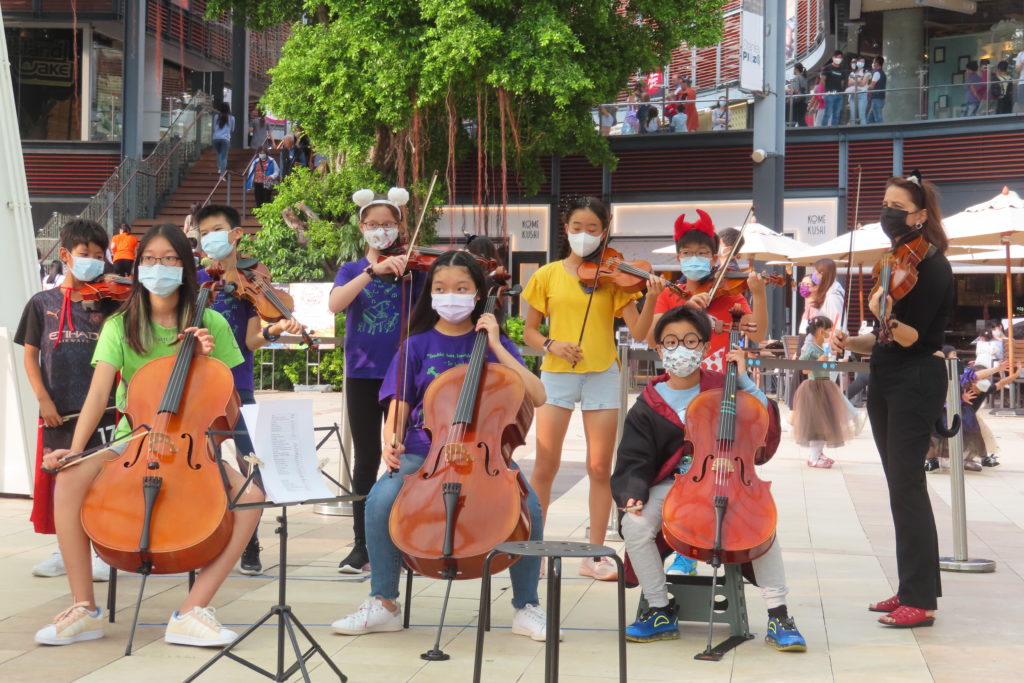
A Happy Halloween!

November 4, 2021 By Suzuki Music Academy of Hong Kong

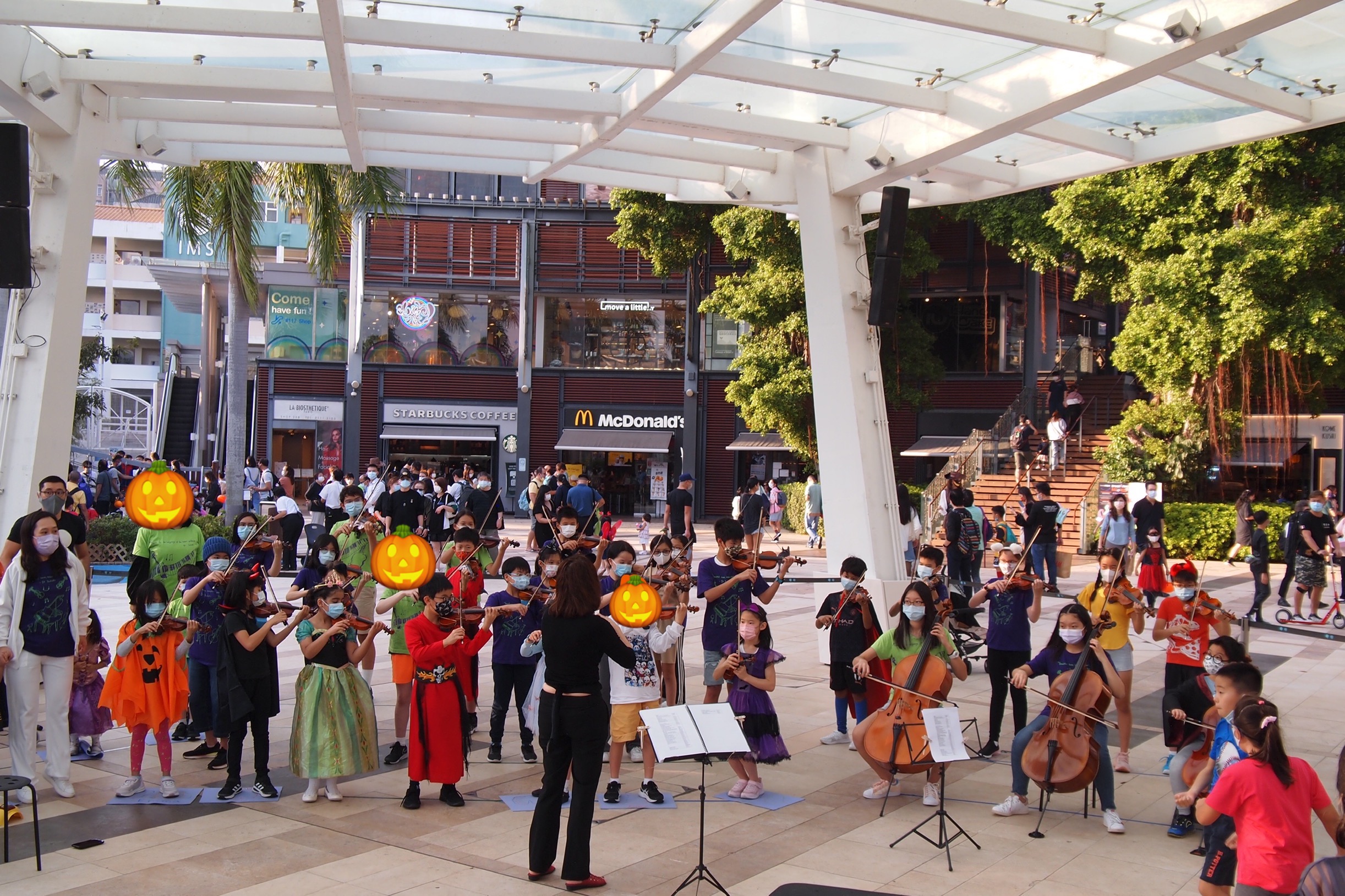
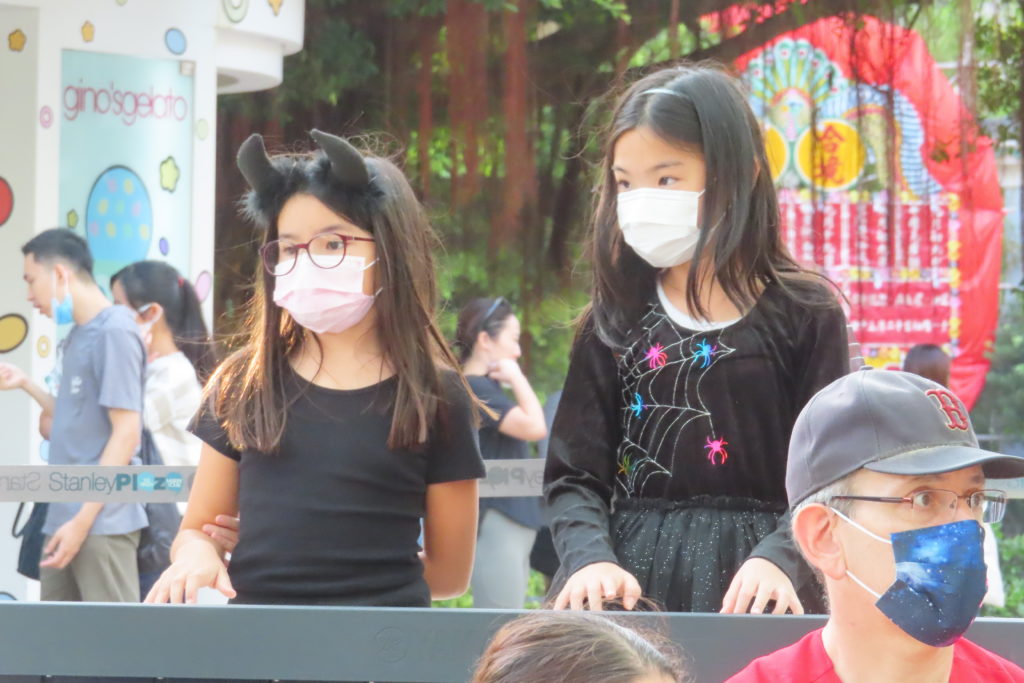
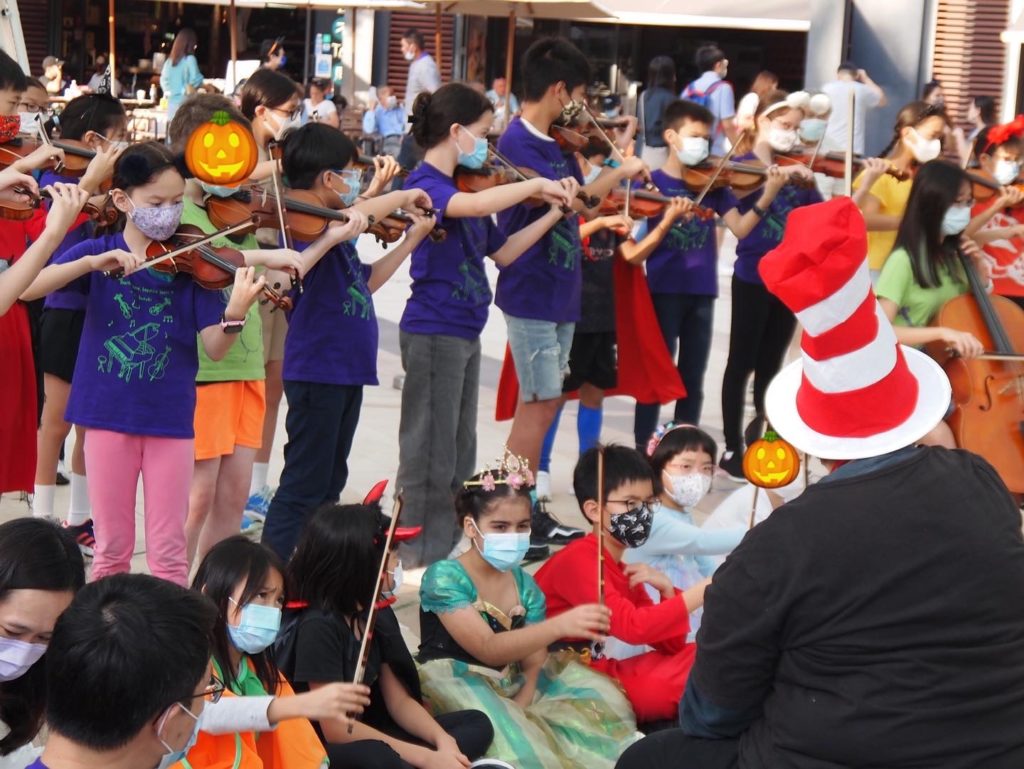
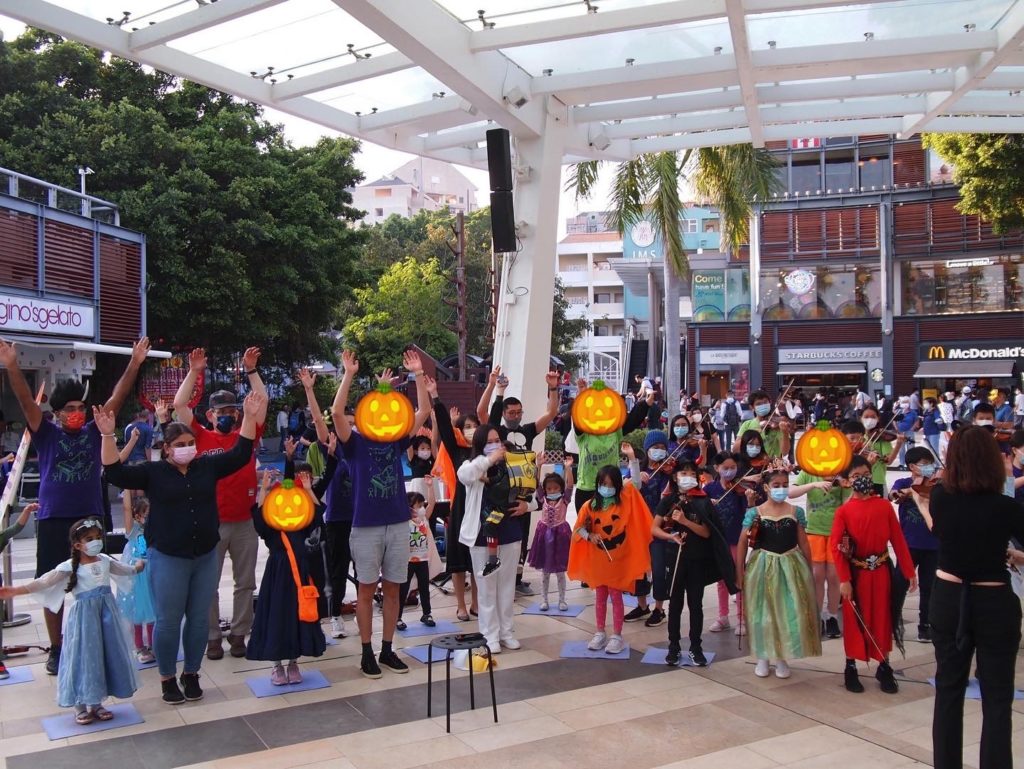
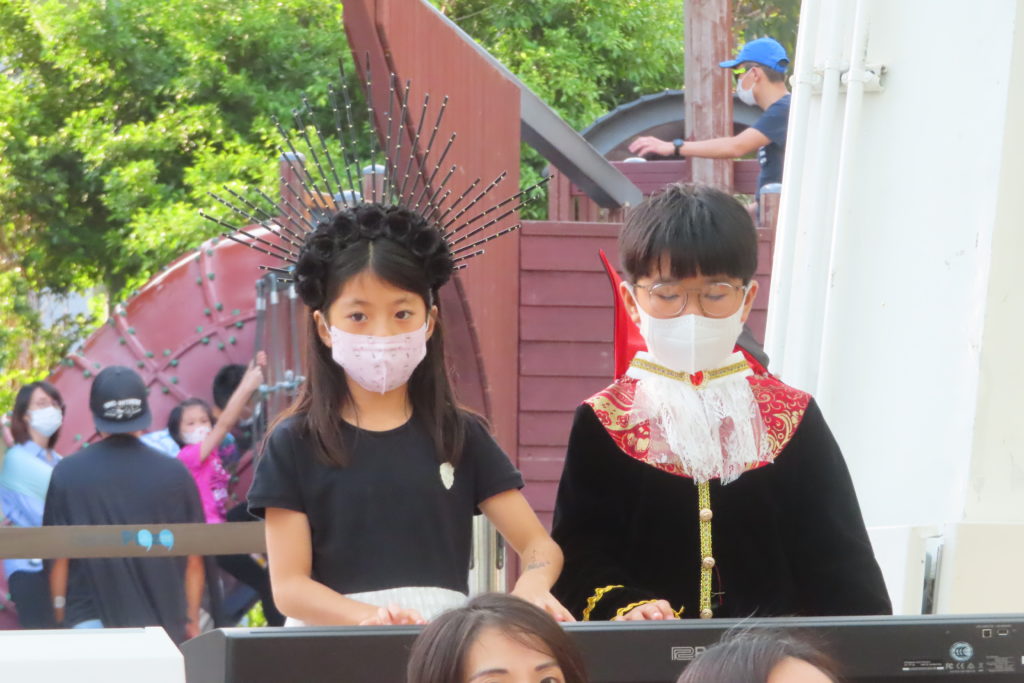
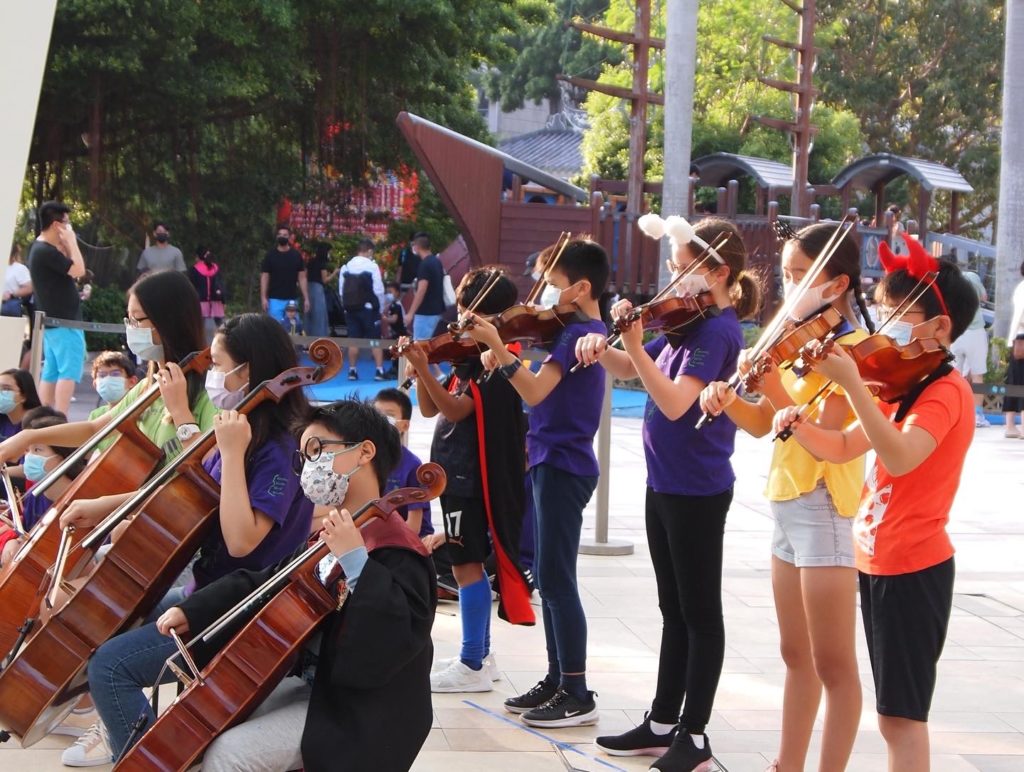
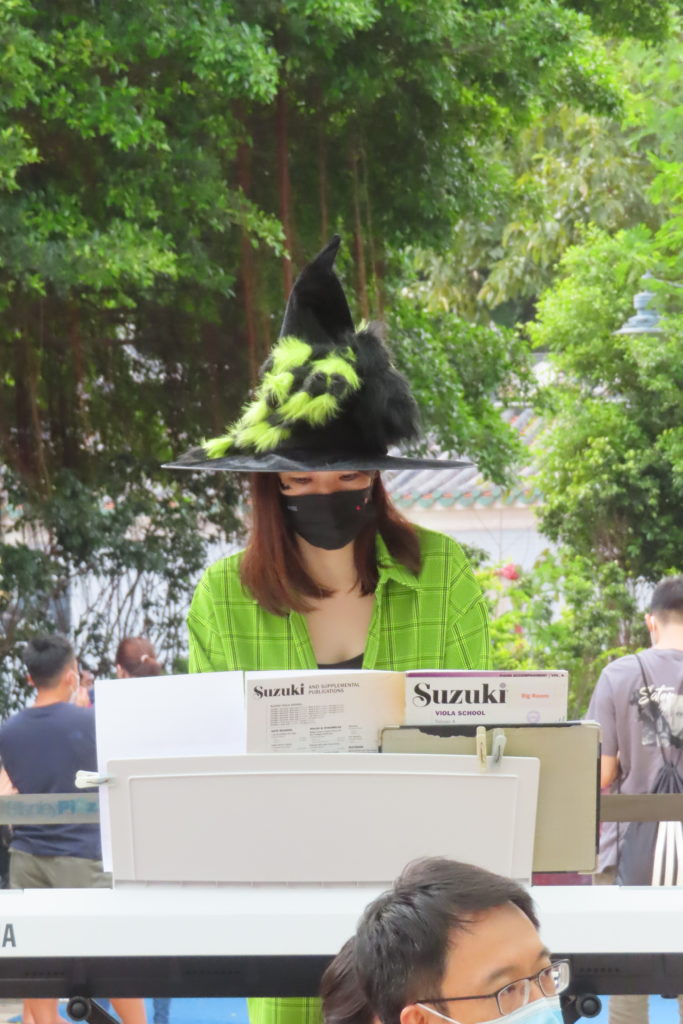
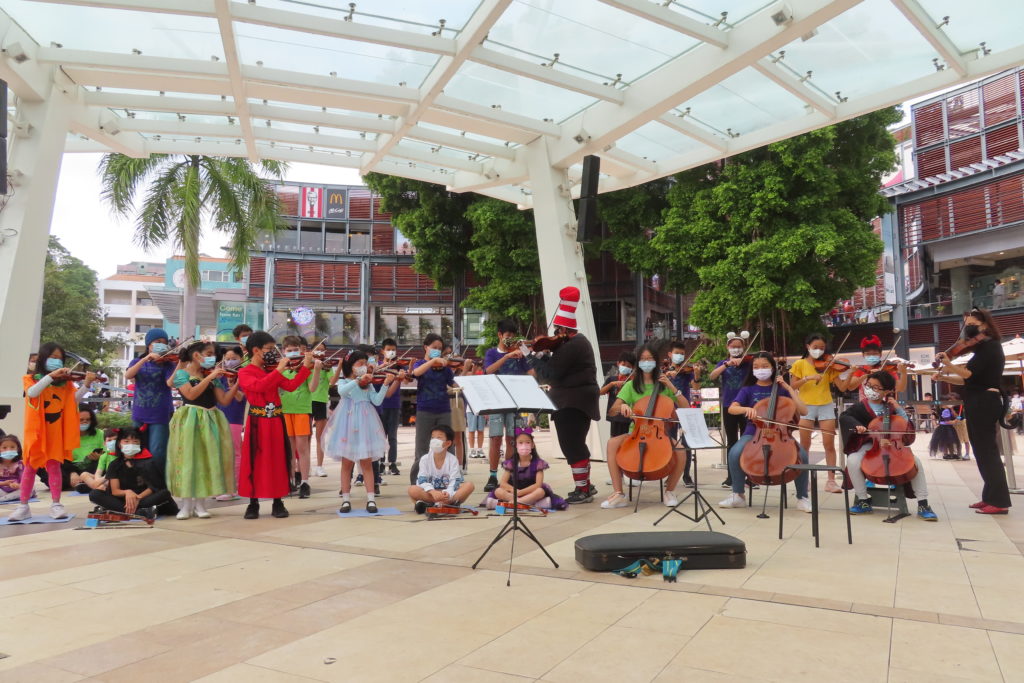
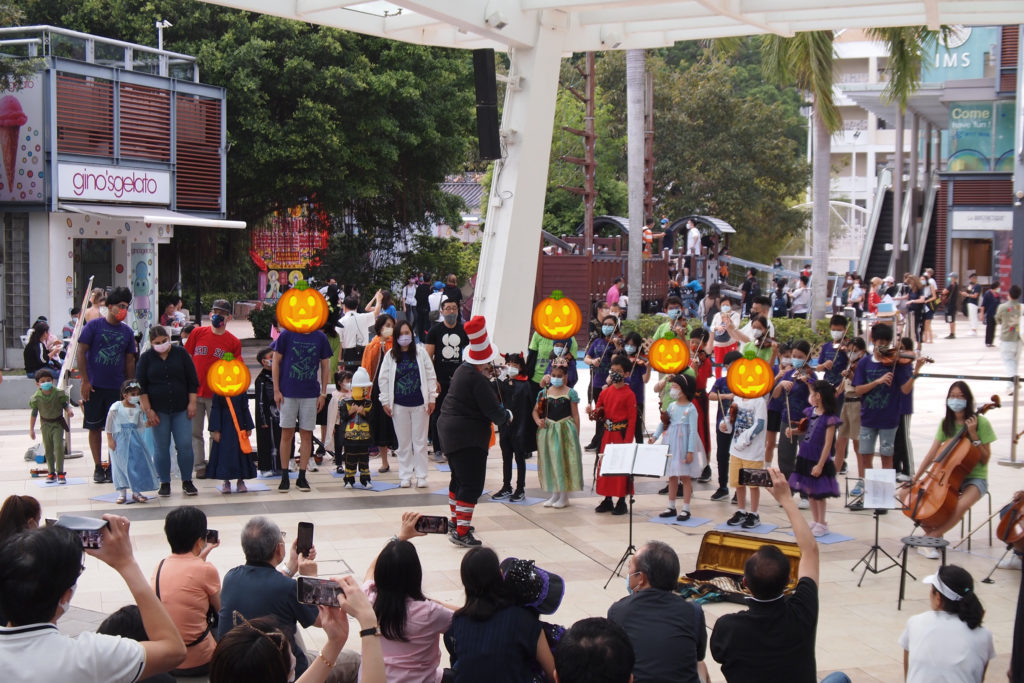
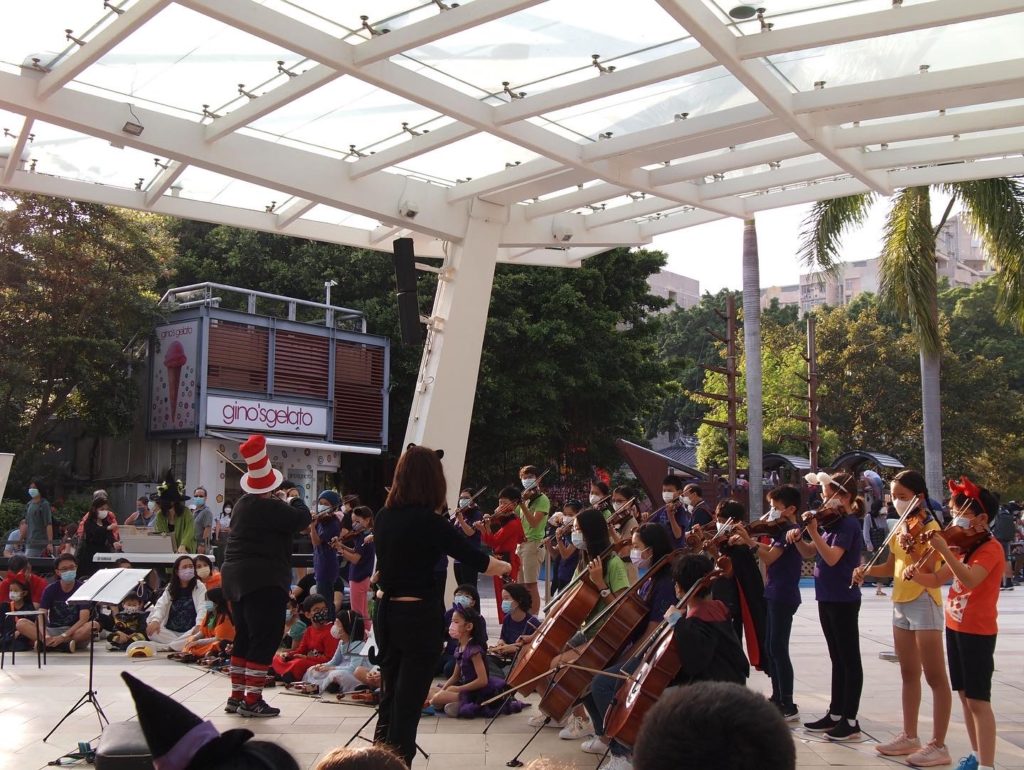
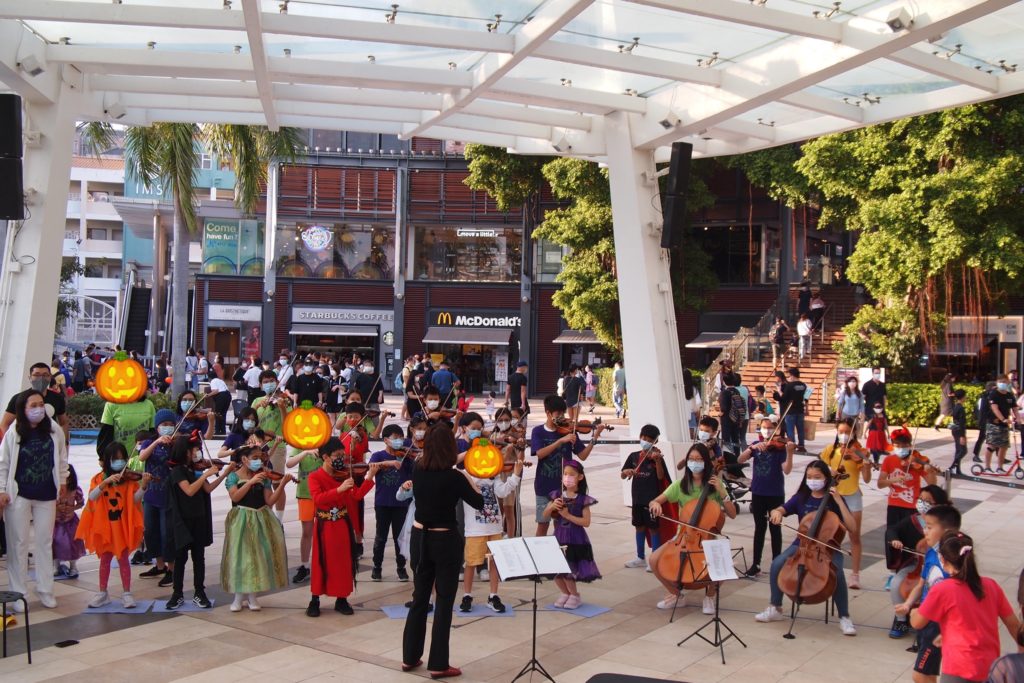
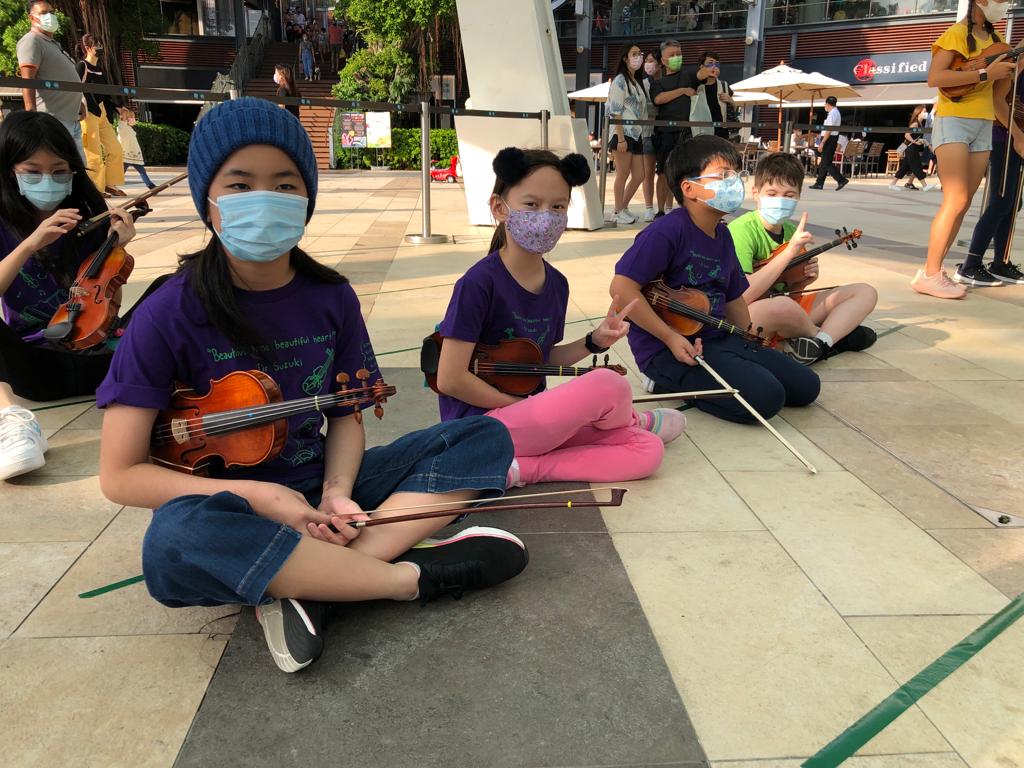
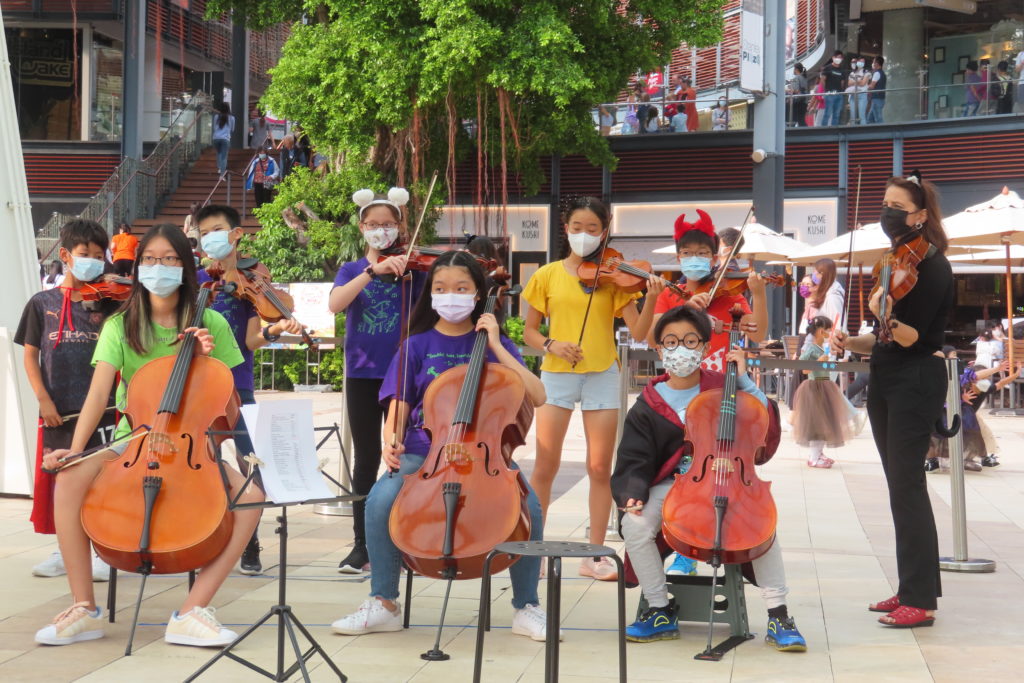
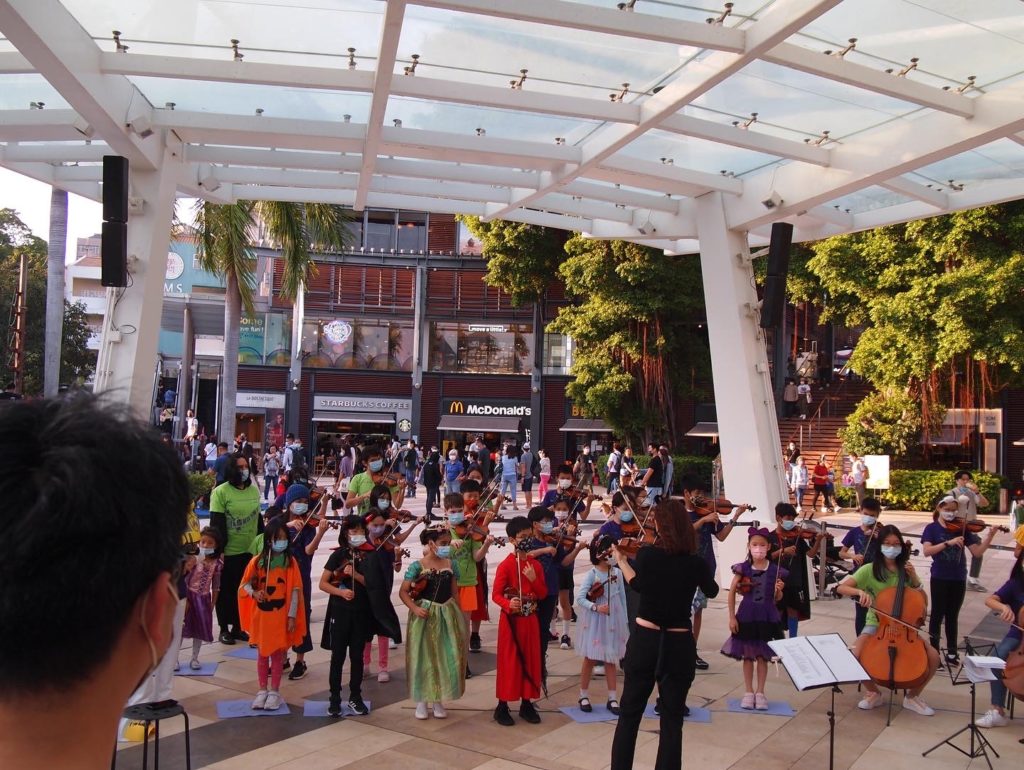
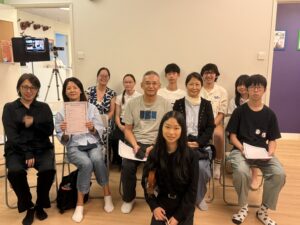
What a joy to be back at Stanley – almost two years after our last public performance! While we have been fortunate to have some “in person” performances – these have been limited to very small audiences comprised of immediate family members. It was so exciting to share our music and our costumes with an audience that included people we didn’t know at all.

There were lots of opportunities for the audience to join in the performance as well: singing, dancing, clapping…sometimes it seemed that the spooky sounds were happening in “surround sound”.

We are all excited to have more chances like this in the future.

Please enjoy some of the sights of our performance!

  • lower strings
  • pianists watching carefully
  • Two Grenadiers!
  • Everyone joined in Witches Dance
  • Pianists playing Gabby Ghost
  • French Folk Song
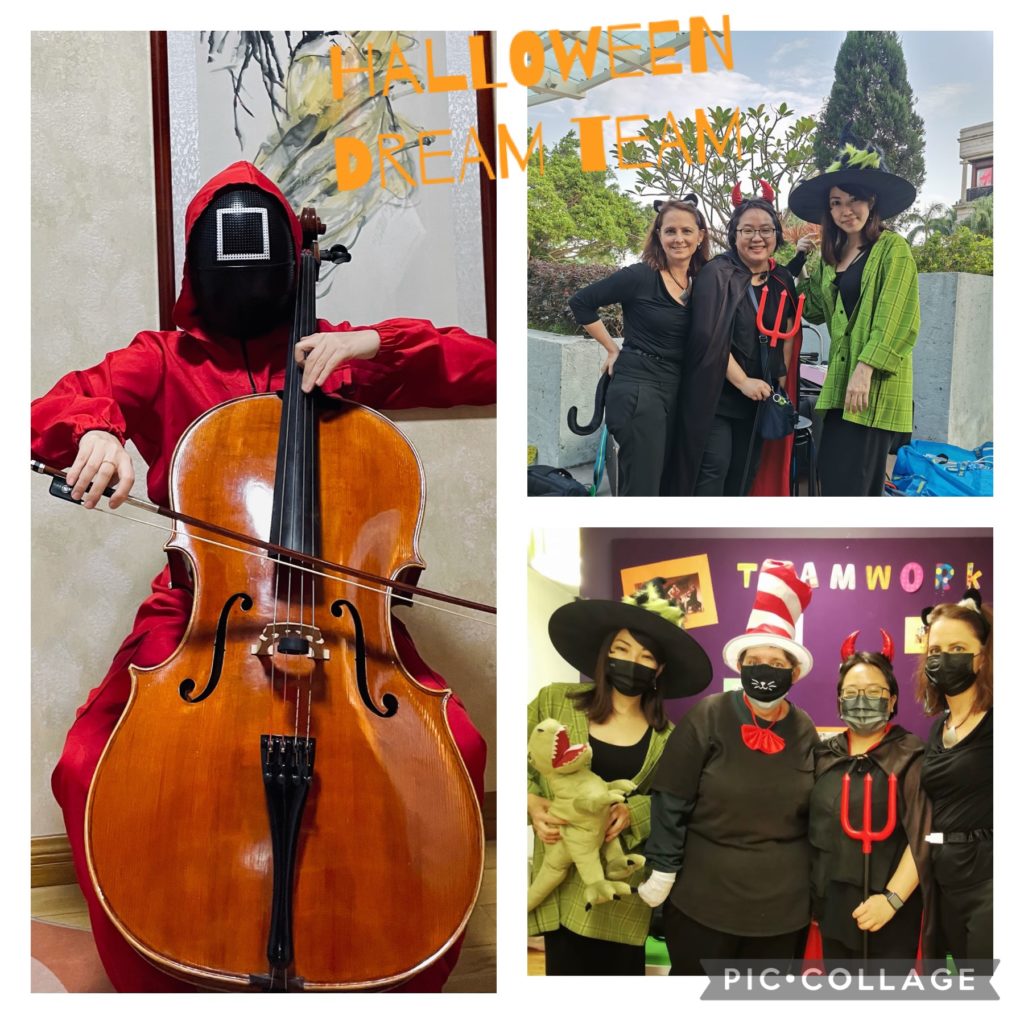
  • Ms Sonomi had a great costume!
  • Ms Susan’s first play-in in Hong Kong!
  • waiting…
  • SMAHK staff dressed for Halloween

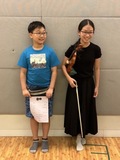
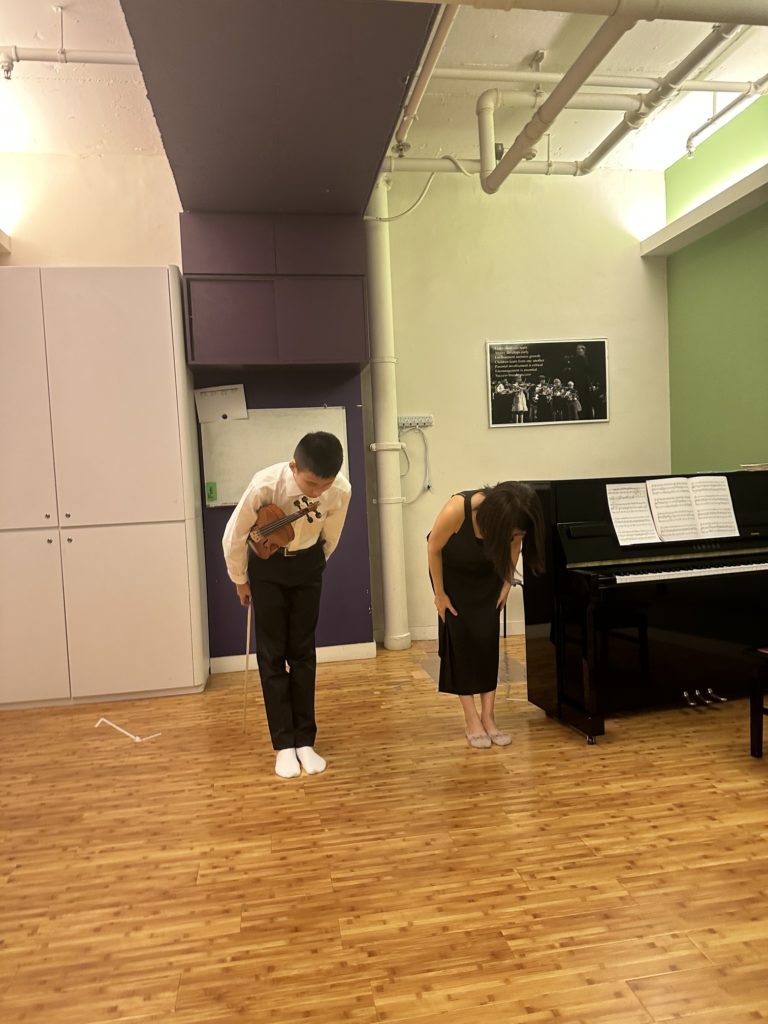
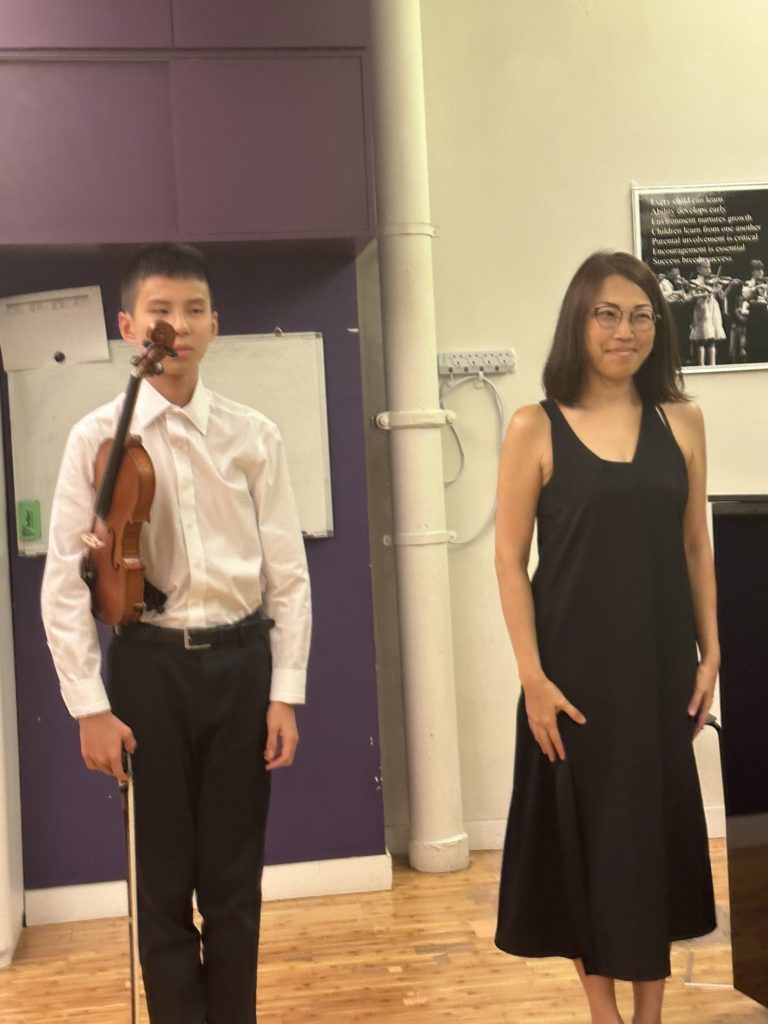
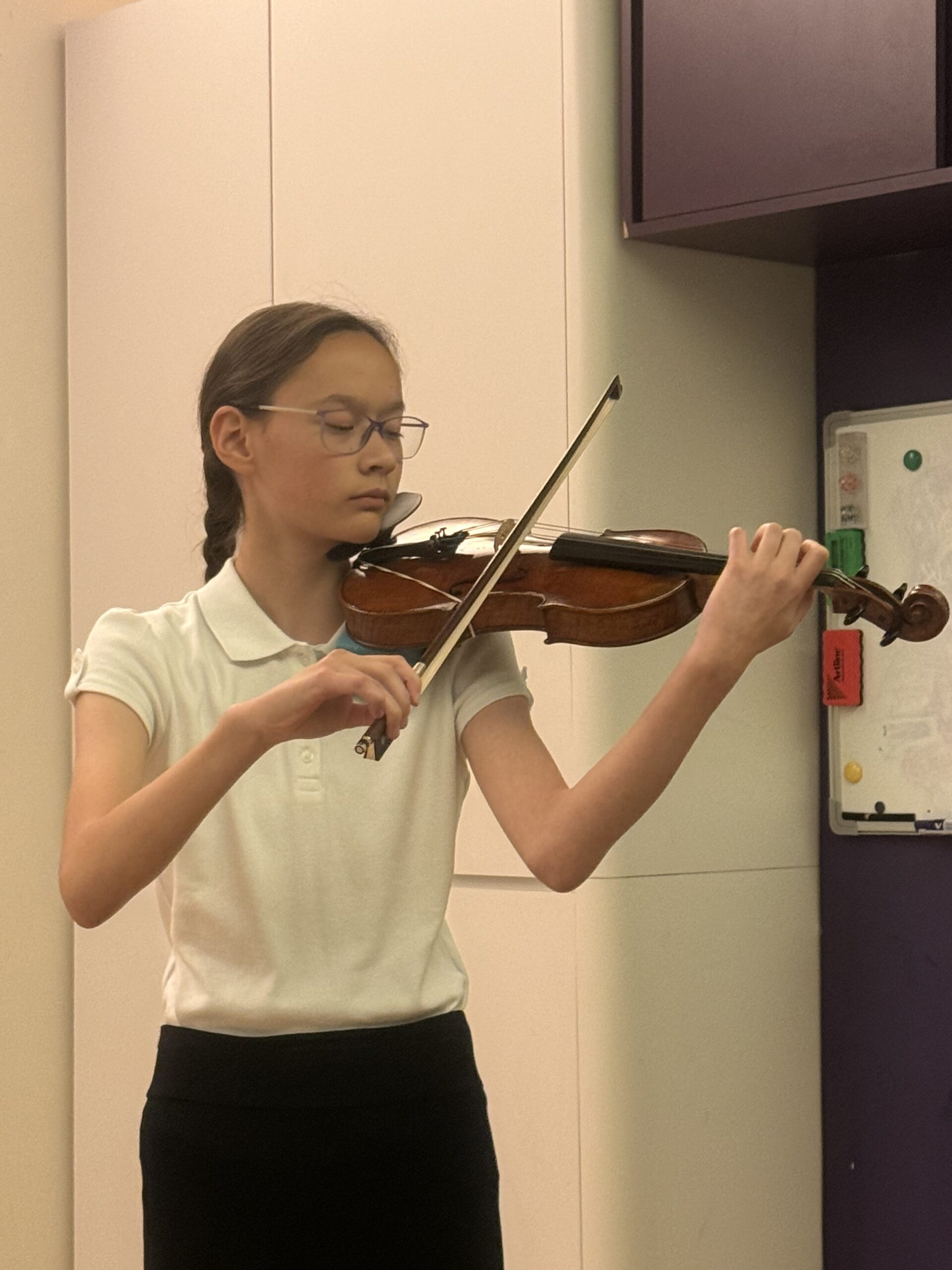
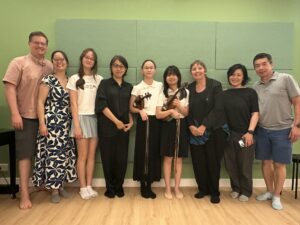
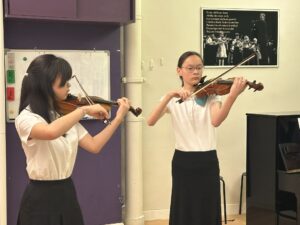
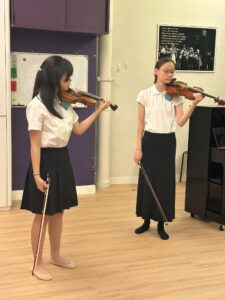
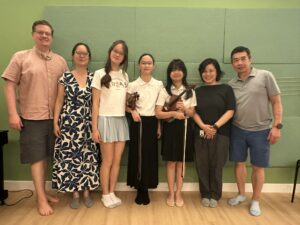
Reflections from the Performers: Camy & Emma W Book 4&5 Violin Recital

June 23, 2026 By Suzuki Music Academy of Hong Kong

~from Emma

To prepare for this recital, Camy and I spent a gruelling four months preparing with each other, our first rehearsal together was in the US, back in February. Since then, we exchanged multiple video recordings with each other, and had a few zoom meetings now and then to discuss possible articulations or dynamic levels. Then upon meeting up with each other a week before the recital, we spent a few hours finalising everything together. In the end, I believe our hard work together paid off. 

Of course there were mishaps along the way: long distance communication with each other being one of the more difficult aspects; or finding the right time to have rehearsals together, school or jet lag being something we had to work around; or when Camy and I went out to eat lunch before our rehearsal, and it immediately started raining heavily. Despite all of these challenges, big and small, we were able to persist to the end, and I believe that shows through our recital. 

One of the main things I learnt while preparing, is the importance of balance between two parts. While playing the Bach Double, the goal wasn’t always to be the same level of volume, but to support each other through our playing. If Camy’s part had the melody, while I had the supporting part, it would be my job to enhance what Camy is playing, not to overtake her, vice versa. With that in mind, I feel like Camy and I were able to successfully incorporate this idea into the Bach Double. All in all, I had a lot of fun playing the Bach Double during the concert. 

When it comes to my own solo pieces, the mistakes were evident, and it could have been prevented, had I prepared more mindfully. At the end of the day, mistakes were made, and I unfortunately cannot go back in time to fix them. This was a lesson I learned, and a preparation mistake that will not happen in my future book recitals. 

Thank you Ms Diane, Ms Sonomi, and Ms Marie Ann for helping us along the way, and thank you Camy for taking the time to prepare and perform this recital with me.

~from Camy

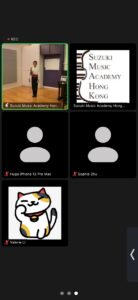
My book 4/5 recital on June 20, 2026 was my second recital with Emma and it was nice to be able to see everyone and work together in Hong Kong! The book 4/5 recital is the first recital where the students have to take most of the responsibilities, including deciding our rehearsal times, working together independently, and making decisions on how to use articulation, phrasing, and bow divisions in our playing. This was especially challenging for me and Emma because we lived halfway across the world from each other.

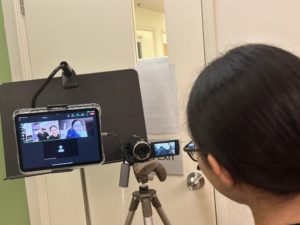
Fortunately, we had the opportunity to meet up in person before I came to Hong Kong, at the SAA Suzuki music educators’ conference in San Francisco in February. Both Emma and I (plus Hanson and Linnaea) were selected to participate in the Early Music Ensemble hosted during the conference, which focused on playing in the baroque style. We had the chance to use baroque bows for the first time and learn bowing techniques from violinist Rachel Barton Pine and her daughter, and we performed an orchestral version of the Bach Double during the conference. This was beneficial for me and Emma to learn more about the articulation used in the baroque style because we were working on the Bach Double for our recital. When working together in San Francisco, on Acapella, and in person, we experimented with both the modern bow and baroque bow to see which style we preferred to use during the recital. Although we are more used to playing with our modern bows, we decided to use the baroque bows during the recital for the Bach Double because it was more fitting for the articulations we chose to use.

At the recital, we decided to make the Bach Double our grand finale. Although we took it considerably faster than when we practiced, it ended up sounding really good and pretty balanced between the parts. We spent the majority of our independent rehearsals as well as a good part of our joint lessons discussing the articulation we should use, how we wanted to use phrasing and dynamics to add depth to our playing, how to balance the parts and when to bring out specific sections, and how we wanted to do the bow divisions for the Bach Double. 

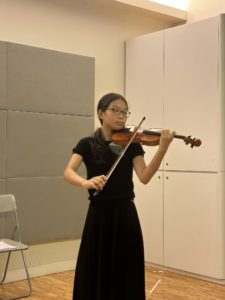
Another big highlight of the book 4/5 recital is that we each had the opportunity to perform a whole Vivaldi concerto with 3 movements. I played the Vivaldi A Minor concerto, and a main focus I worked on in my lessons with Ms. Diane was how to transition between the different movements. This is because it is important to make sure you are prepared with the appropriate energy required for each movement. For example, between the first (Allegro) and second (Largo) movements, I took a longer time to adjust to the lower level of energy for the second movement. The second transition from the second to the third (Presto) movement was much shorter because it was easier to transition from lower to higher energy. The experience of playing a whole concerto helped me understand the relationship between the movements and how their styles were different but related.
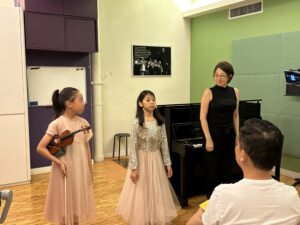
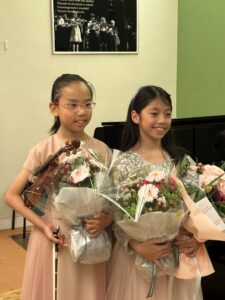
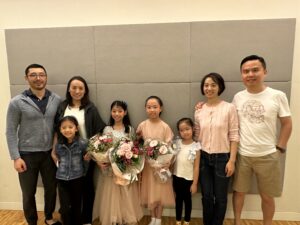
My other solo pieces were German Dance, Seitz 5/3, and Perpetual Motion. The things I needed to work on were different throughout each piece, including how the cues needed to happen, the ritards, phrasing, tone, and much more. I thought I have improved a lot in all the pieces since when I first learned them a few years ago and also from when I started working on them at the beginning of this year to prepare for the recital. Even though some things still could use adjustments when I performed them, I think I still did a good job with the dynamics, articulation, and other specific things I worked on in the pieces.

In the joint pieces, Emma and I had to spend a lot of time coordinating the parts on how we wanted to do different aspects of each piece. One thing that was difficult for us was surprisingly the Twinkle Variations. For the Book 4/5 recital, Ms. Diane asked us to play the variations in multiple keys and 6 different positions to demonstrate our advancing technique. The challenge was even tougher because we didn’t practice the Twinkles as much as the other joint pieces, but also because we changed the keys and positions for each variation multiple times and only finalized the decision at the dress rehearsal two days before the recital. 

In Seitz 2/3, I spent a lot of time working on the cues for Emma and Ms. Sonomi because there are a lot of ritards and places that need me to cue the next section. In the performance, I think I improved the cues in the ending of the piece and the middle compared with the dress rehearsal, when it was difficult for me to cue properly in those sections at first. I was accidentally giving a double cue for the ending note, but I worked to make my motion a smoother and bigger bow circle to provide a clearer cue for my partners. I think the cue in the middle of the piece could have been better because I should have matched the next section’s tempo slightly better, but it was definitely improved since the last time. 

In the Veracini Gigue, the main issues Emma and I both worked on were using our elbows properly throughout the piece and also how to do the grace notes consistently. I think I could have improved my use of my elbow in the recital, but I think Emma and I worked out the grace notes and decided on a consistent solution.

I think we did well in both Gossec Gavotte and Bach Bourree, although the Bourree 2 was pretty slow compared to Bourree 1 when they were supposed to be similar in tempo. Other than that, I think our phrasing, bow divisions, and articulation matched well in both pieces.

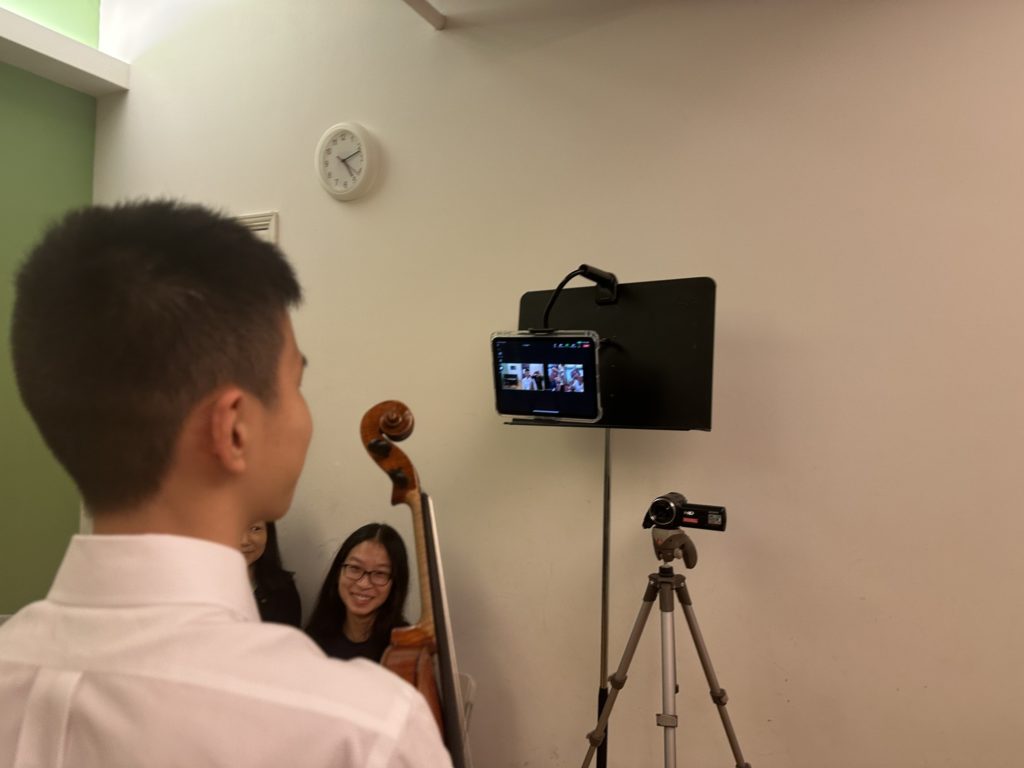
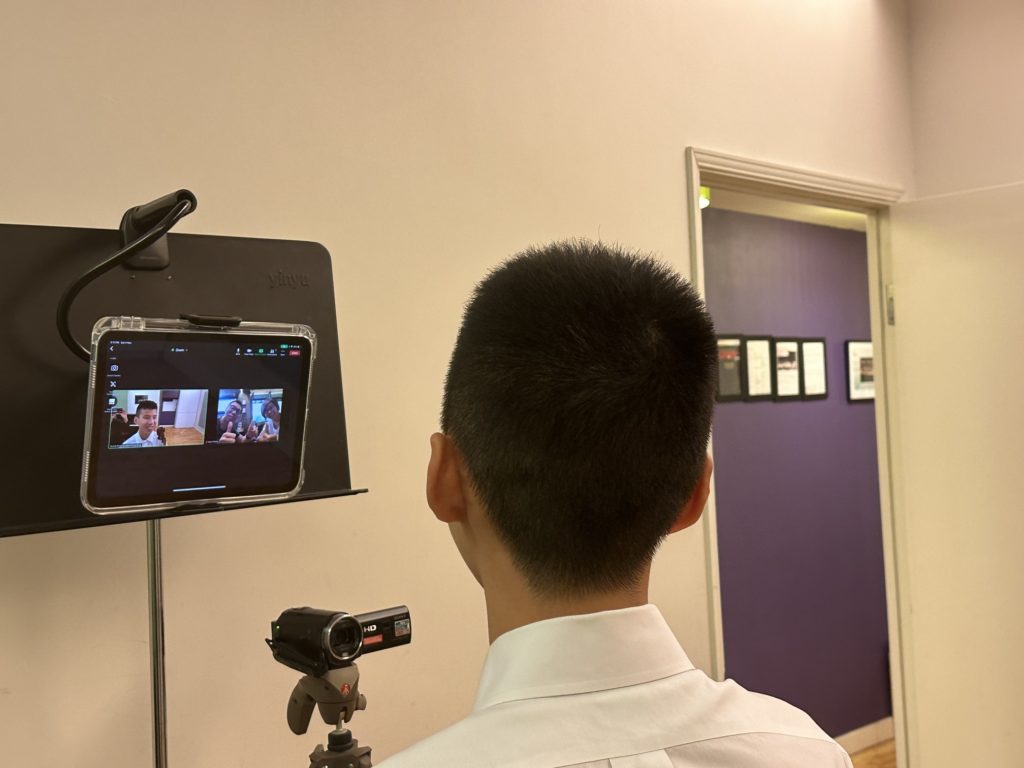
Lastly, I would like to thank everyone who helped me prepare and make the recital happen. Thank you to Emma for being a wonderful recital partner and willing to work with me overseas and have many rehearsals on two different continents. Thank you to Ms. Diane for being a great teacher and helping us work on the recital together, improve our playing, and take more independent responsibility for making decisions. A big thank you to Ms. Sonomi for being an awesome collaborative pianist and taking the time and effort to accompany us during the 4-hour dress rehearsal and recital (on top of several other recitals and performances). Special thanks to Ms. Marie Ann for being so welcoming and making sure everything runs smoothly. Thank you to my family and everyone who came to support us and listen to our recital—both in person and on Zoom.

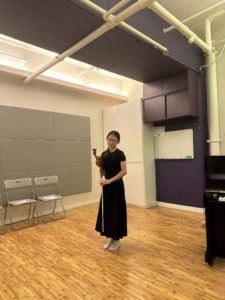
Reflections from the Performer: Isabel Zeng Book 8 Violin Recital

June 22, 2026 By Suzuki Music Academy of Hong Kong

My Book 8 Recital was the culmination of so, so many hours of practice and rehearsals. So while yes, it did have mistakes and rougher sections, I would consider it an immense accomplishment overall.

Something that I am especially proud of was the progress I made especially in the week leading up to the recital. Before that, I was juggling academics and finals, so once finals week was over, I was able to better engage in practicing. Furthermore, because my dress rehearsal was only two days before the recital, this forced me to really hone in on the specific rhythmic errors that I had in addition to the musical elements that I worked on in my lessons. I think that my last lesson before the recital was extremely pivotal to how I was able to express the phrasings and dynamics in pieces like the 1st movement in the Veracini Sonata and the 3rd movement of Eccles Sonata. While the dynamics of the Veracini were challenging to remember at first, I later faced more difficulty with the triplet rhythms — something that was a common theme across many of my pieces. However, I am overall quite proud of how those pieces turned out.

A sonata I’d like to focus on is the Bach Sonata in C Major, which I played the 3rd and 4th movements of. These pieces were definitely a challenge on many fronts (the phrasing in the 3rd movement, memorising the 4th movement, lines, dynamics, shape, just to name a few), but the most interesting of them was switching to playing with a baroque bow. At first, I couldn’t get used to how the bow didn’t feel like it was actually on the string, which made me press harder to compensate and then created a scratchy sound. However, I learnt to use my arm more and have a better contact point, which is something that helped greatly in creating a smoother sound (though it is very much still in progress).

Above all, the Book 8 Recital reflected huge development in both me as a musician and as a person. With the added responsibilities of scheduling all of my rehearsals with Ms. Sonomi and creating my recital poster and programme, the recital was a large undertaking and something that I am very proud of having accomplished (and happy to have had completed!)

But most importantly, I would like to give a massive thank you to Ms. Sonomi for all her hours of rehearsals and practice with me and for tolerating all of my slip-ups and tempo inconsistencies while helping me through them all. To Ms. Diane, thank you so much for going over the same mistakes with me over and over and helping me through them while making the end goal feel perfectly attainable. Last but not least, thank you Ms. Marie Ann for your amazing administrative work and moral support — none of this would be possible without you!

Reflections from the performers: Isabel & Nicole Book 3 Recital

May 5, 2026 By Suzuki Music Academy of Hong Kong

~from Isabel

This Book Recital was the most challenging recital I’ve had. Both Nicole and I had to work together under multiple time constraints. We had to change the dates of our practices numerous times in order to fit our schedules. The biggest challenge for me was, even though I had time to practise I didn’t practise efficiently or effectively. So when it came time to the dress rehearsal I was mostly unprepared, especially on my solo pieces. So I decided I needed to start practising efficiently. Throughout the week I slowly learned how to use my time efficiently and make each practise count. In the end I managed to play all of my pieces pretty well and me and Nicole worked really well together at the concert. On top of that I also learned a valuable lesson. I learned how to be efficient and manage my time. Overall I think this concert was very good given the challenges we faced.

~from Nicole

I was really glad when I heard that my partner would be Isabel. Since Isabel and I have known each other from school, we have collaborated exceptionally well on our book recital, even when we had to reschedule many of our rehearsals, demonstrating a strong partnership that enhanced our overall performance.
During joint lessons, we worked on the flow of each joint piece. For the twinkle variations, we practiced playing the twinkles at a consistent speed (80), with the right articulation and bow division. For Minuet in G, I felt like the first time we played the piece together, we were challenged because Isabel had just started learning it, and I hadn’t practiced the harmony well enough. However, as we began to focus on coordinating our parts and improving each section, the specific places where a ritard was needed, we were able to play the piece well. 
I felt like I had good energy towards the end of the recital, especially in the Gavotte in D major and the Martini Gavotte. I also liked how I played Humoresque. Although some of my shifts did not land correctly, I felt like I had good contrast when the dynamic and energy changed. In Bach Bourrée, I felt like my bow divisions and dynamics were clear, but I could have made some notes clearer rather than rushed, especially in the B section. For Gossec Gavotte, I felt my articulation slowly became more noticeable, but I could have practiced the notes in the C and D sections to make them sound clearer.
I want to thank Ms. Diane for teaching me all the pieces I performed and for supporting me. Ms. Sonomi, for collaborating with me and also teaching and giving tips to Isabel and I during the joint lessons. Ms. Marie Ann, for organizing everything. My family for supporting me. Isabel’s parents for supporting Isabel and me during the joint lessons, dress rehearsal, and book recital. I would also like to thank everyone who was involved in the recital process. Everyone was very flexible when all the schedule changes! Finally, Isabel, for being such a great friend and recital partner! 

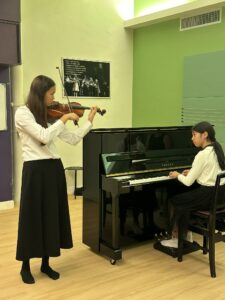
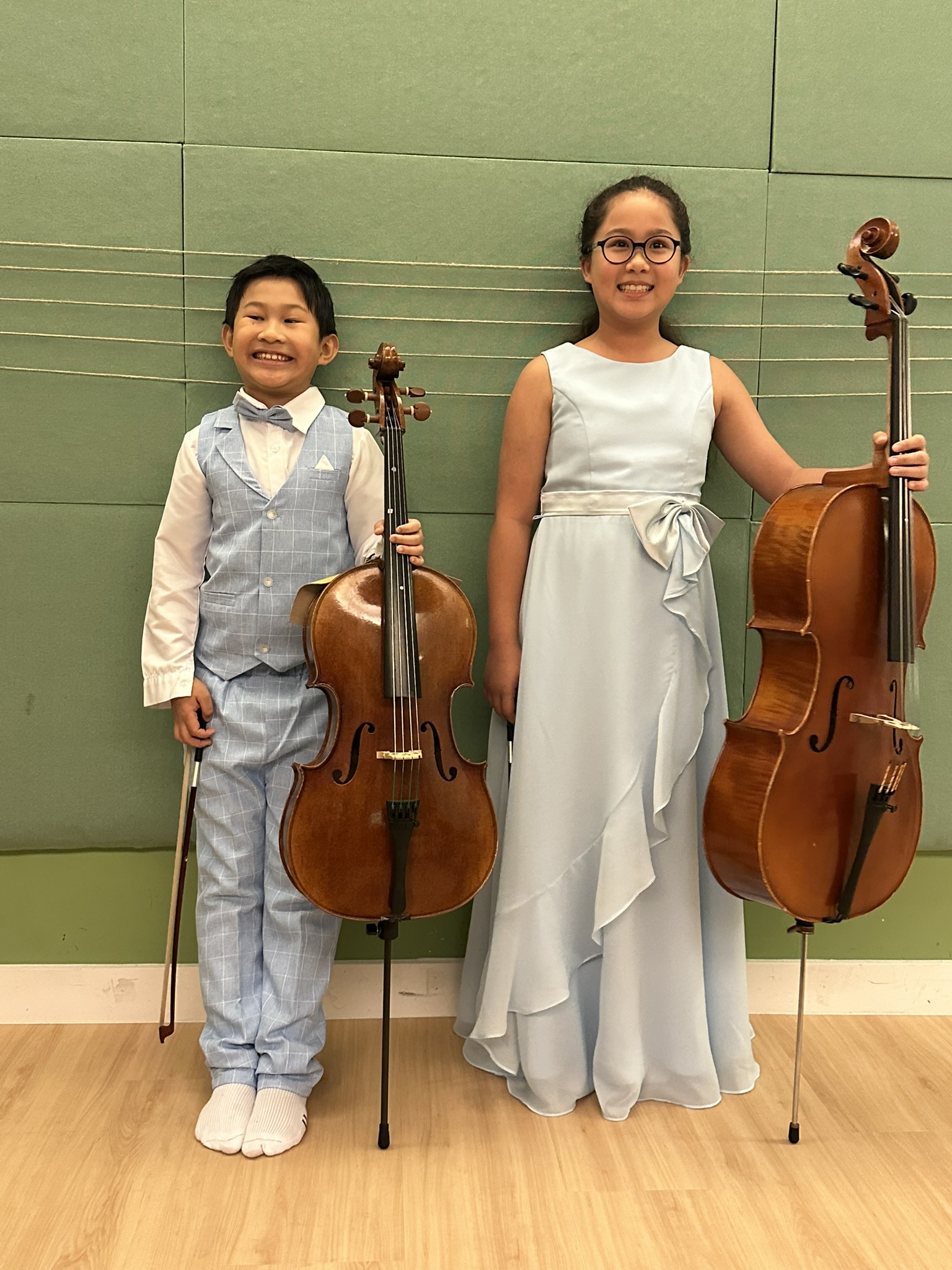
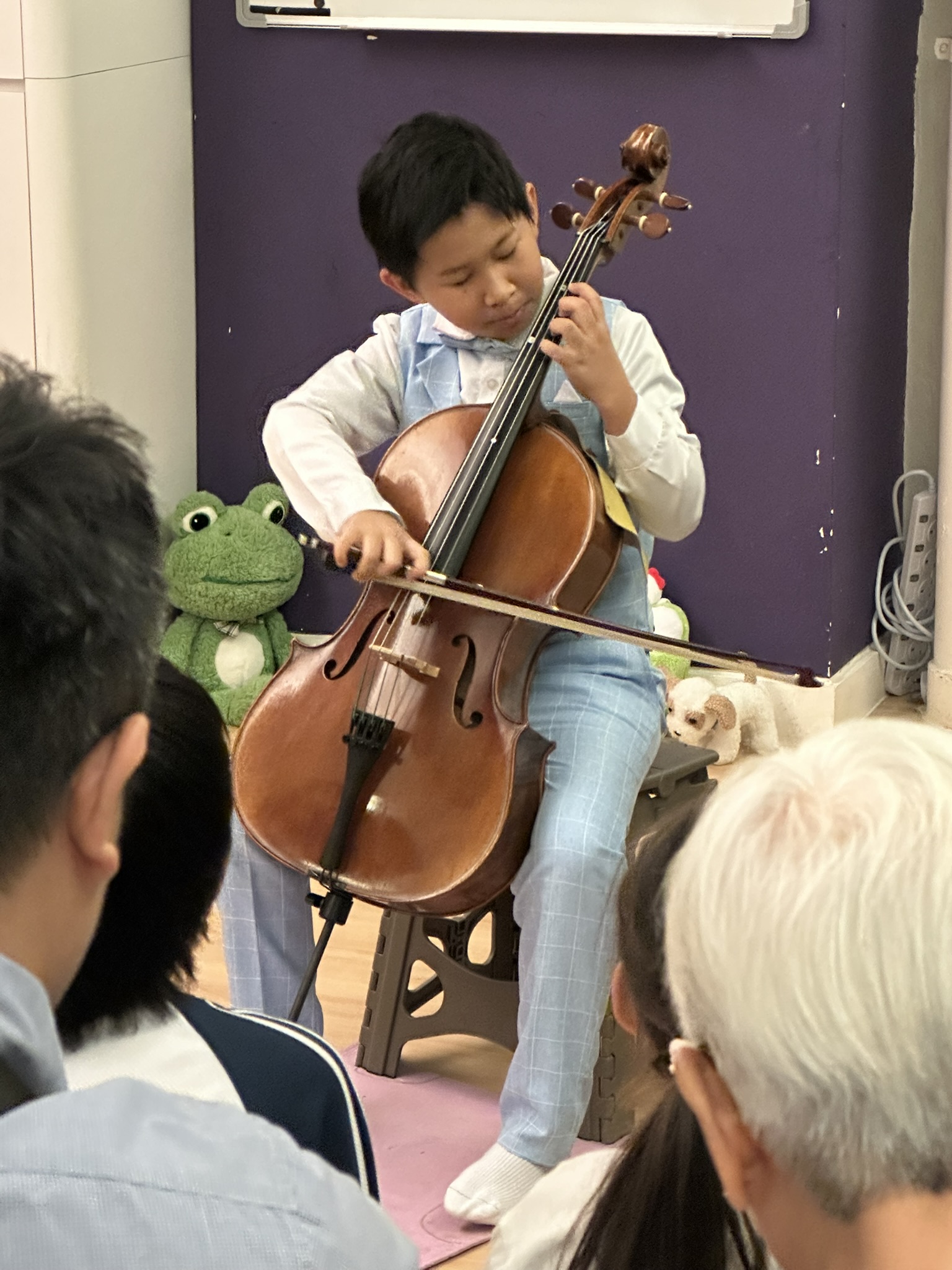
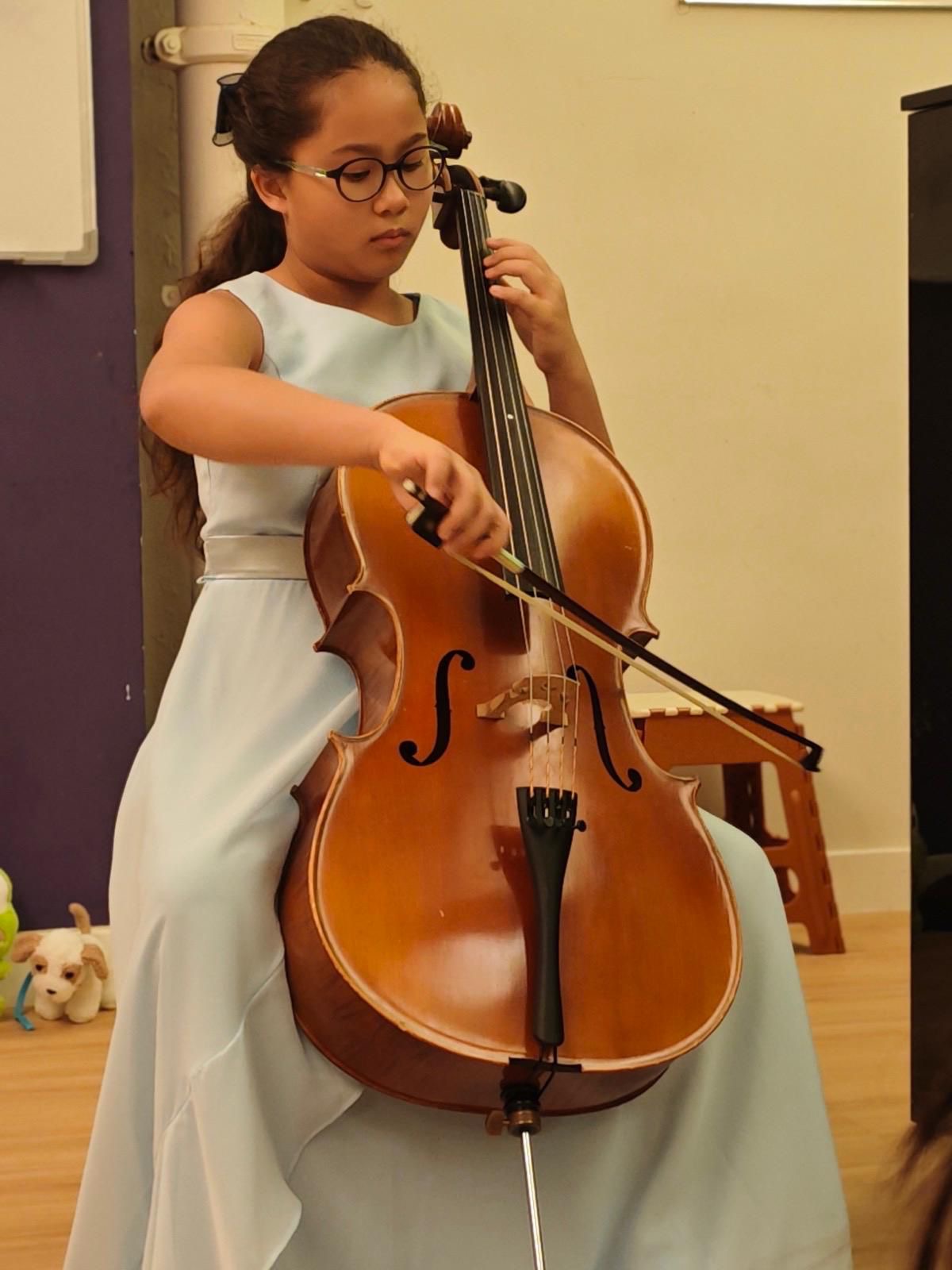
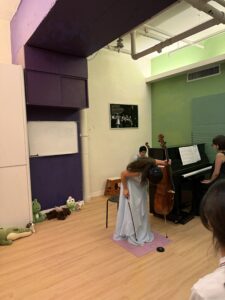
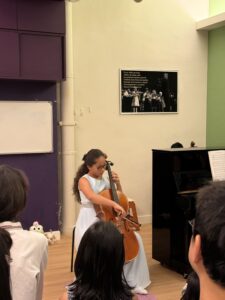
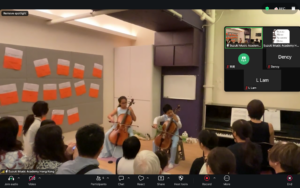
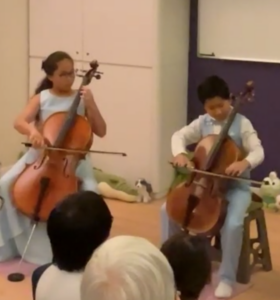
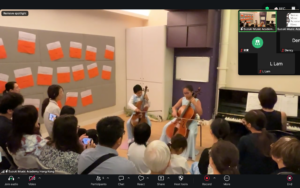
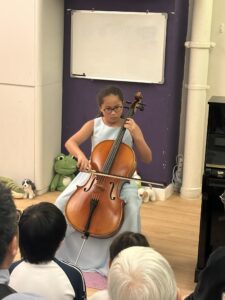
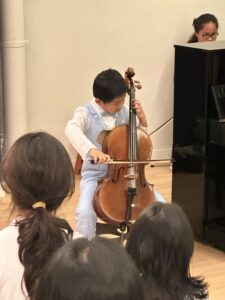
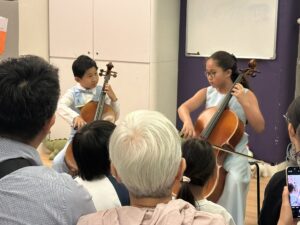
Reflections from the Performers: Elise and Sebastien’s Book 1 Cello Recital

May 5, 2026 By Suzuki Music Academy of Hong Kong

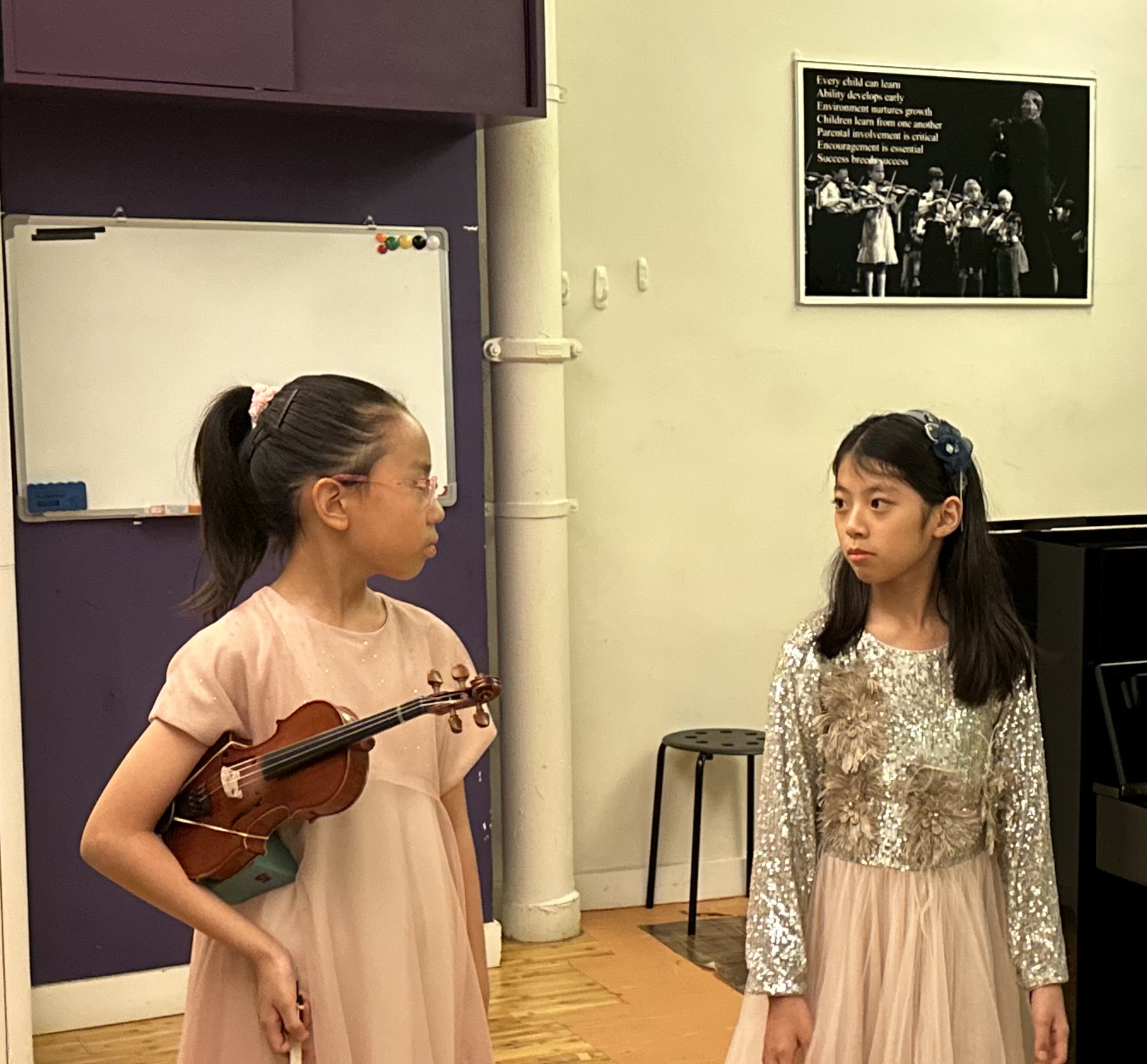
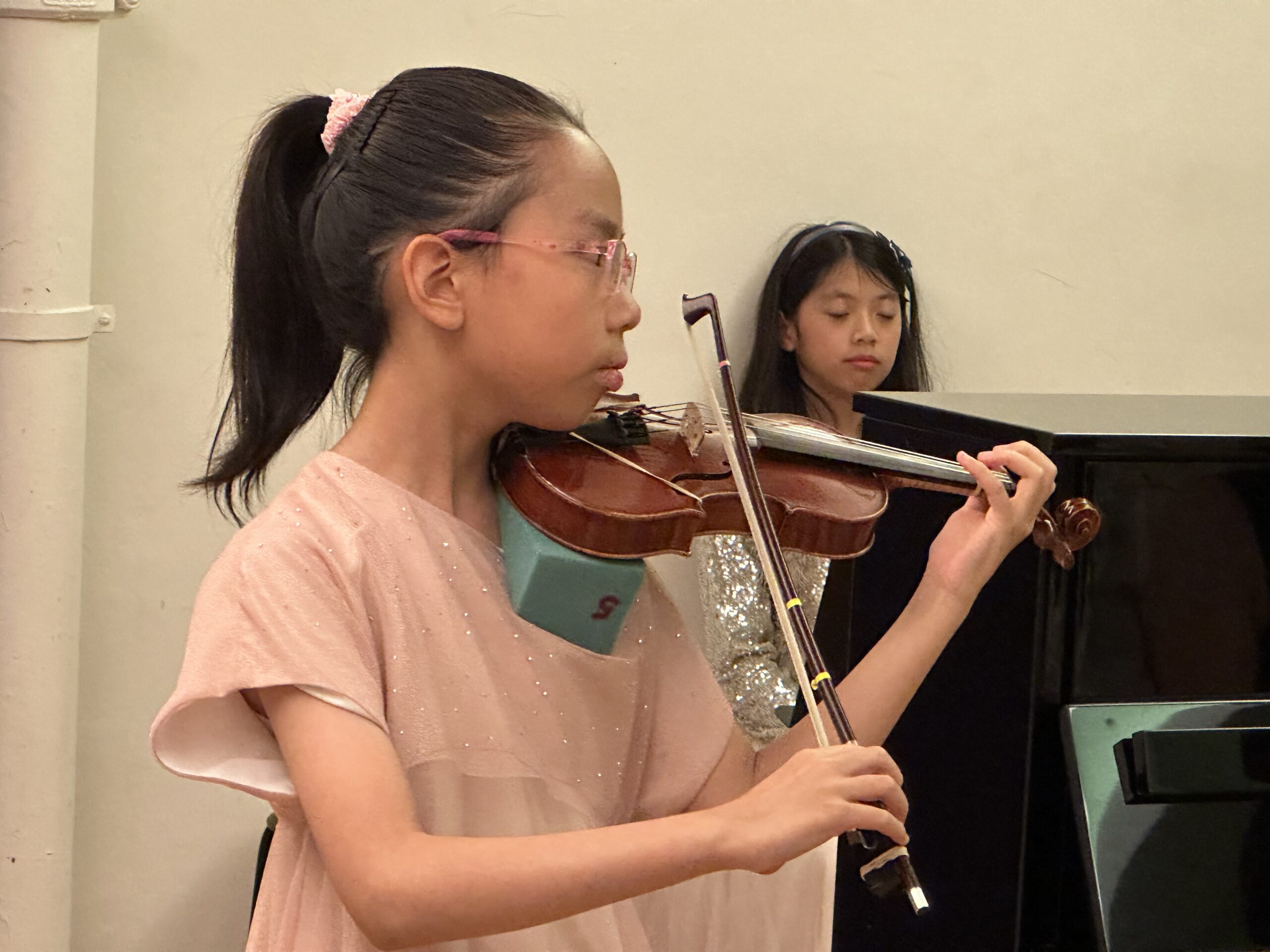
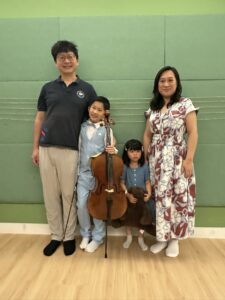
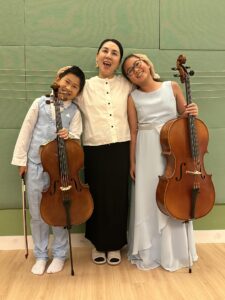
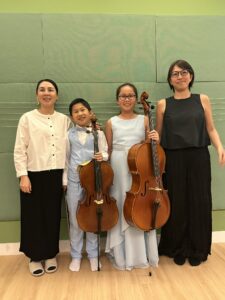
Sebastien and Elise prepared and performed their Book 1 Cello Recital together. Please enjoy their thoughts about the experience!

~from Sebbie

Yesterday, I played cello in front of a lot of people. I was a little scared. I felt a little weird. While I waited backstage I felt bored… (no offence). When I started I was a little nervous but I kept on playing. I felt the ringing of music in my ears when I was playing. I got a mistake in O Come Little Children and I fixed it. I like playing solo more because it is more easier because I can go at my own speed and I can do my own tone after that. I loved eating all the snacks that I brought there were also cupcakes and cookies but still my favourites were the beef sticks. There was also other drinks like grape juice orange juice and apple it was great. I also gave cards to the teachers. And I enjoyed the recital!

~from Elise

I enjoyed when we went to get food because then I felt like I graduated from Book 1. I felt really nervous when we were waiting in the small room but after we played the Twinkles I didn’t feel as scared. I am thankful for my teachers and family.

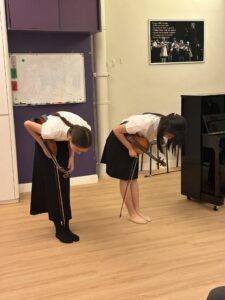
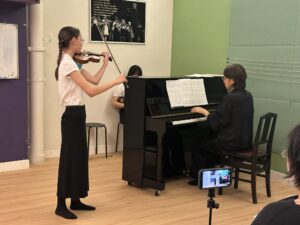
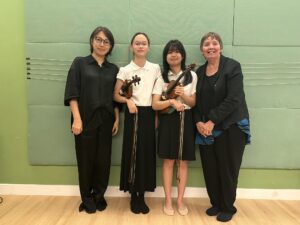
Reflections from the Performers: Charlotte & Sophie’s Book 1 Violin Recital

May 5, 2026 By Suzuki Music Academy of Hong Kong

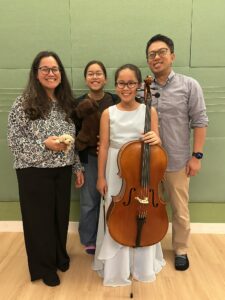
Sophie and Charlotte prepared and performed their Book 1 Recital together! Here are their reflections on their first-ever full recital experience!

~from Sophie

I am very glad that my recital was successful. I really liked how the audience was very supportive. I also think that we (me and Charlotte) did well. We remembered the important things and worked together well. Though I think that if I were to have another recital, I want to make sure that we weren’t as nervous and laugh a little less when we were walking.

~from Charlotte

Next Page »

25/F Times Media Centre
133 Wanchai Road
Wanchai, Hong Kong

directions

Suzuki Music Academy of Hong Kong believes:

Follow us on Facebook

Search

  • HOME
  • PROGRAMS
  • EVENTS
  • GALLERY
  • REGISTER

Copyright © 2026 · Magazine Pro Theme On Genesis Framework · WordPress · Log in