• Mission & Community
  • Contact
  • Register

Suzuki Music Academy of Hong Kong

"Music Exists for the purpose of growing an admirable heart" ~Shinichi Suzuki

"Music exists for the purpose of growing an admirable heart"
Shinichi Suzuki
  • Home
  • About SMAHK
  • What is Suzuki?
    • History of the Suzuki Method
    • About the Suzuki Method
  • Programs
    • Instrumental Program
    • Rising Stars Program
    • Little Stars Early Childhood Music
    • Yo Yo Ma Program
    • Faculty
  • Events
    • Calendar
      • Download Calendar
    • Events sign up
      • Graduation Concert
      • Bach in the Subway
      • Prospective Family Parent Seminar
      • T-Shirt Orders
  • News
  • Gallery
    • Photo Gallery
    • Video Gallery
  • Video Gallery
  • T-Shirt Orders
  • School Calendar Download
  • Conference Photos
  • Studio Recitals
  • Photo Gallery
  • Register
  • Contact
  • Faculty
  • About Suzuki Music Academy of Hong Kong

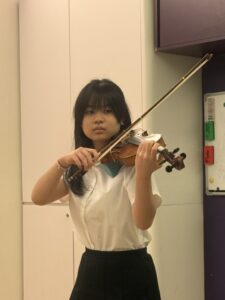
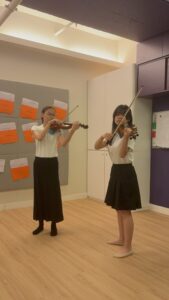
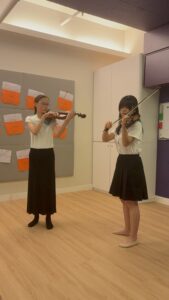
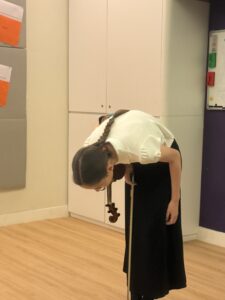
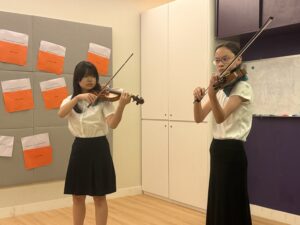
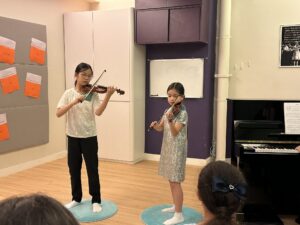
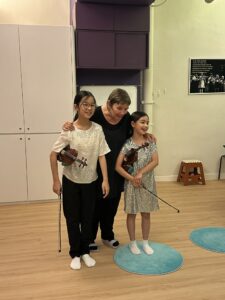
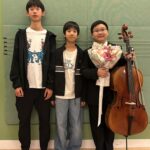
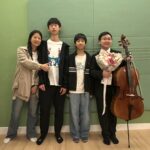
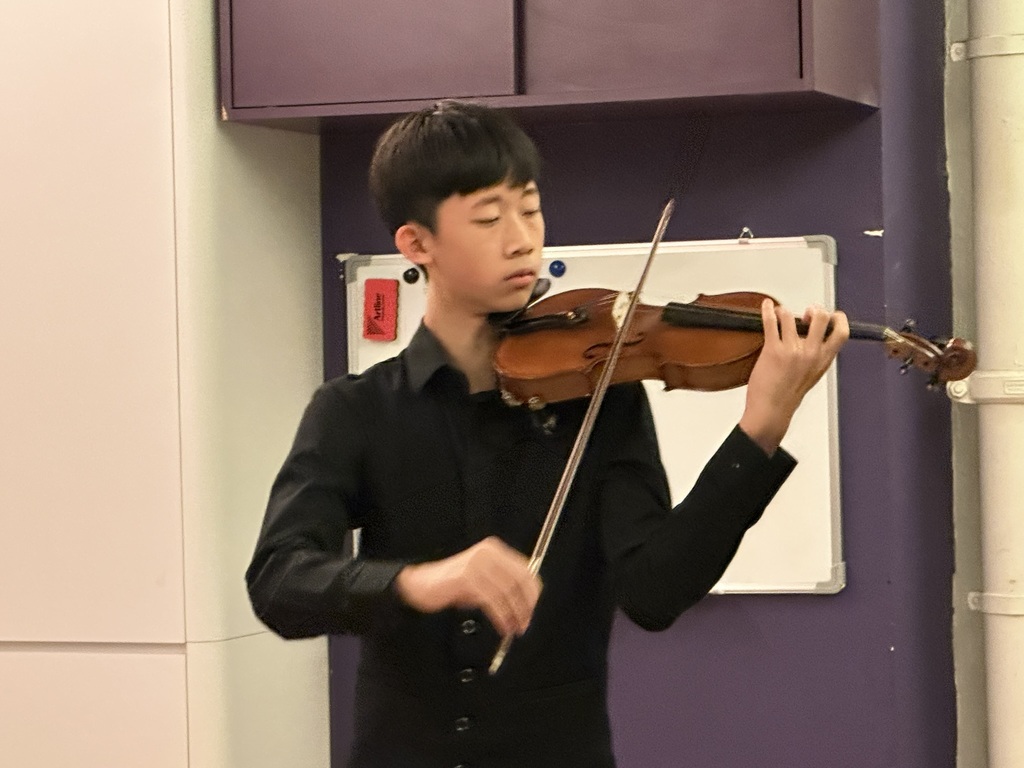
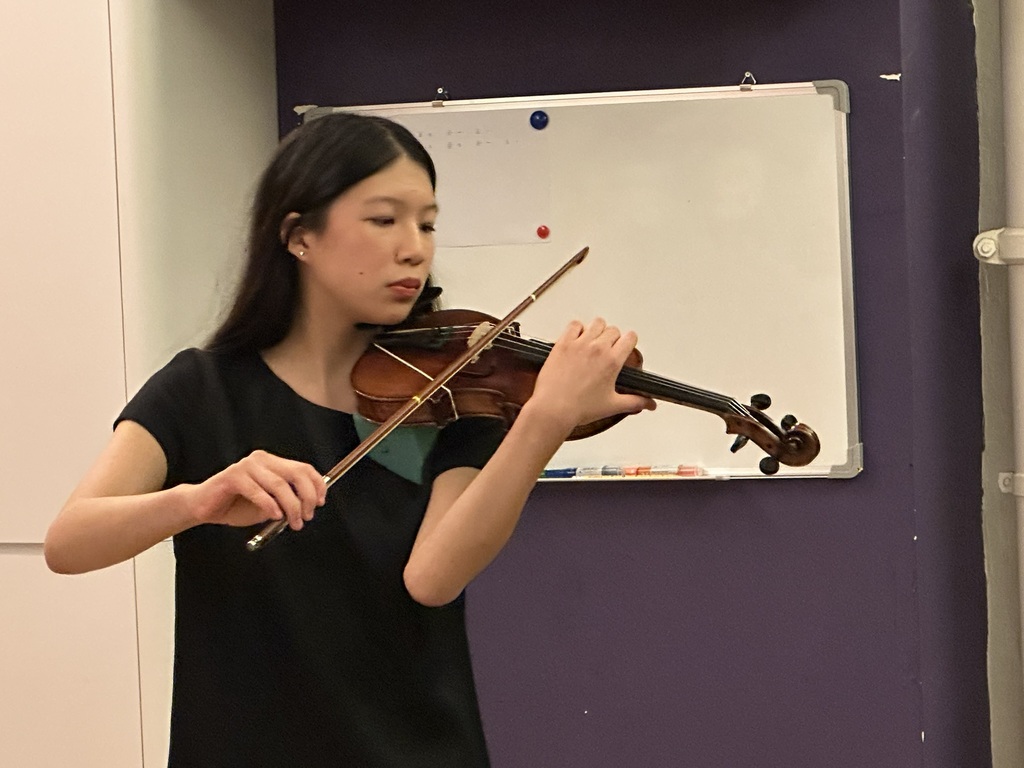
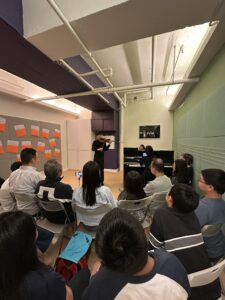
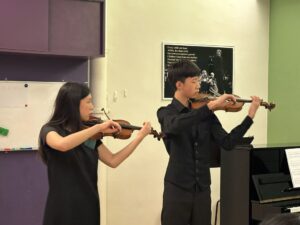
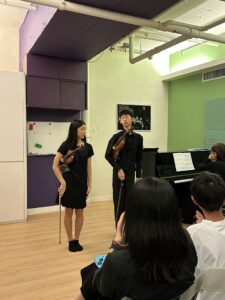
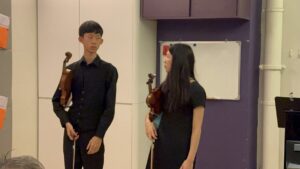
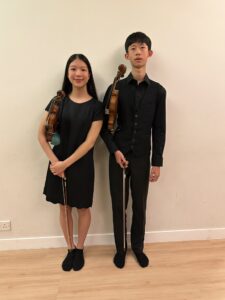
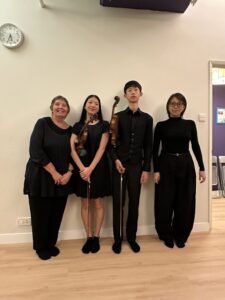
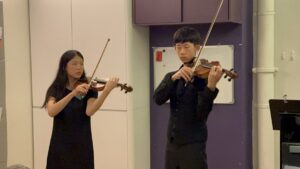
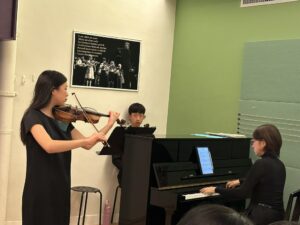
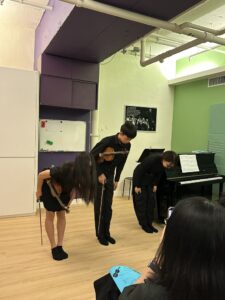
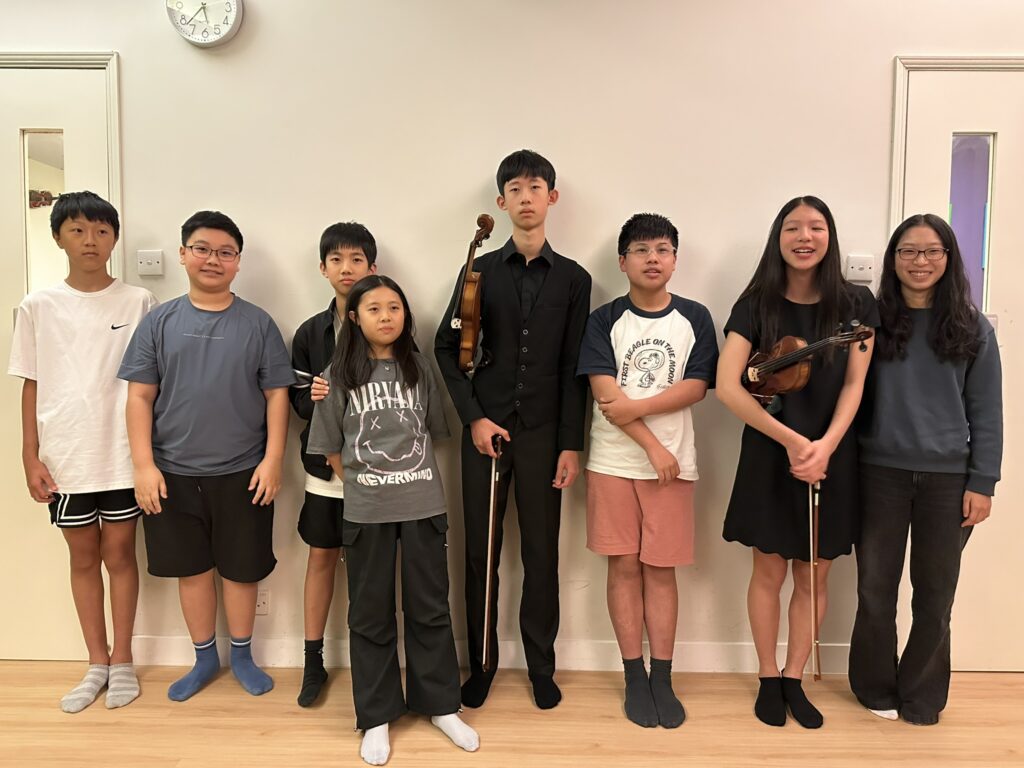
Reflections from the Performers: Camy & Emma W Book 4&5 Violin Recital

June 23, 2026 By Suzuki Music Academy of Hong Kong

~from Emma

To prepare for this recital, Camy and I spent a gruelling four months preparing with each other, our first rehearsal together was in the US, back in February. Since then, we exchanged multiple video recordings with each other, and had a few zoom meetings now and then to discuss possible articulations or dynamic levels. Then upon meeting up with each other a week before the recital, we spent a few hours finalising everything together. In the end, I believe our hard work together paid off. 

Of course there were mishaps along the way: long distance communication with each other being one of the more difficult aspects; or finding the right time to have rehearsals together, school or jet lag being something we had to work around; or when Camy and I went out to eat lunch before our rehearsal, and it immediately started raining heavily. Despite all of these challenges, big and small, we were able to persist to the end, and I believe that shows through our recital. 

One of the main things I learnt while preparing, is the importance of balance between two parts. While playing the Bach Double, the goal wasn’t always to be the same level of volume, but to support each other through our playing. If Camy’s part had the melody, while I had the supporting part, it would be my job to enhance what Camy is playing, not to overtake her, vice versa. With that in mind, I feel like Camy and I were able to successfully incorporate this idea into the Bach Double. All in all, I had a lot of fun playing the Bach Double during the concert. 

When it comes to my own solo pieces, the mistakes were evident, and it could have been prevented, had I prepared more mindfully. At the end of the day, mistakes were made, and I unfortunately cannot go back in time to fix them. This was a lesson I learned, and a preparation mistake that will not happen in my future book recitals. 

Thank you Ms Diane, Ms Sonomi, and Ms Marie Ann for helping us along the way, and thank you Camy for taking the time to prepare and perform this recital with me.
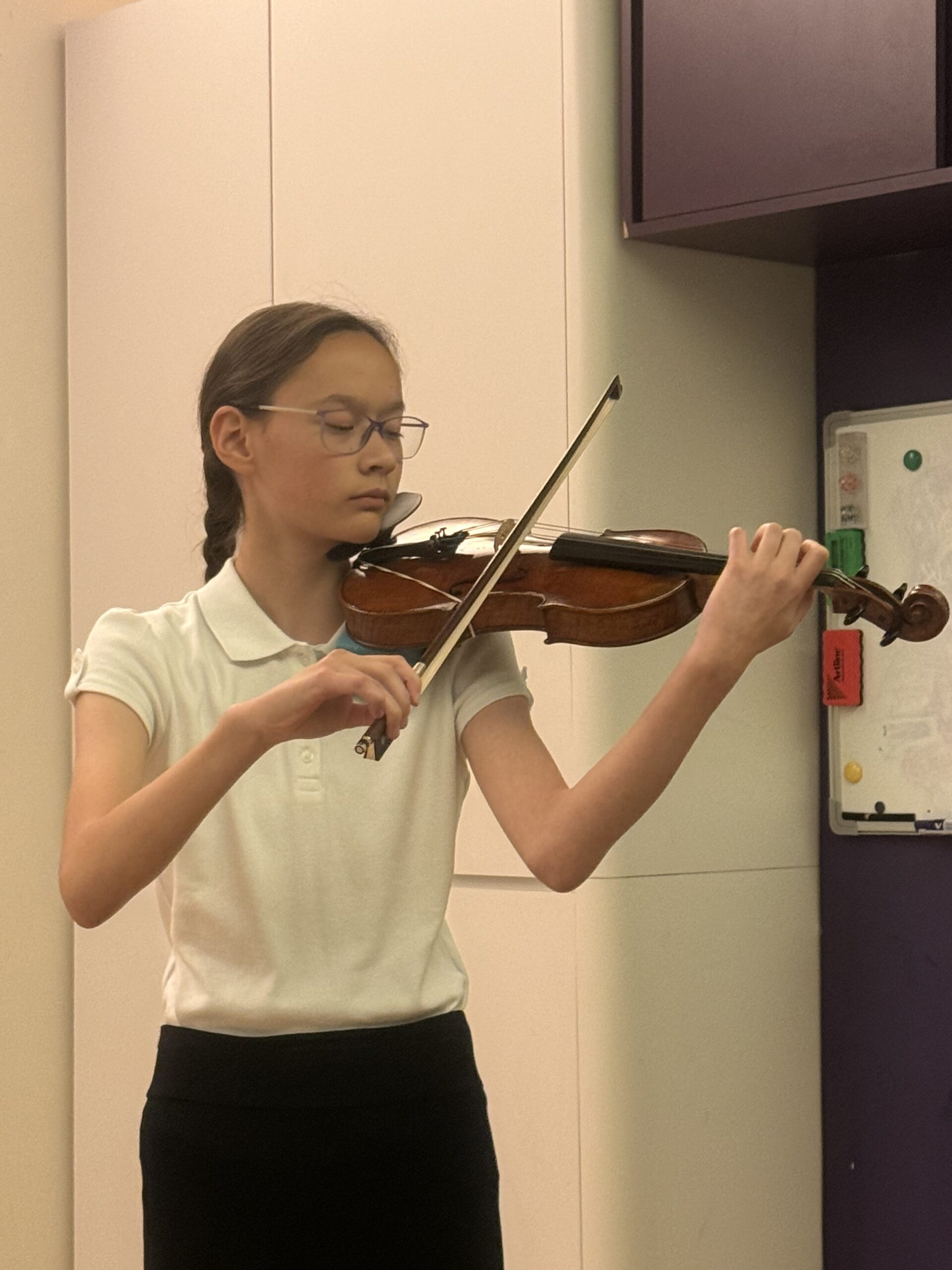
~from Camy

My book 4/5 recital on June 20, 2026 was my second recital with Emma and it was nice to be able to see everyone and work together in Hong Kong! The book 4/5 recital is the first recital where the students have to take most of the responsibilities, including deciding our rehearsal times, working together independently, and making decisions on how to use articulation, phrasing, and bow divisions in our playing. This was especially challenging for me and Emma because we lived halfway across the world from each other.

Fortunately, we had the opportunity to meet up in person before I came to Hong Kong, at the SAA Suzuki music educators’ conference in San Francisco in February. Both Emma and I (plus Hanson and Linnaea) were selected to participate in the Early Music Ensemble hosted during the conference, which focused on playing in the baroque style. We had the chance to use baroque bows for the first time and learn bowing techniques from violinist Rachel Barton Pine and her daughter, and we performed an orchestral version of the Bach Double during the conference. This was beneficial for me and Emma to learn more about the articulation used in the baroque style because we were working on the Bach Double for our recital. When working together in San Francisco, on Acapella, and in person, we experimented with both the modern bow and baroque bow to see which style we preferred to use during the recital. Although we are more used to playing with our modern bows, we decided to use the baroque bows during the recital for the Bach Double because it was more fitting for the articulations we chose to use.

At the recital, we decided to make the Bach Double our grand finale. Although we took it considerably faster than when we practiced, it ended up sounding really good and pretty balanced between the parts. We spent the majority of our independent rehearsals as well as a good part of our joint lessons discussing the articulation we should use, how we wanted to use phrasing and dynamics to add depth to our playing, how to balance the parts and when to bring out specific sections, and how we wanted to do the bow divisions for the Bach Double. 

Another big highlight of the book 4/5 recital is that we each had the opportunity to perform a whole Vivaldi concerto with 3 movements. I played the Vivaldi A Minor concerto, and a main focus I worked on in my lessons with Ms. Diane was how to transition between the different movements. This is because it is important to make sure you are prepared with the appropriate energy required for each movement. For example, between the first (Allegro) and second (Largo) movements, I took a longer time to adjust to the lower level of energy for the second movement. The second transition from the second to the third (Presto) movement was much shorter because it was easier to transition from lower to higher energy. The experience of playing a whole concerto helped me understand the relationship between the movements and how their styles were different but related.

My other solo pieces were German Dance, Seitz 5/3, and Perpetual Motion. The things I needed to work on were different throughout each piece, including how the cues needed to happen, the ritards, phrasing, tone, and much more. I thought I have improved a lot in all the pieces since when I first learned them a few years ago and also from when I started working on them at the beginning of this year to prepare for the recital. Even though some things still could use adjustments when I performed them, I think I still did a good job with the dynamics, articulation, and other specific things I worked on in the pieces.

In the joint pieces, Emma and I had to spend a lot of time coordinating the parts on how we wanted to do different aspects of each piece. One thing that was difficult for us was surprisingly the Twinkle Variations. For the Book 4/5 recital, Ms. Diane asked us to play the variations in multiple keys and 6 different positions to demonstrate our advancing technique. The challenge was even tougher because we didn’t practice the Twinkles as much as the other joint pieces, but also because we changed the keys and positions for each variation multiple times and only finalized the decision at the dress rehearsal two days before the recital. 

In Seitz 2/3, I spent a lot of time working on the cues for Emma and Ms. Sonomi because there are a lot of ritards and places that need me to cue the next section. In the performance, I think I improved the cues in the ending of the piece and the middle compared with the dress rehearsal, when it was difficult for me to cue properly in those sections at first. I was accidentally giving a double cue for the ending note, but I worked to make my motion a smoother and bigger bow circle to provide a clearer cue for my partners. I think the cue in the middle of the piece could have been better because I should have matched the next section’s tempo slightly better, but it was definitely improved since the last time. 

In the Veracini Gigue, the main issues Emma and I both worked on were using our elbows properly throughout the piece and also how to do the grace notes consistently. I think I could have improved my use of my elbow in the recital, but I think Emma and I worked out the grace notes and decided on a consistent solution.

I think we did well in both Gossec Gavotte and Bach Bourree, although the Bourree 2 was pretty slow compared to Bourree 1 when they were supposed to be similar in tempo. Other than that, I think our phrasing, bow divisions, and articulation matched well in both pieces.

Lastly, I would like to thank everyone who helped me prepare and make the recital happen. Thank you to Emma for being a wonderful recital partner and willing to work with me overseas and have many rehearsals on two different continents. Thank you to Ms. Diane for being a great teacher and helping us work on the recital together, improve our playing, and take more independent responsibility for making decisions. A big thank you to Ms. Sonomi for being an awesome collaborative pianist and taking the time and effort to accompany us during the 4-hour dress rehearsal and recital (on top of several other recitals and performances). Special thanks to Ms. Marie Ann for being so welcoming and making sure everything runs smoothly. Thank you to my family and everyone who came to support us and listen to our recital—both in person and on Zoom.
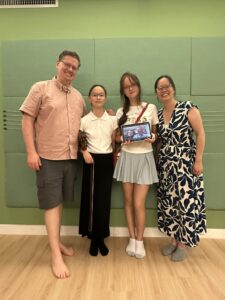
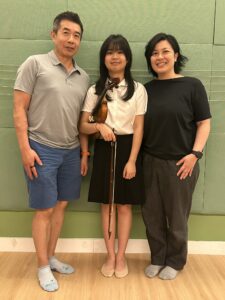
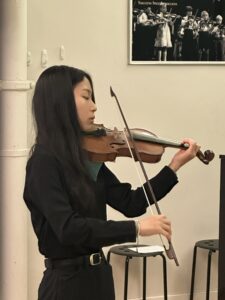
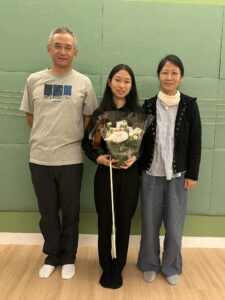
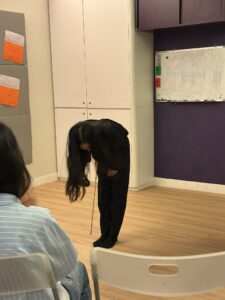
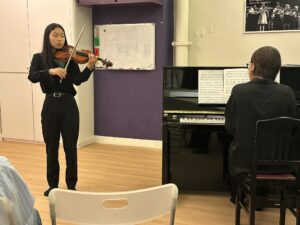
Reflections from the Performer: Isabel Zeng Book 8 Violin Recital

June 22, 2026 By Suzuki Music Academy of Hong Kong

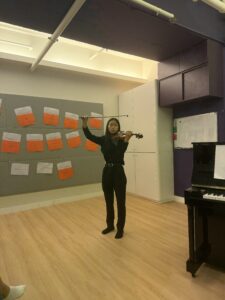
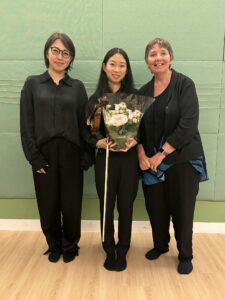
My Book 8 Recital was the culmination of so, so many hours of practice and rehearsals. So while yes, it did have mistakes and rougher sections, I would consider it an immense accomplishment overall.

Something that I am especially proud of was the progress I made especially in the week leading up to the recital. Before that, I was juggling academics and finals, so once finals week was over, I was able to better engage in practicing. Furthermore, because my dress rehearsal was only two days before the recital, this forced me to really hone in on the specific rhythmic errors that I had in addition to the musical elements that I worked on in my lessons. I think that my last lesson before the recital was extremely pivotal to how I was able to express the phrasings and dynamics in pieces like the 1st movement in the Veracini Sonata and the 3rd movement of Eccles Sonata. While the dynamics of the Veracini were challenging to remember at first, I later faced more difficulty with the triplet rhythms — something that was a common theme across many of my pieces. However, I am overall quite proud of how those pieces turned out.

A sonata I’d like to focus on is the Bach Sonata in C Major, which I played the 3rd and 4th movements of. These pieces were definitely a challenge on many fronts (the phrasing in the 3rd movement, memorising the 4th movement, lines, dynamics, shape, just to name a few), but the most interesting of them was switching to playing with a baroque bow. At first, I couldn’t get used to how the bow didn’t feel like it was actually on the string, which made me press harder to compensate and then created a scratchy sound. However, I learnt to use my arm more and have a better contact point, which is something that helped greatly in creating a smoother sound (though it is very much still in progress).

Above all, the Book 8 Recital reflected huge development in both me as a musician and as a person. With the added responsibilities of scheduling all of my rehearsals with Ms. Sonomi and creating my recital poster and programme, the recital was a large undertaking and something that I am very proud of having accomplished (and happy to have had completed!)

But most importantly, I would like to give a massive thank you to Ms. Sonomi for all her hours of rehearsals and practice with me and for tolerating all of my slip-ups and tempo inconsistencies while helping me through them all. To Ms. Diane, thank you so much for going over the same mistakes with me over and over and helping me through them while making the end goal feel perfectly attainable. Last but not least, thank you Ms. Marie Ann for your amazing administrative work and moral support — none of this would be possible without you!

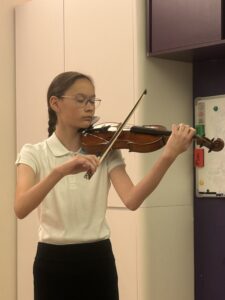
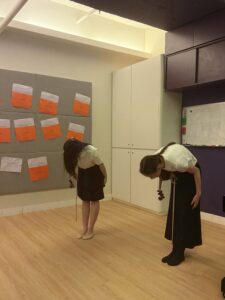
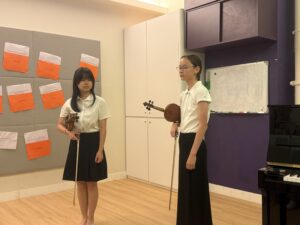
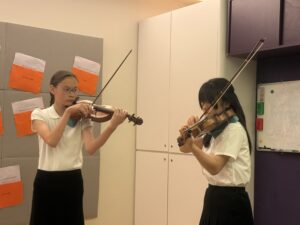
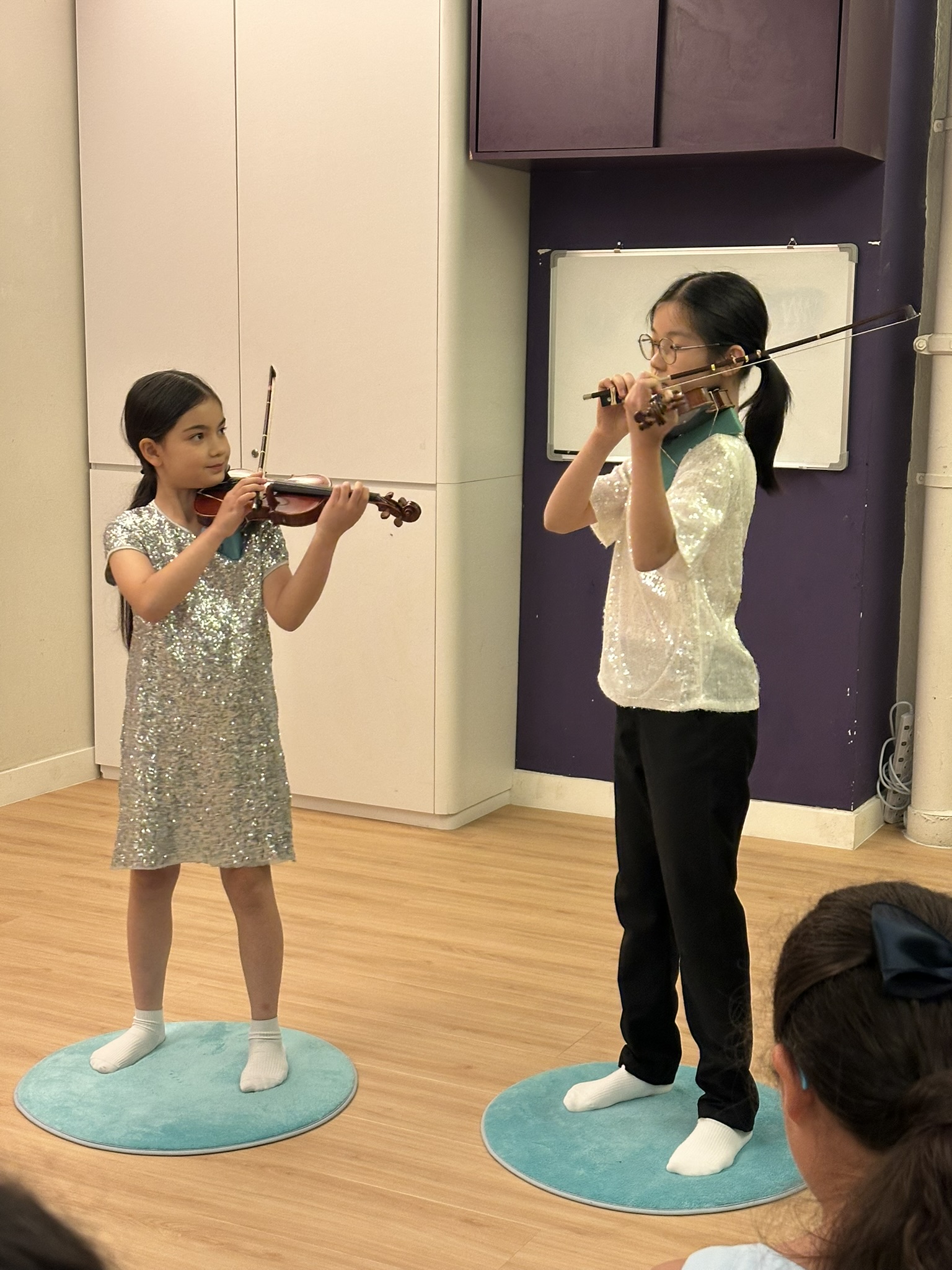
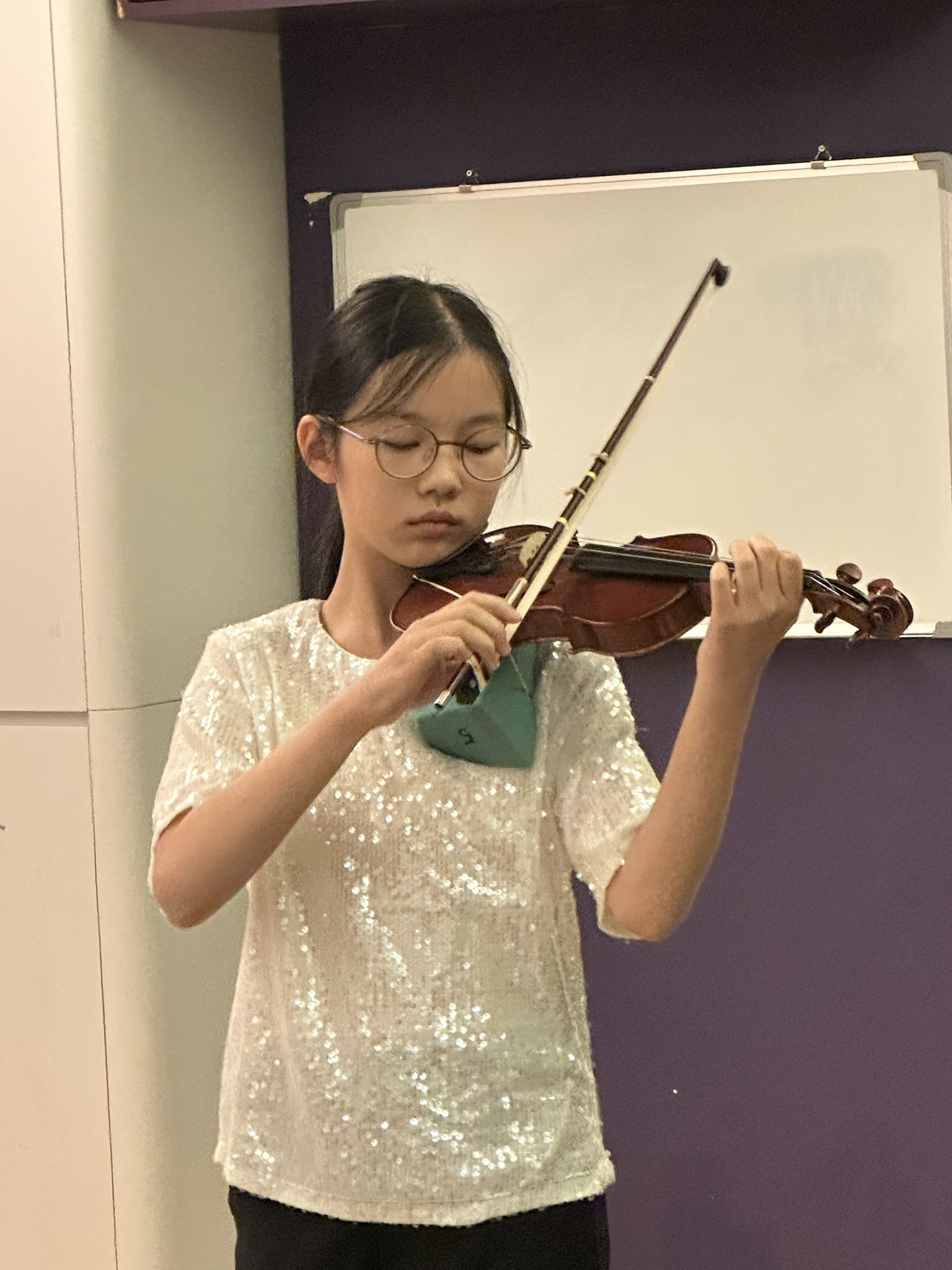
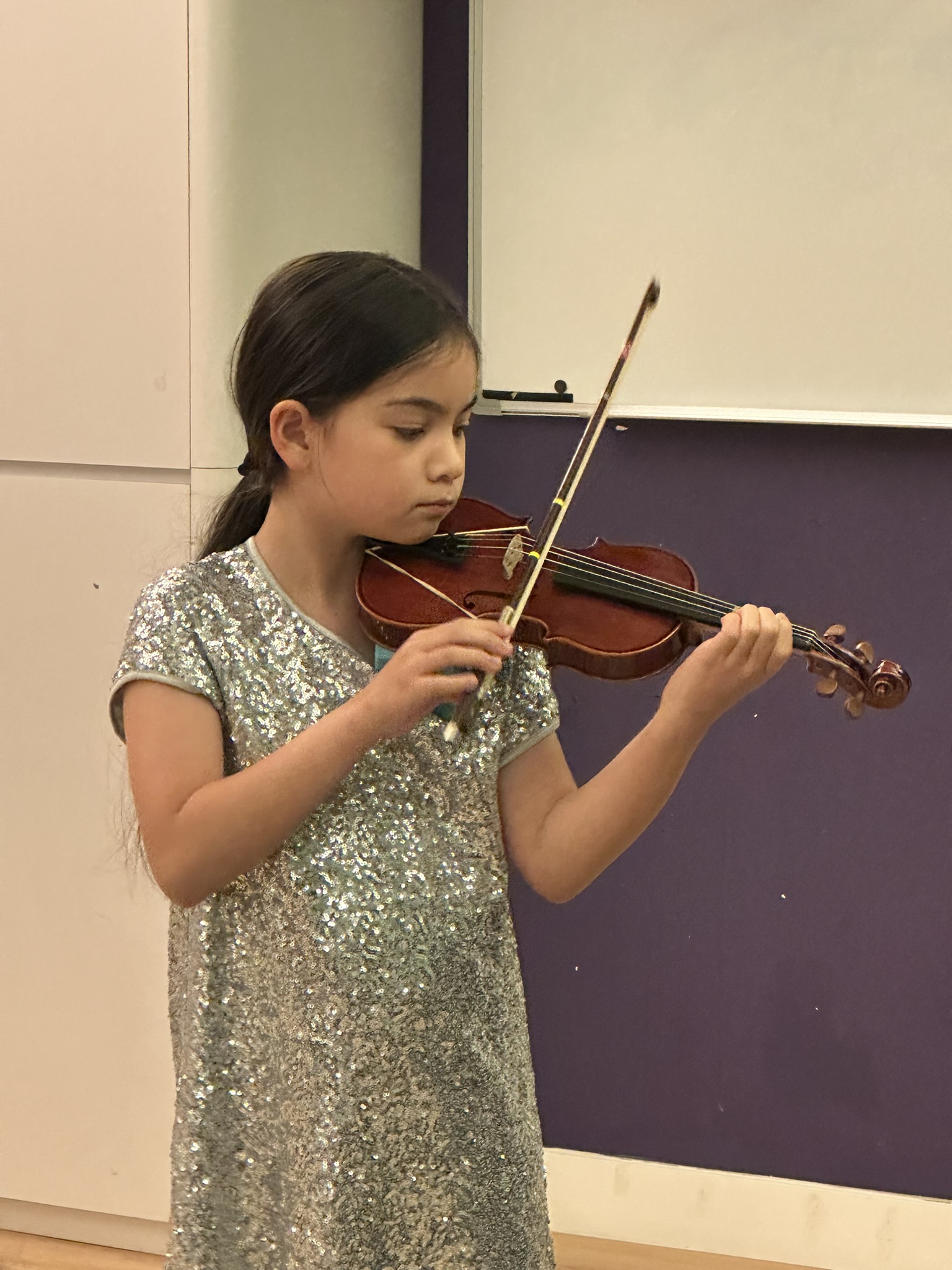
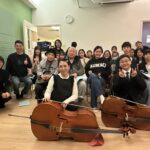
Reflections from the Performers: Charlotte & Sophie’s Book 1 Violin Recital

May 5, 2026 By Suzuki Music Academy of Hong Kong

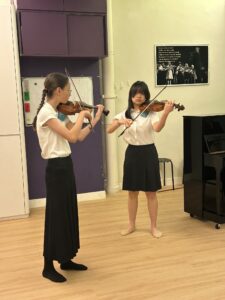
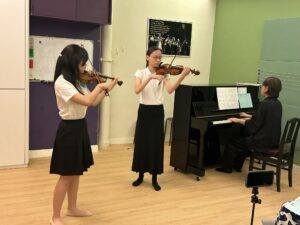
Sophie and Charlotte prepared and performed their Book 1 Recital together! Here are their reflections on their first-ever full recital experience!

~from Sophie

I am very glad that my recital was successful. I really liked how the audience was very supportive. I also think that we (me and Charlotte) did well. We remembered the important things and worked together well. Though I think that if I were to have another recital, I want to make sure that we weren’t as nervous and laugh a little less when we were walking.

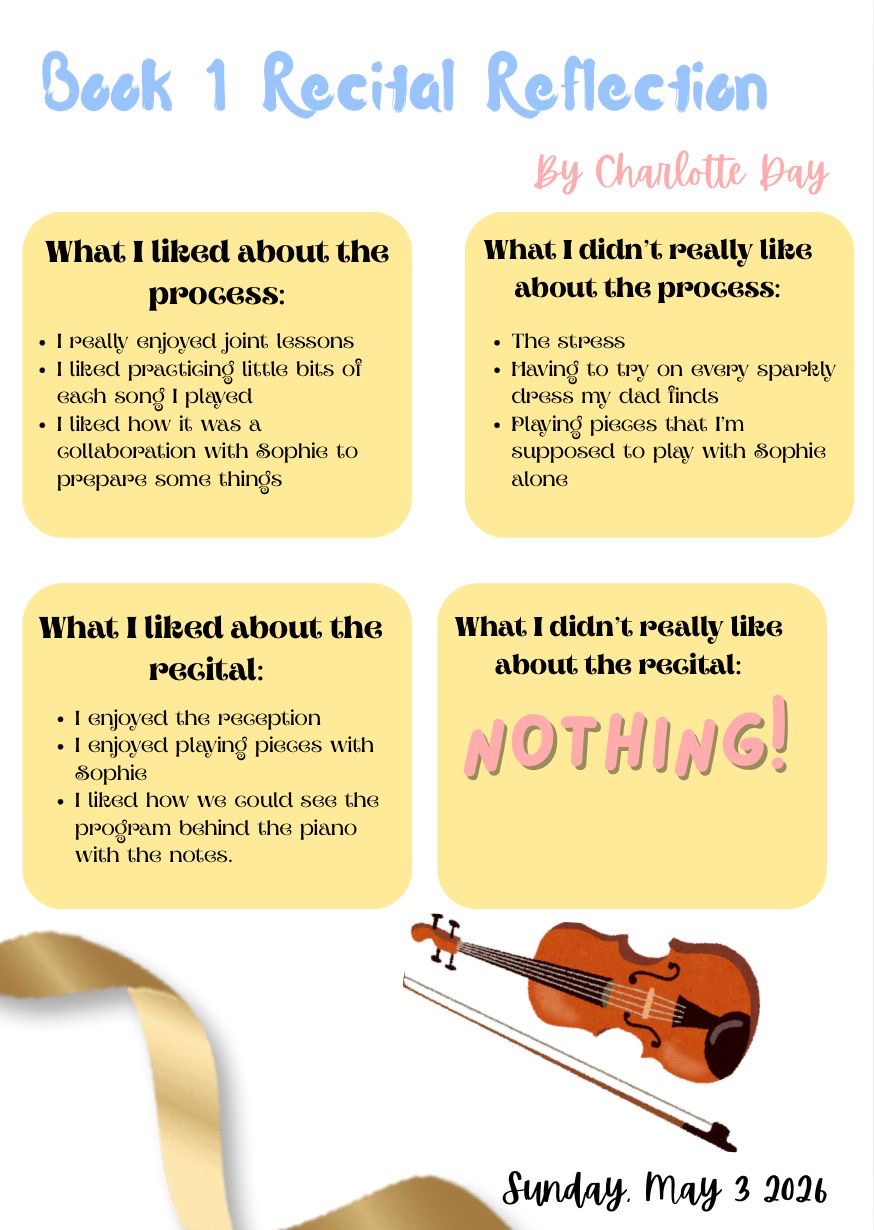
~from Charlotte

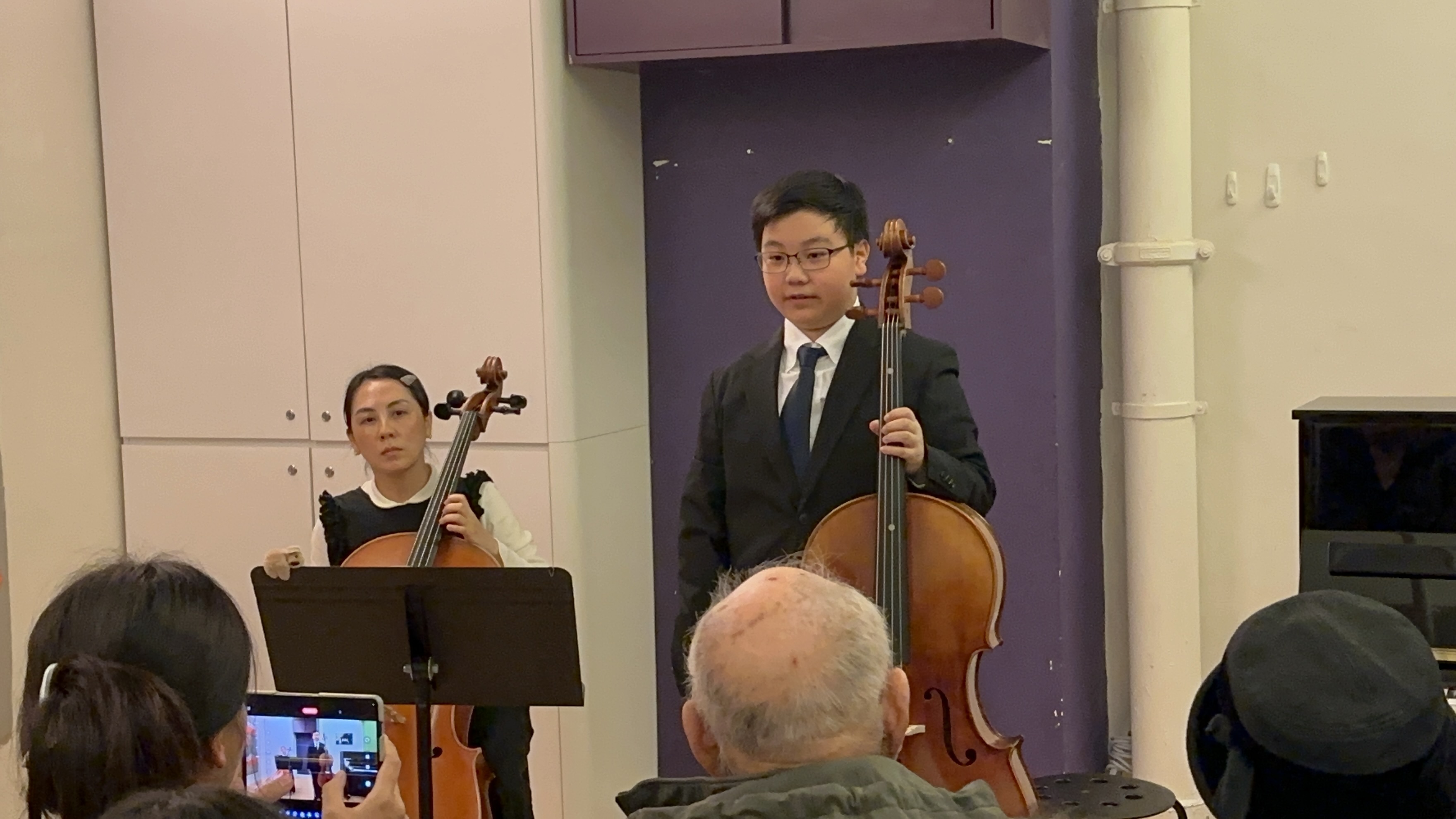
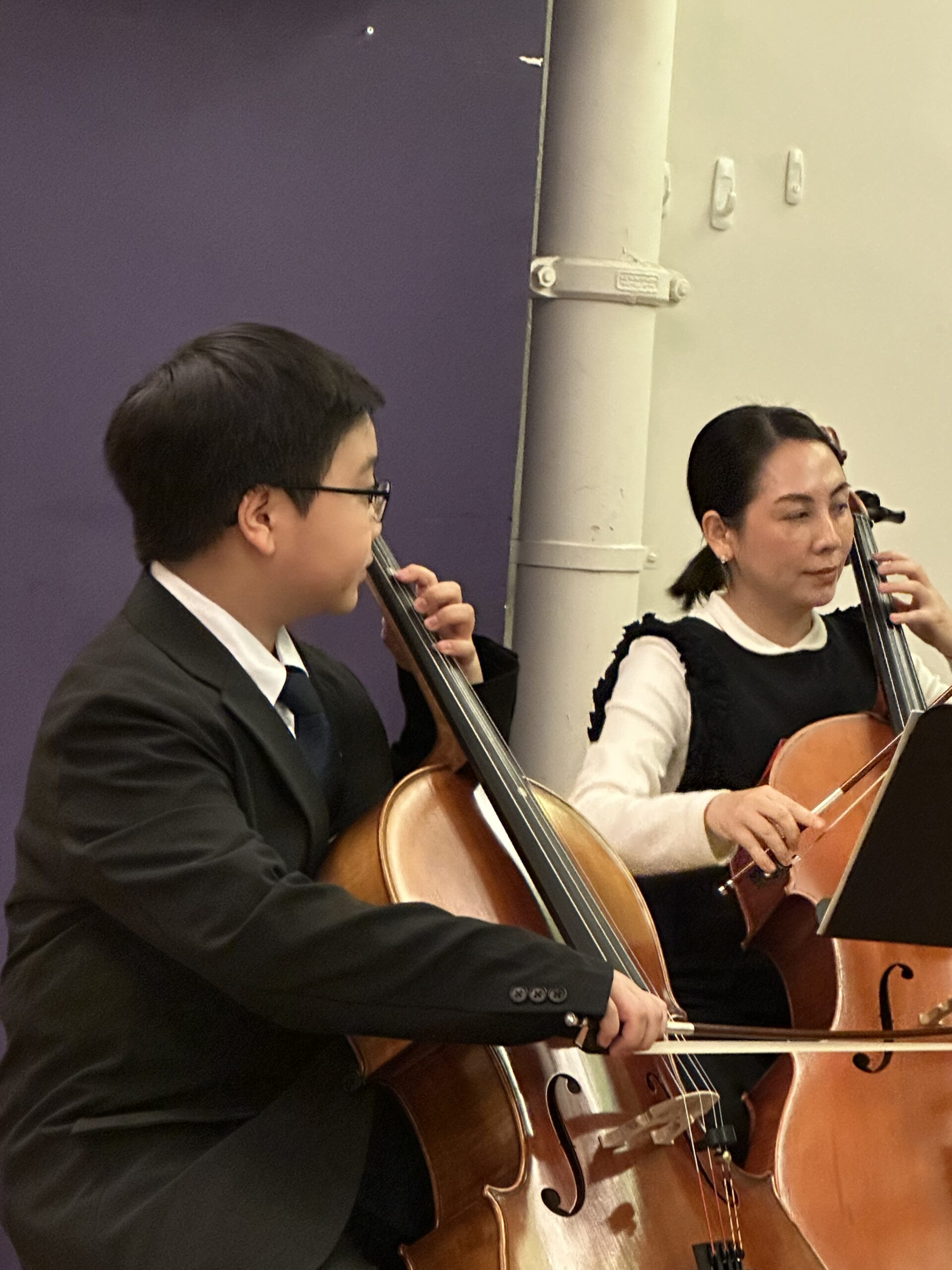
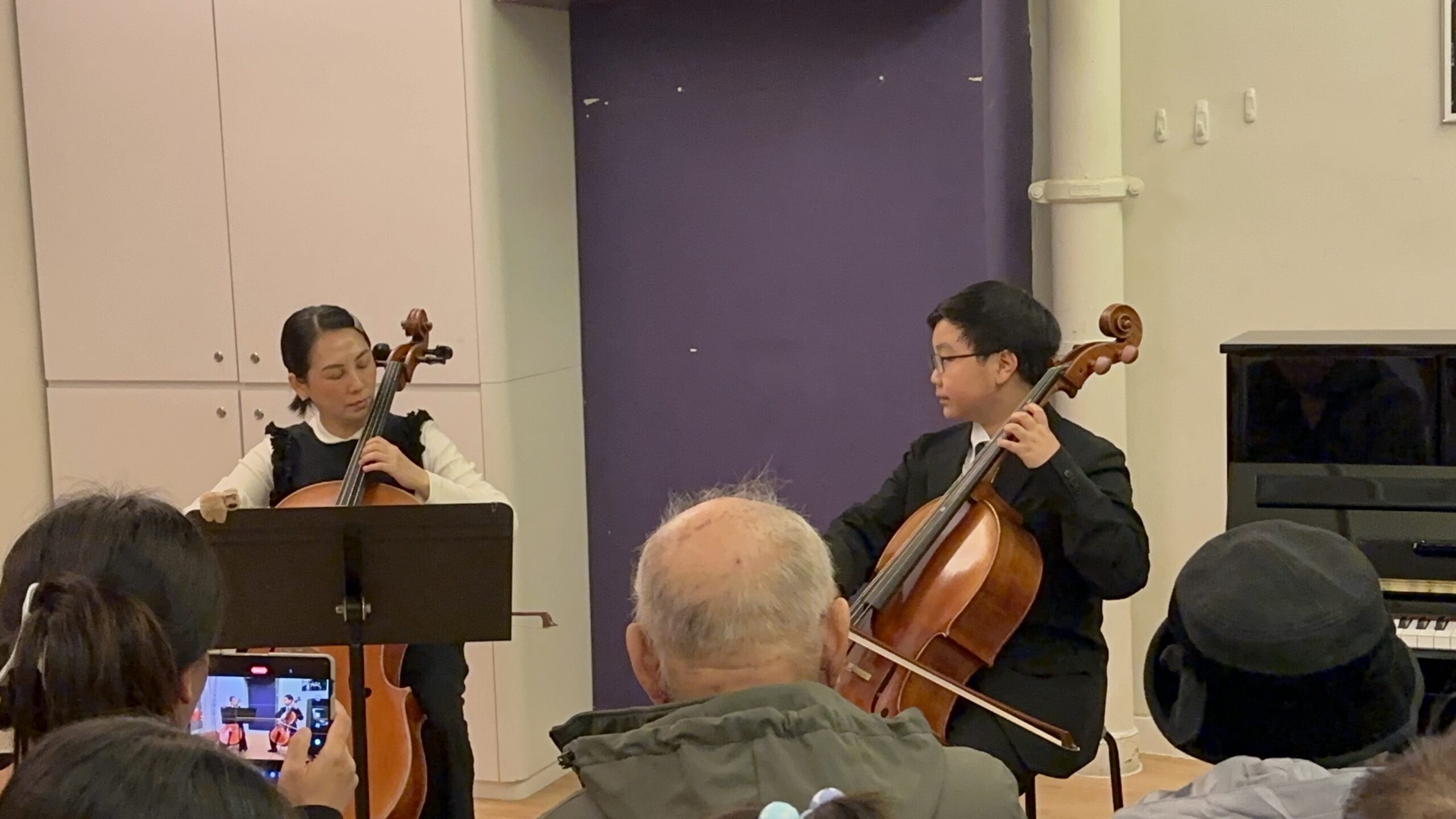
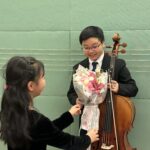
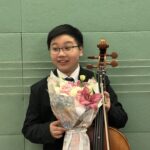
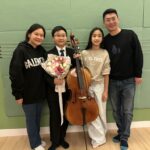
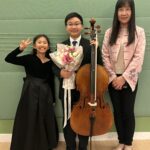
Reflections from the Performer: Hugo’s Book 4 Cello Recital

December 5, 2025 By Suzuki Music Academy of Hong Kong

Hugo gave a Book 4 recital that included a heartfelt dedication to those impacted by the Tai Po fire. Please enjoy his reflections on his Book 4 recital experience:

This recital was very stressful, tiring and nerve-racking. However, it was also fun, heartwarming, and something I am proud of.  In the weeks preceding the recital, I had to not only juggle the workload of my various end-of-term assessments but also practise for the solo recital and upcoming friendship concert in addition to my book 4 recital.  So naturally, I procrastinated.

I did not seriously practise for my recital until 2 weeks before, which is also 1 week before the final rehearsal. Uh oh.  I wasn’t even able to play through the entire book without the music.  In these 2 weeks, I also had an above-average amount of homework, meaning I had little to no time to do other things.  I would go home, do my homework, and practise when my dad returned from work before going to sleep.  

I was stressed and tired and exhausted for the entire 2 weeks.  But in the end, I think it was all worth it.  So many people came to watch me play, from my close family to my fellow Suzuki friends.  This, while heartwarming. Also had a small, teeny side effect.  Making me perhaps the most nervous I had been the whole year, I was sweating and internally freaking out. The pressure of performing in front of so many people, and the fact that I had worked so hard during the past 2 weeks, made me lose focus, mess up, and stutter my words before playing Chanson Triste. I honestly am a bit mad at myself for messing up my speech; I had a wonderful opportunity to give my heart and condolences to those affected by the fire.  And at the moment, I just couldn’t do that. I really hope I can do better in the friendship concert.

For the minuet, I felt like I did fairly well; I had good tone and vibrato and only rushed a little bit at the end of the second minuet.

For the Breval sonata, I feel like I did decently well. I did vibrato for the majority of the piece and had good intonation, except for the double stops at the end of the first phrase.

I feel the most proud of chanson triste. I had good tone and vibrato and had good dynamics.

Finally, for the Marcello sonata, it is the piece I feel I could improve the most on. I rushed a lot on the second movement and got a lot of wrong notes and got stuck on multiple spots; however, the first movement went fine.

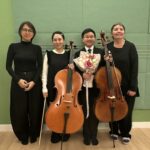
Reflections from the Performers: Alice & Ayden Book 6 violin recital

October 30, 2025 By Suzuki Music Academy of Hong Kong

Alice and Ayden recently performed their Book 6 violin recital in front of a large audience of friends and family. It was their last time of performing a recital with a peer partner, as well as the first time they had complete responsibility of preparing their joint pieces without input from a teacher. Here are their reflections on the experience.

~from Ayden

After completing my book 6 recital, I felt satisfied with our performance. Before the recital, I didn’t feel very nervous. Instead, I felt comfortable, which helped my performance in sounding more confident.

In the few weeks before the recital, Alice and I had to make time to practice joint pieces, and book a room at Suzuki with Ms Marie Ann. Although we had chances to experience this during the Book 4 and 5 recital, this time we didn’t get joint lessons to work on them. This meant that we were fully responsible for rehearsing until we felt confident, and working on details such as dynamics, articulation and cues. I felt like we were usually ready to practice every time, and we collaborated efficiently, continuing on where we left off in the previous rehearsal.
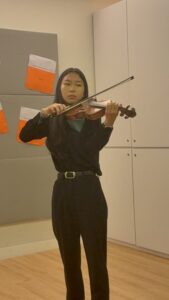
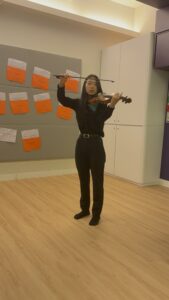
For the solo pieces, this recital was also a new experience. This was the first time I played an entire Sonata in a recital. Most notable was the Handel Sonata, since it is a long piece; around 18 minutes, and develops throughout its 4 movements as a story. Moreover, this was the first time I have performed with both Ms Sonomi and Ms Diane. During the performance, I felt that our parts synchronized well, and that we were able to effectively change the mood and dynamics throughout the movements. 

Additionally, I learnt a new piece for the recital; Adoration. During the piece, I felt that I was able to change the colors of each section of the piece fairly well. I also focused on bringing out the vibrato and maintaining arm and elbow energy, especially in the climax (fortississimo).

For our joint pieces, I felt that we collaborated well. When Alice was leading, I was able to follow her bow divisions, articulation and dynamics, and we mostly played with the details that we practiced in our rehearsals. 

Lastly, the most remarkable joint piece we played was La Folia. During our practices, we dedicated lots of time to solely practicing La Folia, as there are many different tempo, dynamic and articulation changes throughout the piece. I felt that our performance was expressive. For me, I was able to effectively cue to both Ms Sonomi and Alice, to change the tempo and dynamics of each phrase. At the end, we were able to slowly progress through various phrases and colors to reach the last variation. We maintained the high energy up to the last chord of the piece.

Overall, this recital was a very memorable experience for me. Whether it was practicing with Alice on rehearsals, performing the Handel Sonata, or La Folia, it was an enjoyable experience.

~ from Alice

The book 6 recital is the last recital I get to perform with a partner, so I’m happy it turned out the way it did. The preparation process was a new experience for me because Ayden and I did all the work independently, with no guidance from Ms. Diane until the dress rehearsal one week before the recital. We scheduled all the times ourselves and had to book the rooms with Ms. Marie Ann independently, which I quite enjoyed, because I felt more comfortable at the sessions to work on what we needed to. The amount of agency and responsibility that we got in the preparation of this recital actually made me feel less stressed and more in control, even though I expected the opposite. 

My previous book recital was with Stacey, who I’m friends with. We also both talk a lot and have lots of energy. Ayden and I aren’t as close, and he usually doesn’t have as much energy as I do, so coming into the preparation process, I thought it would be challenging. However, it actually turned out that Ayden and I were very productive and worked on all the pieces well. We discussed dynamics, bow divisions, and many other musical elements that made the piece genuinely enjoyable to play. We had to work on leading and following, but I also think that I improved a lot, and I was satisfied with it during the book recital. One interesting aspect of the shared pieces is that we encountered problems with an unexpected piece: Twinkle. Both of us thought that the twinkles would be easy and smooth, so we only went over them a few times and didn’t spend much time working on them. In the dress rehearsal, we learned that a seemingly simple piece like Twinkle Theme actually required a lot of communication, coordination, and tone to play well, which we neglected due to underestimating the need to practice a piece that seemed so simple compared to La Folia or the Vivaldi. We spent some more time working on the piece and were eventually able to match our tone and playing. Still, the fact that “simple and easy pieces” like Twinkle actually proved to be a challenge and required effort and skill was a very insightful takeaway.
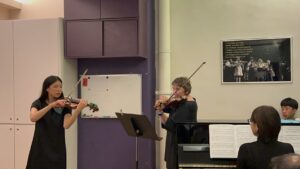
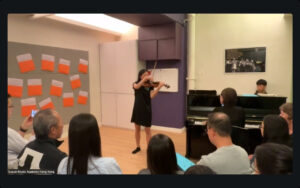
In my own individual preparation, I didn’t do as well. I wasn’t practicing efficiently initially, and my solo pieces still needed much more work. After guidance from Ms. Diane at a private lesson and some more practicing, I could play my solo pieces better, and at the recital, I really enjoyed playing my Handel Sonata’s first movement. I played this piece with both Ms. Sonomi and Ms. Diane, and I really liked having that option because it added so much more to the music. I also used some of the skills from the book 4 & 5 recital, such as transitioning between movements and the bariolage, demonstrating that every skill is meaningful and valuable in many different pieces, and that learning carries on through different books.

Overall, the book 6 recital was a meaningful and inspiring experience that helped me learn a lot about my playing and collaboration, and I’m generally happy with how it went.

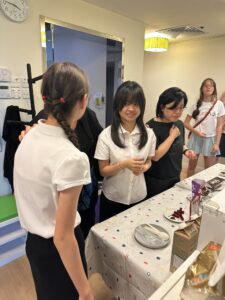
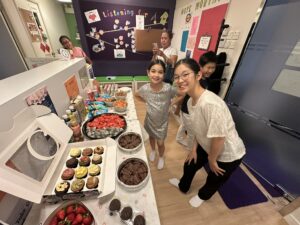
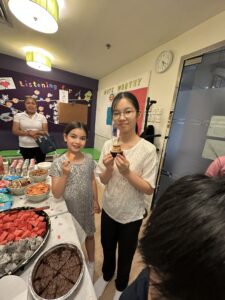
p.s. This is kind of unrelated, but Ayden’s mom brought the most delicious box of tarts to the reception, so that was another highlight from this recital.

Next Page »

25/F Times Media Centre
133 Wanchai Road
Wanchai, Hong Kong

directions

Suzuki Music Academy of Hong Kong believes:

Follow us on Facebook

Search

  • HOME
  • PROGRAMS
  • EVENTS
  • GALLERY
  • REGISTER

Copyright © 2026 · Magazine Pro Theme On Genesis Framework · WordPress · Log in