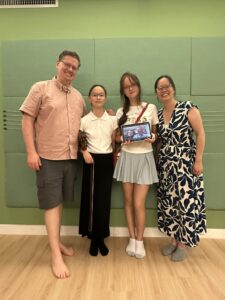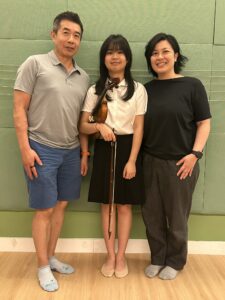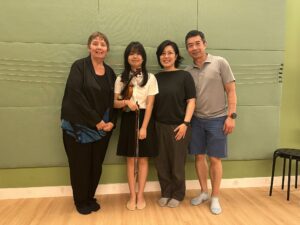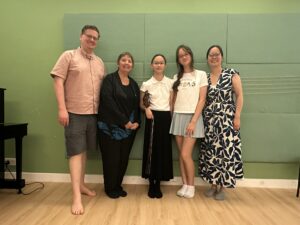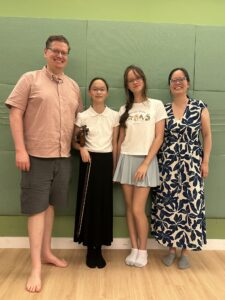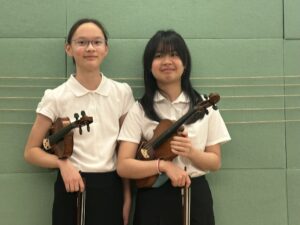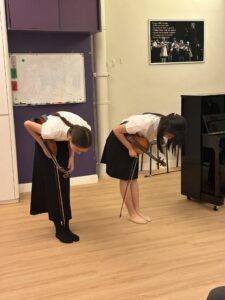
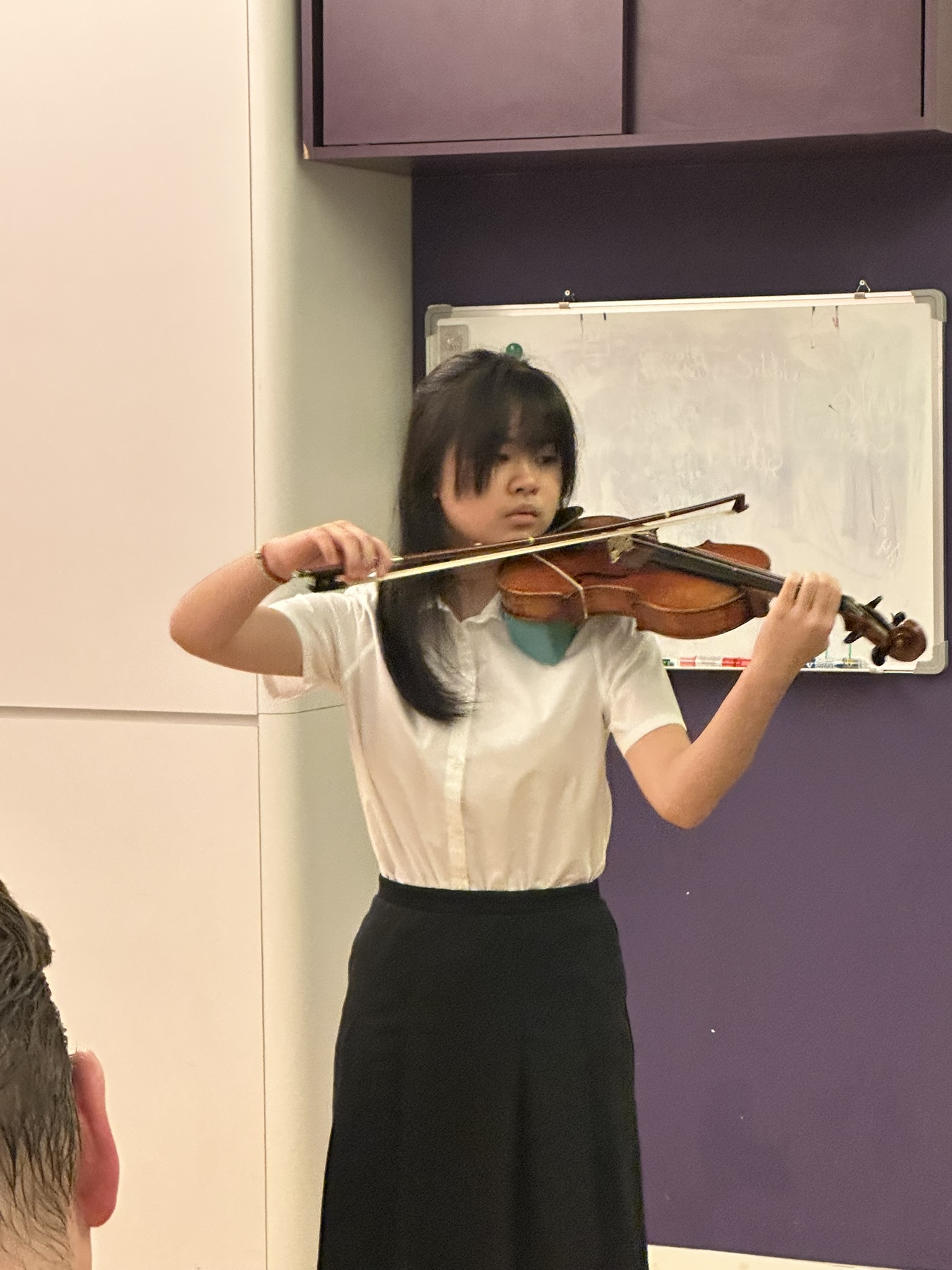
~from Emma
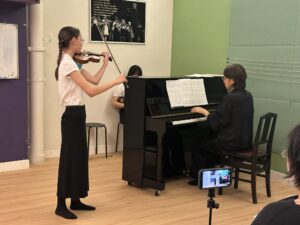
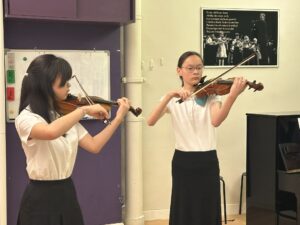
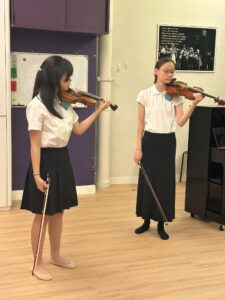
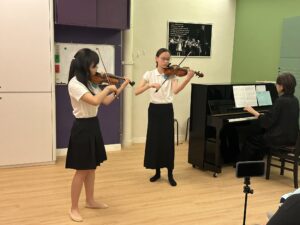
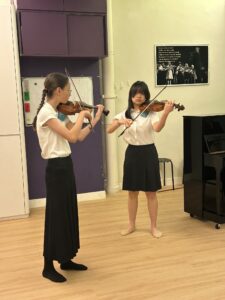
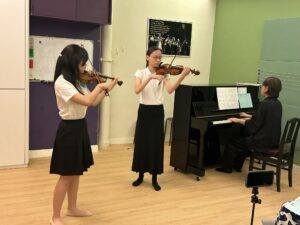
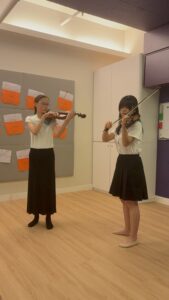
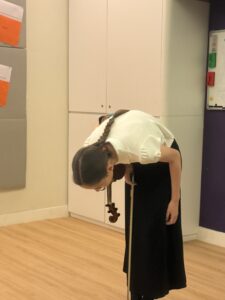
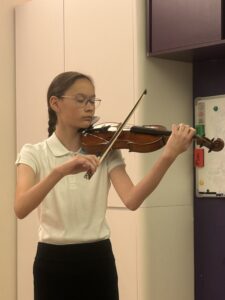
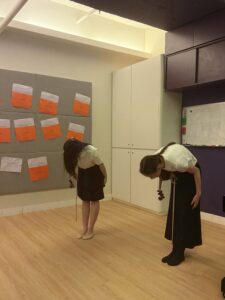
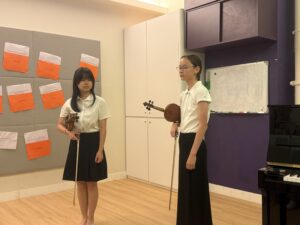
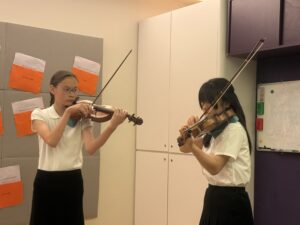
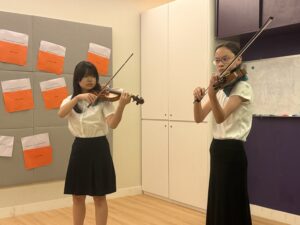
To prepare for this recital, Camy and I spent a gruelling four months preparing with each other, our first rehearsal together was in the US, back in February. Since then, we exchanged multiple video recordings with each other, and had a few zoom meetings now and then to discuss possible articulations or dynamic levels. Then upon meeting up with each other a week before the recital, we spent a few hours finalising everything together. In the end, I believe our hard work together paid off.
Of course there were mishaps along the way: long distance communication with each other being one of the more difficult aspects; or finding the right time to have rehearsals together, school or jet lag being something we had to work around; or when Camy and I went out to eat lunch before our rehearsal, and it immediately started raining heavily. Despite all of these challenges, big and small, we were able to persist to the end, and I believe that shows through our recital.
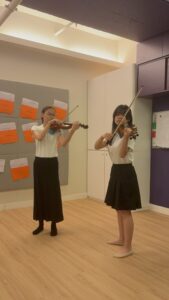
One of the main things I learnt while preparing, is the importance of balance between two parts. While playing the Bach Double, the goal wasn’t always to be the same level of volume, but to support each other through our playing. If Camy’s part had the melody, while I had the supporting part, it would be my job to enhance what Camy is playing, not to overtake her, vice versa. With that in mind, I feel like Camy and I were able to successfully incorporate this idea into the Bach Double. All in all, I had a lot of fun playing the Bach Double during the concert.
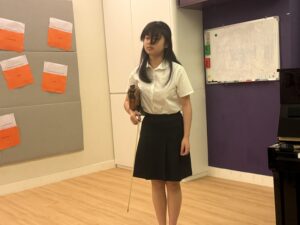
When it comes to my own solo pieces, the mistakes were evident, and it could have been prevented, had I prepared more mindfully. At the end of the day, mistakes were made, and I unfortunately cannot go back in time to fix them. This was a lesson I learned, and a preparation mistake that will not happen in my future book recitals.
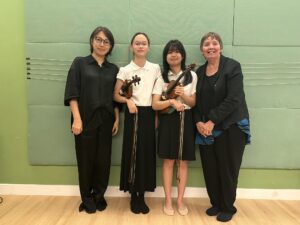
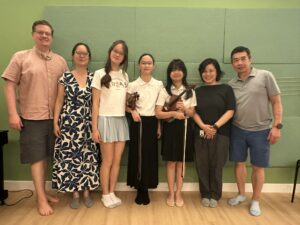
Thank you Ms Diane, Ms Sonomi, and Ms Marie Ann for helping us along the way, and thank you Camy for taking the time to prepare and perform this recital with me.
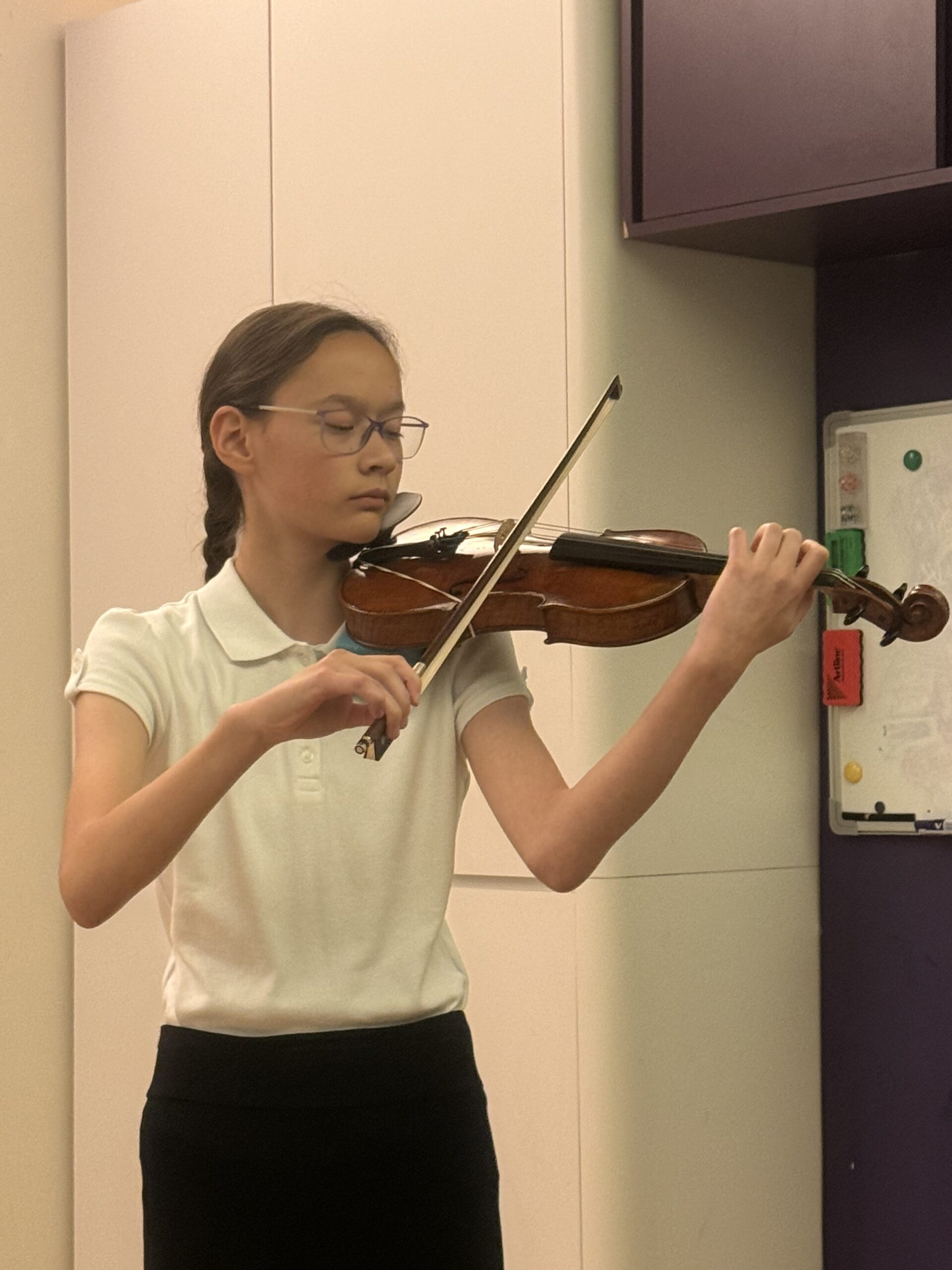
~from Camy
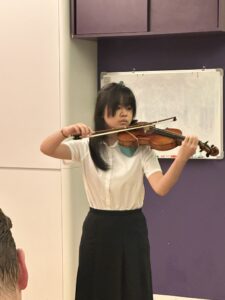
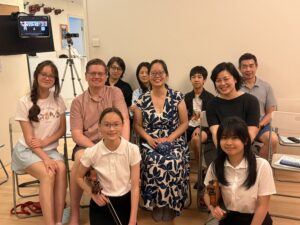
My book 4/5 recital on June 20, 2026 was my second recital with Emma and it was nice to be able to see everyone and work together in Hong Kong! The book 4/5 recital is the first recital where the students have to take most of the responsibilities, including deciding our rehearsal times, working together independently, and making decisions on how to use articulation, phrasing, and bow divisions in our playing. This was especially challenging for me and Emma because we lived halfway across the world from each other.
Fortunately, we had the opportunity to meet up in person before I came to Hong Kong, at the SAA Suzuki music educators’ conference in San Francisco in February. Both Emma and I (plus Hanson and Linnaea) were selected to participate in the Early Music Ensemble hosted during the conference, which focused on playing in the baroque style. We had the chance to use baroque bows for the first time and learn bowing techniques from violinist Rachel Barton Pine and her daughter, and we performed an orchestral version of the Bach Double during the conference. This was beneficial for me and Emma to learn more about the articulation used in the baroque style because we were working on the Bach Double for our recital. When working together in San Francisco, on Acapella, and in person, we experimented with both the modern bow and baroque bow to see which style we preferred to use during the recital. Although we are more used to playing with our modern bows, we decided to use the baroque bows during the recital for the Bach Double because it was more fitting for the articulations we chose to use.
At the recital, we decided to make the Bach Double our grand finale. Although we took it considerably faster than when we practiced, it ended up sounding really good and pretty balanced between the parts. We spent the majority of our independent rehearsals as well as a good part of our joint lessons discussing the articulation we should use, how we wanted to use phrasing and dynamics to add depth to our playing, how to balance the parts and when to bring out specific sections, and how we wanted to do the bow divisions for the Bach Double.
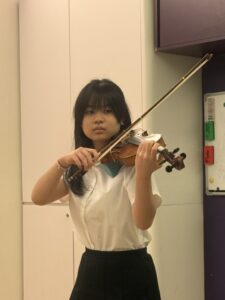
Another big highlight of the book 4/5 recital is that we each had the opportunity to perform a whole Vivaldi concerto with 3 movements. I played the Vivaldi A Minor concerto, and a main focus I worked on in my lessons with Ms. Diane was how to transition between the different movements. This is because it is important to make sure you are prepared with the appropriate energy required for each movement. For example, between the first (Allegro) and second (Largo) movements, I took a longer time to adjust to the lower level of energy for the second movement. The second transition from the second to the third (Presto) movement was much shorter because it was easier to transition from lower to higher energy. The experience of playing a whole concerto helped me understand the relationship between the movements and how their styles were different but related.
My other solo pieces were German Dance, Seitz 5/3, and Perpetual Motion. The things I needed to work on were different throughout each piece, including how the cues needed to happen, the ritards, phrasing, tone, and much more. I thought I have improved a lot in all the pieces since when I first learned them a few years ago and also from when I started working on them at the beginning of this year to prepare for the recital. Even though some things still could use adjustments when I performed them, I think I still did a good job with the dynamics, articulation, and other specific things I worked on in the pieces.
In the joint pieces, Emma and I had to spend a lot of time coordinating the parts on how we wanted to do different aspects of each piece. One thing that was difficult for us was surprisingly the Twinkle Variations. For the Book 4/5 recital, Ms. Diane asked us to play the variations in multiple keys and 6 different positions to demonstrate our advancing technique. The challenge was even tougher because we didn’t practice the Twinkles as much as the other joint pieces, but also because we changed the keys and positions for each variation multiple times and only finalized the decision at the dress rehearsal two days before the recital.
In Seitz 2/3, I spent a lot of time working on the cues for Emma and Ms. Sonomi because there are a lot of ritards and places that need me to cue the next section. In the performance, I think I improved the cues in the ending of the piece and the middle compared with the dress rehearsal, when it was difficult for me to cue properly in those sections at first. I was accidentally giving a double cue for the ending note, but I worked to make my motion a smoother and bigger bow circle to provide a clearer cue for my partners. I think the cue in the middle of the piece could have been better because I should have matched the next section’s tempo slightly better, but it was definitely improved since the last time.
In the Veracini Gigue, the main issues Emma and I both worked on were using our elbows properly throughout the piece and also how to do the grace notes consistently. I think I could have improved my use of my elbow in the recital, but I think Emma and I worked out the grace notes and decided on a consistent solution.
I think we did well in both Gossec Gavotte and Bach Bourree, although the Bourree 2 was pretty slow compared to Bourree 1 when they were supposed to be similar in tempo. Other than that, I think our phrasing, bow divisions, and articulation matched well in both pieces.
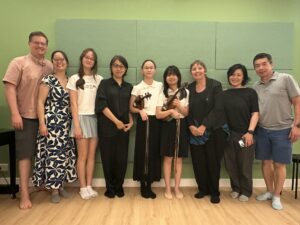
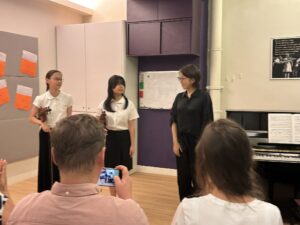
Lastly, I would like to thank everyone who helped me prepare and make the recital happen. Thank you to Emma for being a wonderful recital partner and willing to work with me overseas and have many rehearsals on two different continents. Thank you to Ms. Diane for being a great teacher and helping us work on the recital together, improve our playing, and take more independent responsibility for making decisions. A big thank you to Ms. Sonomi for being an awesome collaborative pianist and taking the time and effort to accompany us during the 4-hour dress rehearsal and recital (on top of several other recitals and performances). Special thanks to Ms. Marie Ann for being so welcoming and making sure everything runs smoothly. Thank you to my family and everyone who came to support us and listen to our recital—both in person and on Zoom.